We focus almost exclusively on Blood & Plunder on this blog, but there are other Pirate games out there! In this review we look at Treasure Island, a pirate board game published by Matagot.
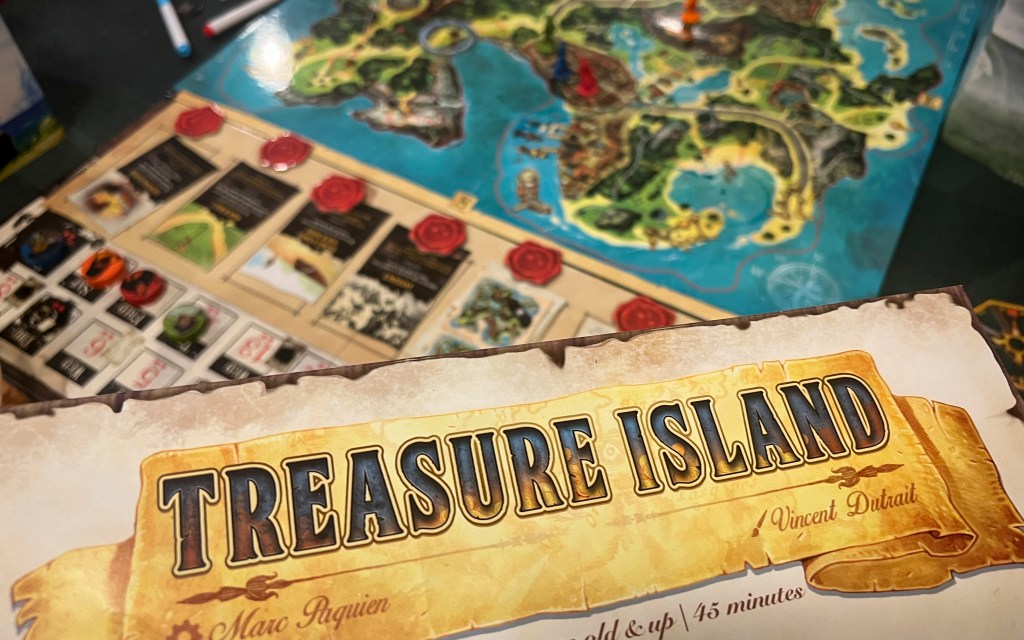
Basic Details for Treasure Island Board Game
- 2-5 Players
- 45-60 Minutes
- Ages 10+
- Designed by Marc Paquin
- Art by Vincent Dutrait
- Published by Matagot
- Rated 7.2/10 on BGG
- MSRP $59.99
- Themed around Robert Louis Stevenson’s Treasure Island book
- Unique hidden information gameplay with 1 player vs the rest, with semi cooperative elements.

Theme
The “story” or theme in Treasure Island is fairly lightly based on Robert Louis Stevenson’s Treasure Island universe. The game starts with Long John Silver (Player 1) “in prison” while the rest of the players are various other generic pirate characters that are searching an island, looking for Silver’s buried treasure. I found that players got caught up in the theme to a reasonable extent. The game is focused on “the search” and there is no combat or sailing or much of what you might reasonable expect in a Pirate Game.
Treasure Island Game Play
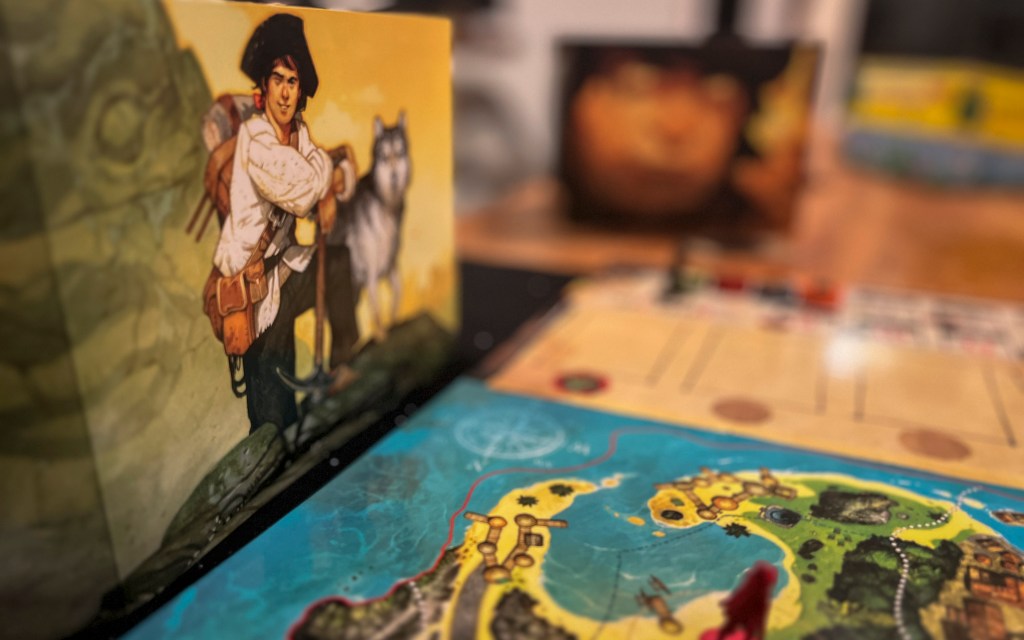
Treasure Island is a semi-cooperative game with two very distinct classes of players: you have Long John Silver who hides the treasure before the game begins (and is almost like a Game Master, and all the other players who search for the treasure (and are all on a fairly level playing field). Only one player wins at the end of the game, but the way the game plays out, the non-Silver players often end up sharing some information in an effort to make sure Silver does not win.
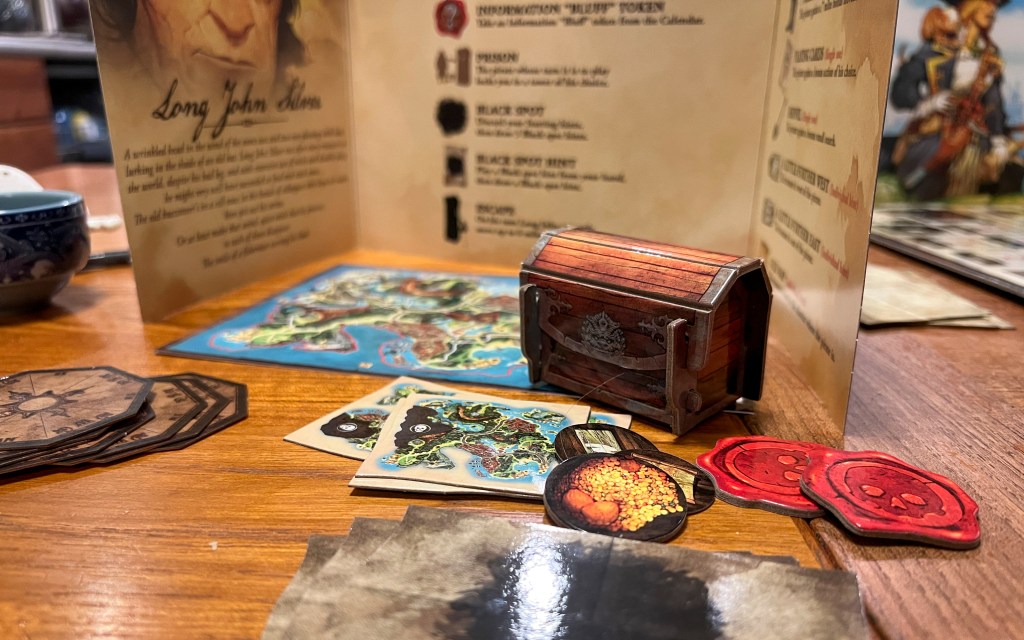
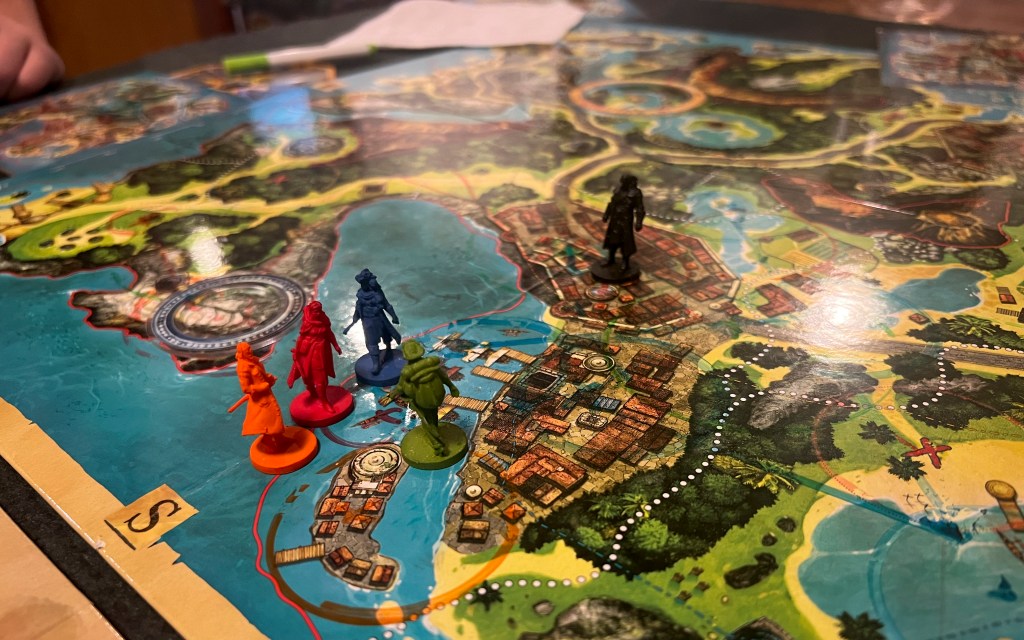
There is a large central map featuring a brightly colored island with lots of details and terrain features. Each player is equipped with a mini map and a player screen so they can keep information hidden. All these maps are designed to write on with dry erase pens to mark up your map throughout the game.
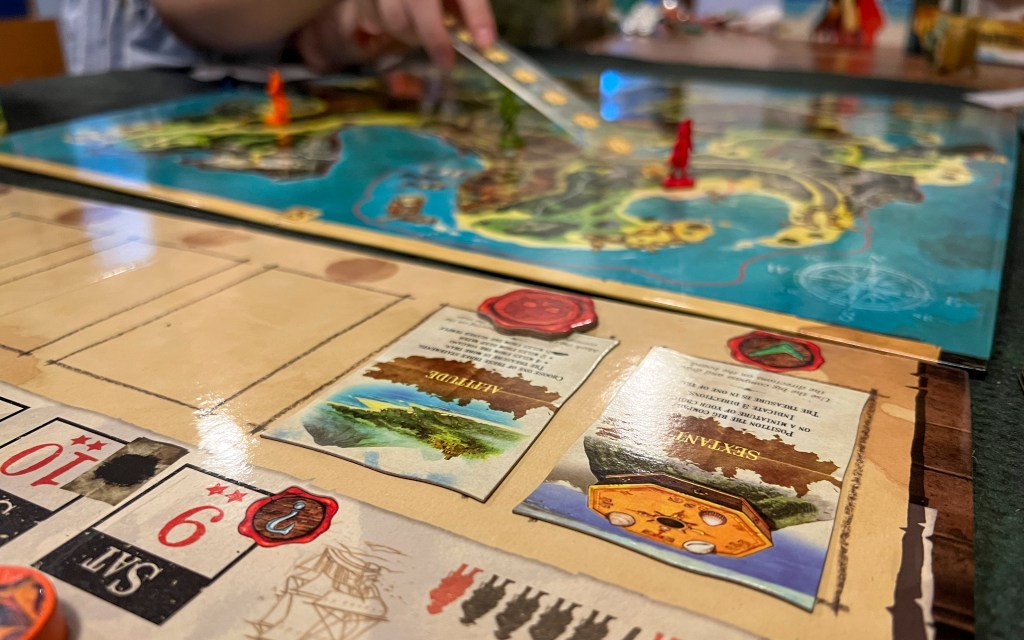
Before the game begins, Long John Silver secretly “buries the treasure” by drawing an X on his mini map. Then he must hand out a “clue” to each player in the form of a token that tells them one portion of the map where the treasure is NOT buried. Over the course of the game, Long John Silver will have to give out more and more clues. Some of these clues are for everyone, and some clues go to individual players and they can choose to share that info with the group or not. And, to make things more complicated, some of these clues may not be true and the players will have to take extra time to confirm if they are true or not!
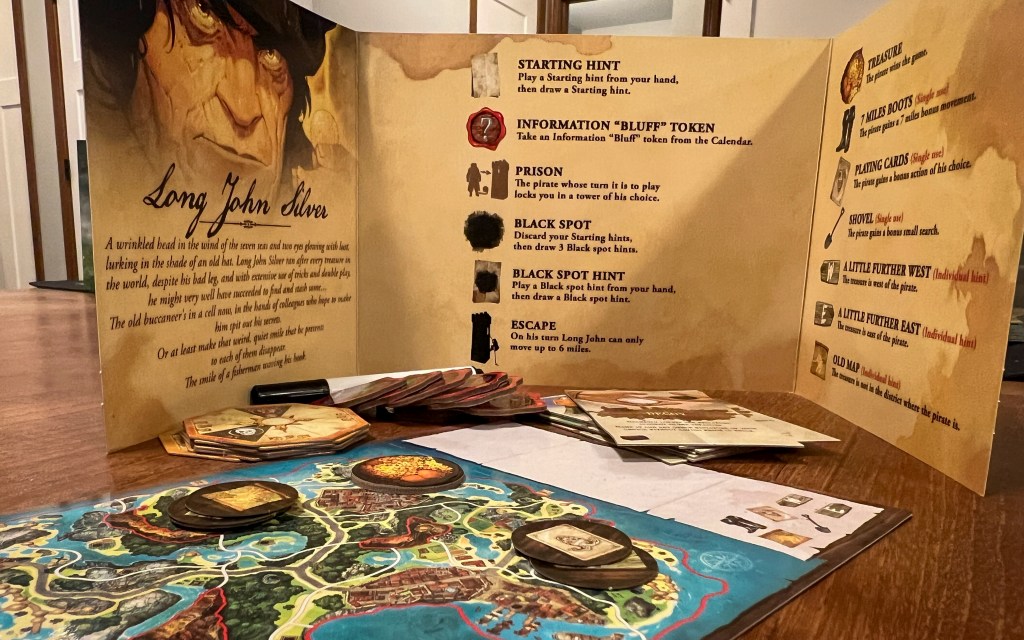
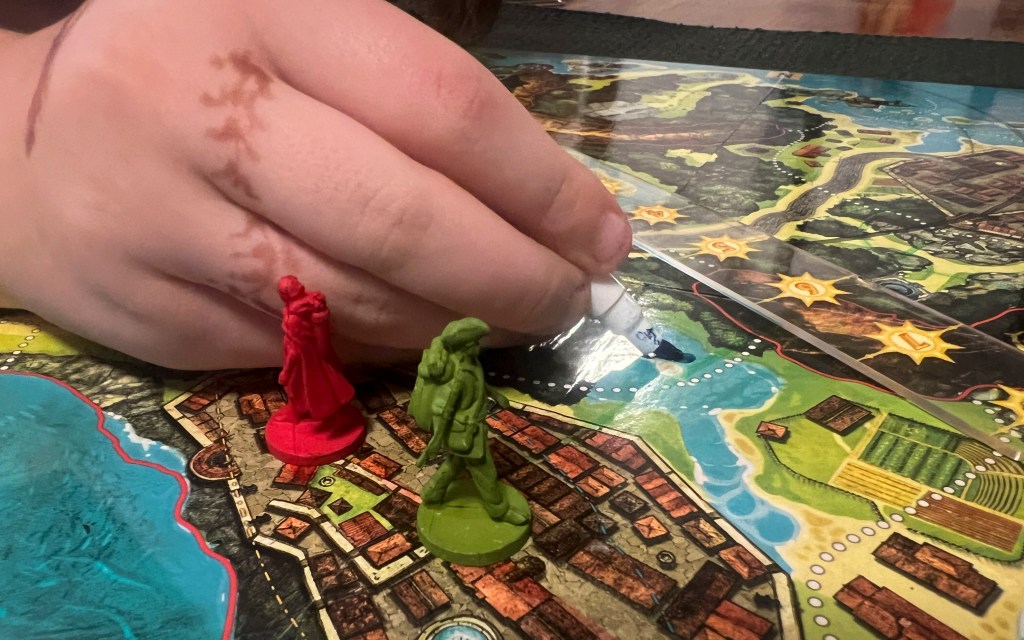
The other players, using a set of basic actions and a couple special abilities specific to their character, move around the island, searching areas that seem likely (or at least have not been eliminated) as a possible location for Silver’s treasure. Each time a player moves their pawn or searches an area, they draw on the map, leaving a visual record of their travels and their searched locations, slowly narrowing the area where the treasure may be.
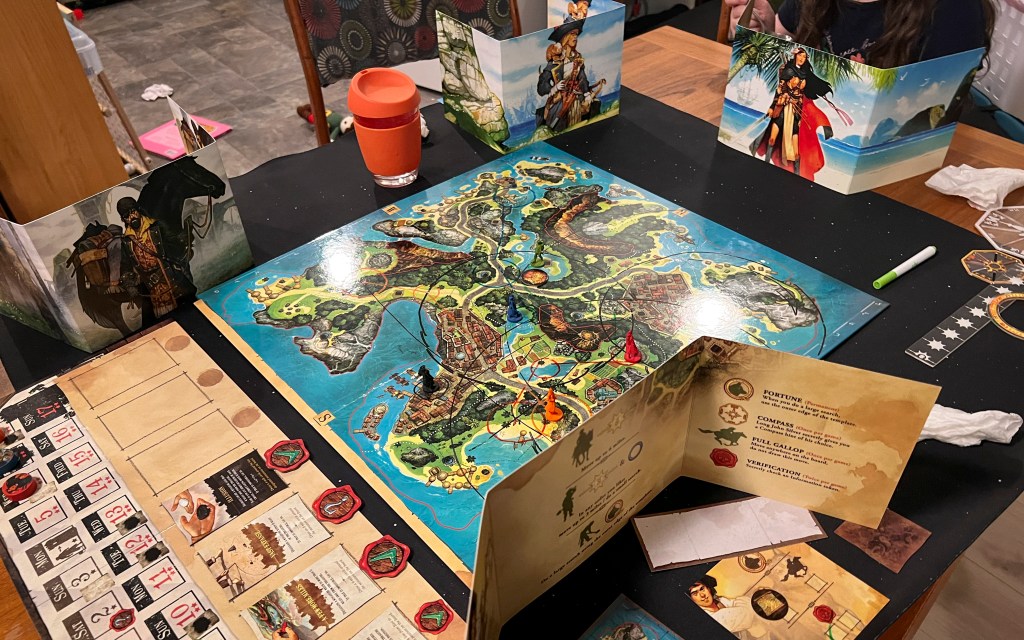
Play continues around the table with Long John Silver revealing a new clue every turn. If the game goes long enough, Silver escapes from prison and has a chance to rescue his own treasure if they other players don’t discover it soon enough! This is where it gets very tense and the other players may break down and start sharing information that was previously precious and private. It would be unbearable if Silver dug up his own treasure and made a fool of everyone! Long John is released from the prison (one of several on the board) the player chose to lock him in, and he must move across the board to the location of his treasure without tipping the players off before he gets there. There can be some very tense last few turns!

The Long John Silver player have a “hand” of clues that he can reveal to the players as a group, with the “weaker clues” only available if he gives another smaller clue or perk to an individual player. The challenge is to provide the most unhelpful clue possible, while giving private information to different players that may throw them off track. Trying to remember what each player knows and feed them unhelpful information is tricky and very fun!
Fun Factor
This game is a ton of fun. There’s deception, there’s unpleasant but necessary cooperation, there’s many opportunities to read all of the other players, there’s the unusual opportunity to draw all over your gameboard and mini map, and there’s the fun of the pirate theme.
My family found this to be an extremely fun game. Even the asymmetrical element of the game was great, with Dad playing Silver, the villian and everyone else working together against him.
Best Audience for Treasure Island
The game is recommended for ages 10+, and that sounds pretty reasonable and could go lower if your kids player games regularly. We’ve played a couple times as family with with a 11, 9 and 8 year old and they caught on pretty quickly. There is a level of sorting information that will be harder for younger kids but the Silver game master can balance that a little by providing different players with different private clues.
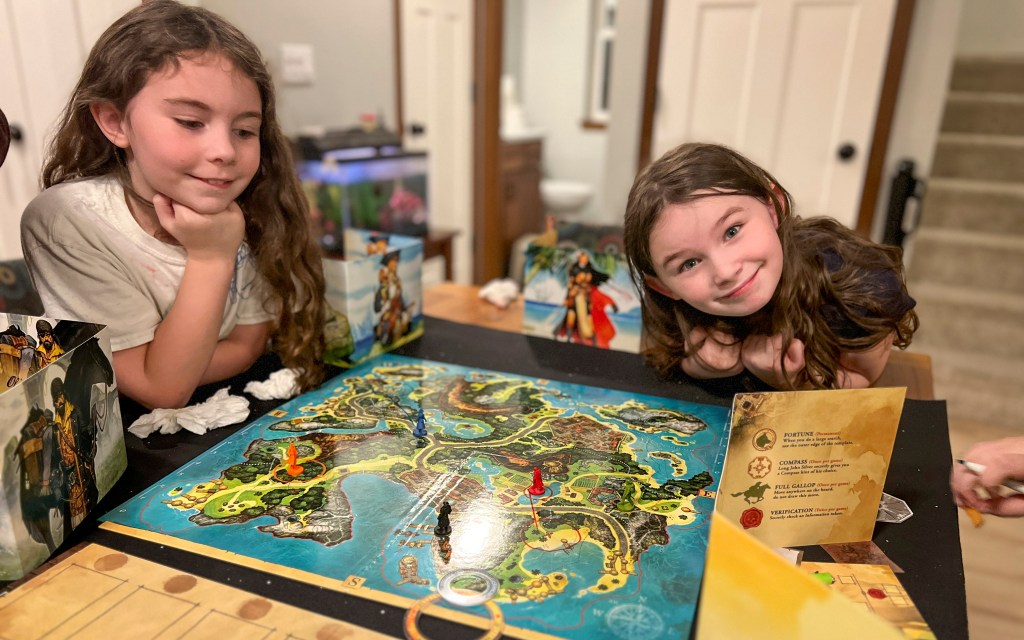
I think this game is certainly best when played by a group of people that all know each other. The social element of the game is very fun and more delightful when you know each other well.
Treasure Island Production Value
This is a beautiful game and it’s very “non standard” for a board game. Since you a using dry erase markers on both the main board and the mini map, everything has a shiny sheen to it which is a little annoying just because of the bright reflection of lights, but that’s unavoidable. It comes with dry erase markers of various colors and some were more visible than others when used on the map.

The art is great and the map has tons of detail to study and enjoy. The game includes several templates for movement and searching, and they went out of their way to make them look “nautical” which is appreciated.
Replayability
This game can be played multiple times and bear up just fine! We found repeated plays helped make it more fun because we knew what we were doing and could dig into the intrigue even more. The novelty of this game is a little part of what makes it fun and that wears off after a couple plays, but the social interactions keep it fresh.
Expansion for Treasure Island
There is a Captain Silver expansion to Treasure Island that includes a new map, and some improvements to the game, but I have not purchased or played the expansion.

Final Thoughts on the Treasure Island Board Game
What does this have to do with Blood & Plunder? Nothing really! But Treasure Island is a delightful pirate themed family game that you might enjoy! If you enjoy Blood & Plunder, Treasure Island is a great game that will let your family share in your interest by exploring the pirate world. And the game is set up really well for a parent to teach and facilitate the game. My kids loved working together against Long Dad Silver, the villain!
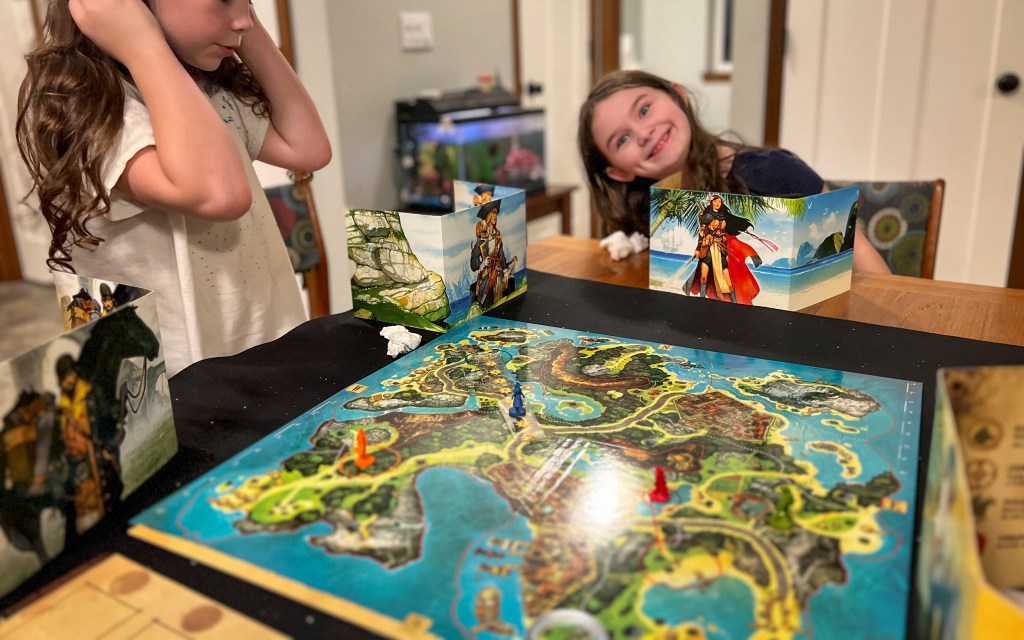
Treasure Island could also be a great game to play with your regular Blood & Plunder gaming friends for a quick and light experience. It could become very cutthroat with a competitive group of adults!
Look for more in this series of short reviews of Pirate themed board games here on Blood & Pigment.
Article by Joseph Forster
Additional Recommended Reading
- Treasure Island on BoardGameGeek
- Captain Silver: Revenge Island expansion for Treasure Island on BoardGameGeek
- Shut Up and Sit Down review of Treasure Island