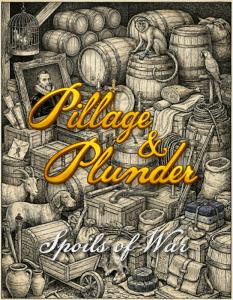
Pillage & Plunder: Spoils of War is a new fan supplement for Blood & Plunder from Final Stand Games. In this article I’ll cover what it does, why I made it, and where to get it. If you’ve ever felt like your buildings deserved more than a cover bonus, keep reading.
I’m Jason Klotz, lead designer and founder of the game studio and a longtime Blood & Plunder content creator. This supplement grew out of a problem that’s bugged me for years.
Introduction to Pillage & Plunder: Spoils of War
If you know me at all, you know I am a terrain guy first. Painting minis is great, but allow me to build a unique terrain piece or special display project, and I am in my element. When I walk the game halls at conventions, I am the one slowing down to look at the tables, not the armies on them. The terrain is what pulls me in every time.
I have built terrain for multiple games over the years. I have built foam-core hills, D&D dungeons and encounters, scratch-built buildings, store-bought MDF kits, and custom items using foam board and popsicle/stir sticks. When I go into a consignment store, I’m always on the lookout for toys and items I can convert or use in terrain builds.
So when I sit down to play Blood & Plunder, something has always bothered me. I love sitting at a tabletop covered with beautiful buildings. The terrain community around this game produces incredible work. And then the game starts, and those buildings become… Cover. Hardcover if you are lucky. They are tactically relevant but narratively empty. Aside from a few rare scenarios, nobody cares what is inside. Mostly, because there is nothing inside.
That felt wrong to me. Movies like Star Wars work because the universe feels lived in — and buildings on a wargaming table should too. A Spanish merchant’s house should feel like a place, and places have things in them worth fighting over. Raiding parties in the late 17th century didn’t kick down doors to use them as firing positions. They kicked them down because there was silver on the other side.
That is the problem Pillage & Plunder: Spoils of War was built to solve.
What Is Pillage & Plunder

Pillage & Plunder: Spoils of War is a fan supplement for Blood & Plunder that introduces two new systems to the game: a Search action that lets units ransack Structure sections during play, and Plunder Token rules that govern what happens once something worth taking has been found.
It is designed to drop straight into any standard land or amphibious Blood & Plunder scenario with no changes to your force construction. If you already own the Core Rules and have buildings on your table, you are ready to go.

How It Works
When a Unit takes time to explore a Structure, it may uncover valuables, supplies, or secrets left behind. This action represents a deliberate search of the room, tearing through crates, cupboards, personal effects, and hidden compartments in hopes of finding something worth carrying off. If you’ve played Zombicide, Descent, HeroQuest, or similar board/miniatures games, you’ll be familiar with the concept of searching rooms for gear, loot, and other items. This isn’t a new concept or game mechanic, but it is new for Blood & Plunder.
If you’ve used the Events tables, the flow will feel familiar.
The Plunder Table content is made up of 100 unique items and results across 10 categories:
- Coin & Valuables
- Weapons & Powder
- Provisions & Drink
- Trade Goods
- Documents & Intelligence
- Tools & Equipment
- Livestock & Animals
- Curiosities & Exotica
- Hazards & Misfortune
- Sundry Goods
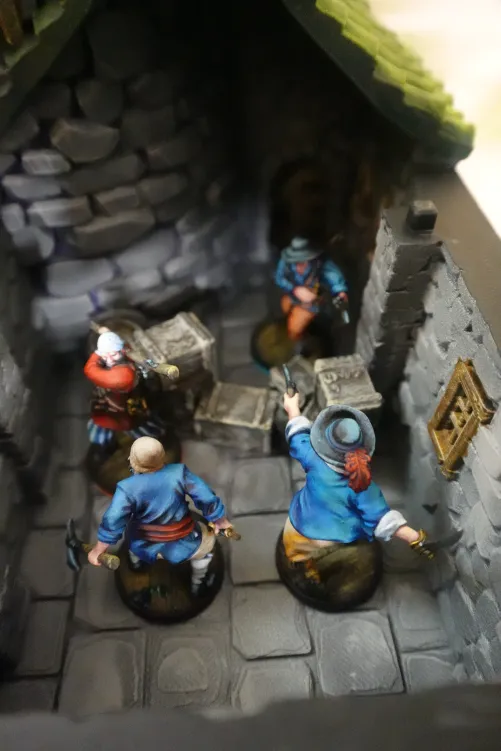
Spoils and Rewards With a Few Surprises
Most results give you something — a tactical benefit, valuables, or supplies. A smaller portion are complications or mixed outcomes, so searching is never entirely safe. Whether helpful or hazardous, these less common moments add texture and create stories players remember long after the game ends.
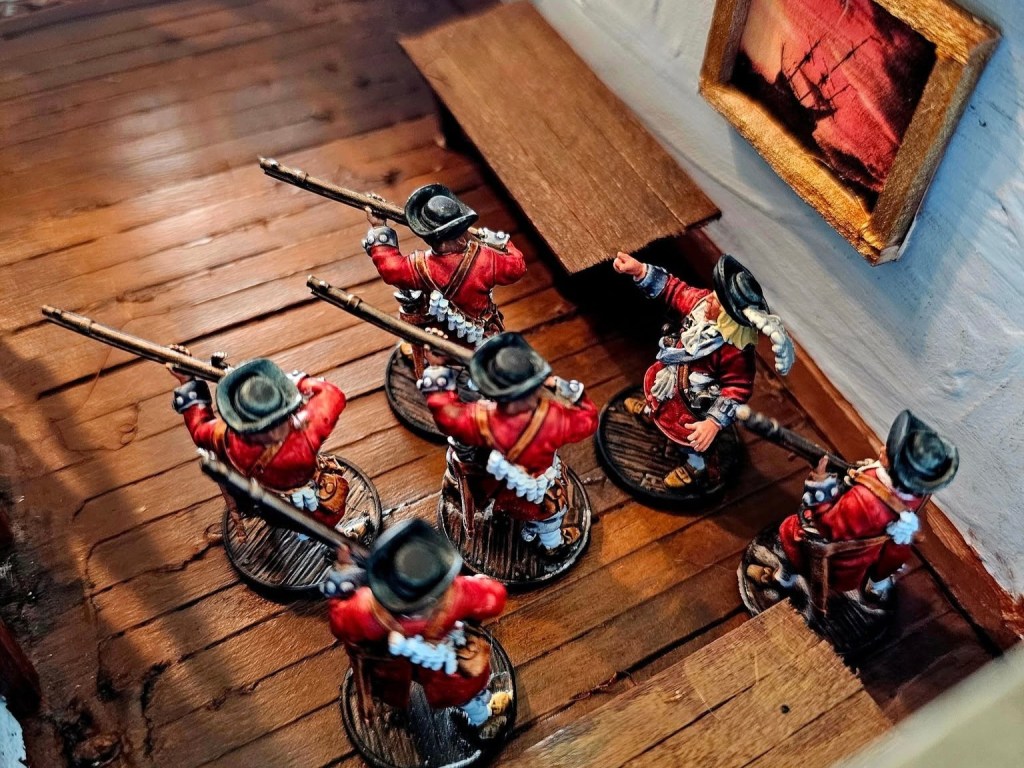
A Taste of What You Might Find
There are 100 unique items in the booklet in 10 distinct categories. The Plunder Tables cover a lot of ground, but I would summarize them into 4 “flavors”. Here is a sample from across the spectrum.
Fundamentally, the Plunder Tables are grounded in period history and material culture. You are not going to find a magic sword or a bag of holding like a D&D campaign. The results lean into the Caribbean and North American Colonial settings, focusing on trade goods, livestock, documents, weapons, and other items common to the era.
That said, not every result will satisfy strict historians, and that is by design. Some entries are more thematic and entertaining, and I make no apology for it. The goal is a supplement that captures the feeling of the period without being so strict that it stops being a game.
Plunder Table Result Samples
The Mundane
Practical finds grounded in period reality. Nothing glamorous, just simple trade goods, food, or items with a minor game effect.

The Valuable
Items worth fighting over and worth carrying off the table. These are the finds that may grant special abilities or, in rare instances, may inflict Strike Points.

The Unexpected
There are a few finds that create a minor story moment or force a decision that can affect the outcome, which adds some variety to gameplay.

The Whimsical
A handful of entries that may sput a laugh or a bit of randomness before they cause a problem or offer a reward. Some items are based on historical superstitions and beliefs, such as the Hand of Glory or Carved Santo Figure. Scattered through the tables are a few Easter Eggs that are deliberate nods to films, books, and games I love. I will not name them all here. Half the fun is finding them.

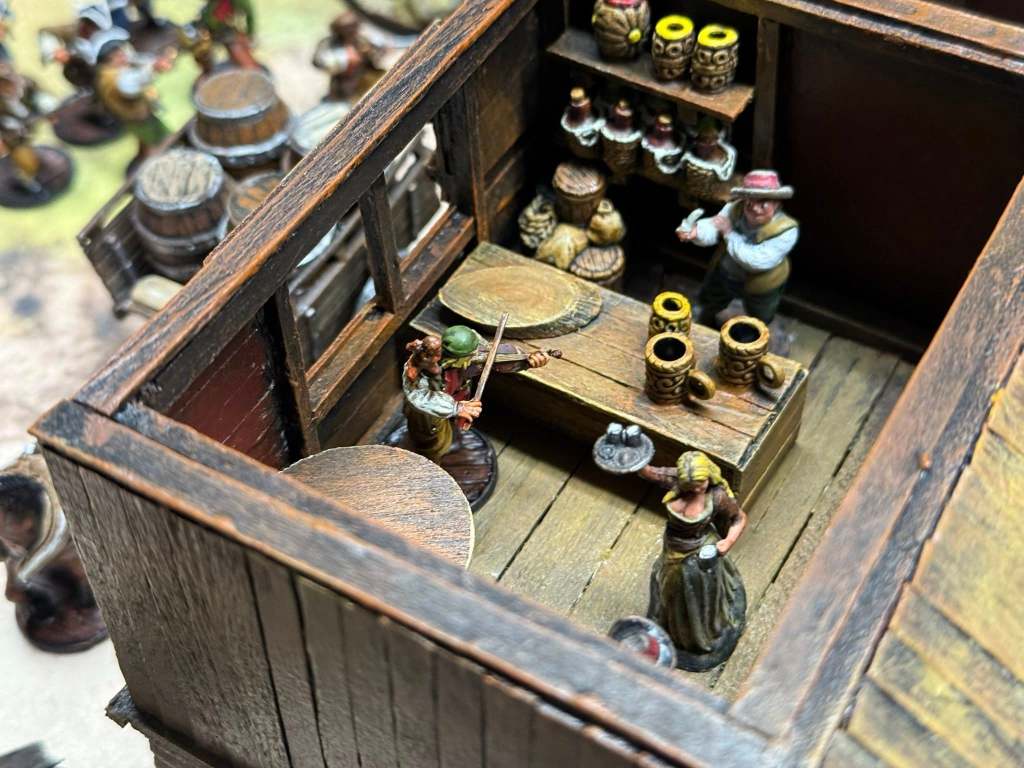
Simple Mechanics for Plunder Tokens
Rules for “prizes” exist in the Search & Recover Scenario in the No Peace Beyond the Line expansion book. This supplement expands those rules and fills in some of the cracks while keeping things simple and streamlined.
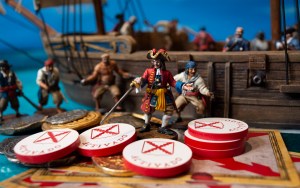
Plunder Tokens represent valuables discovered during play and act as movable objectives that Units can interact with. They can be carried, handed off, dropped through the natural flow of the game, or left in the environment for others to recover. Control of a token can come from physically holding it or securing it within areas a Force already controls, and tokens left in neutral or dangerous locations may become unclaimed or even destroyed. The result is that a token sitting in a burning building forces a choice: send a unit after it or let it go.
Where to Get Pillage & Plunder
Pillage & Plunder: Spoils of War is available in the Blood & Pigment Shop and on Wargame Vault as a PDF download. It is priced at $5 and can be used with any standard Blood & Plunder land or amphibious scenario.
This supplement has been developed with the blessing of Firelock Games and is an approved fan product. A copy of the Blood & Plunder Core Rules is required to use this supplement.

Conclusion
If you pick it up, let me know how it plays at your table. These rules were built because great terrain deserves more than a simple Cover bonus. Hopefully, this expansion will make buildings feel like places worth fighting over, not just fighting from. The Blood & Plunder community has always done incredible things with their terrain and tables, and this is one more tool to make those tables come alive. Hope you enjoy it.
— Jason Klotz