This Summer of Plunder 2026 campaign map system is new this year, and new mechanics come with a learning curve. After hearing some confusion in the community about how the map actually works, this article lays out the strategic fundamentals in plain language for everyone. If you are looking for an article that explains the rules in depth, try the 2026 Summer of Plunder Campaign Rules System.

Join me, Kaptain Klotz, as we discuss some of the finer points of the strategy and tactical elements of the campaign map. We’ll learn how the campaign map works with the changing theaters, discuss domination bonuses, the ramifications of sea lanes control, and why your votes matter.
It is not a comprehensive strategy guide, nor is it meant to be a directive for how to play. It is simply a breakdown of why certain decisions matter more than others on the map, and how every player, from the person who plays one game a week to the Commander coordinating dozens of votes, fits into the bigger picture.
Whether you are brand new to the campaign, a casual player wondering if your single vote actually matters, or a veteran looking to sharpen your understanding of the strategic layer, there is something here for you.
The goal is simple. Better inform the community to make it a more fun, more competitive, and more memorable campaign for everyone. Now, let us get into it.
3 Theater Windows — The Time Pressure Element
The three theaters don’t all run the same duration, which adds a layer of urgency and prioritization. Once a theater closes out, any opportunity to score new points there is gone forever after that.
- Weeks 1-3: SE and NE only. The SE theater closes after Week 6, so its domination bonus window is counting down from the start of the game.
- Weeks 4-6: All three theaters open at once. This is the busiest stretch of the campaign. The Caribbean opens fresh with neither alliance holding domination, the SE is approaching its deadline, and the NE has been running since Week 1. Alliances will need to make some real decisions about where to focus their votes and army points.
- Weeks 7-9: SE is done, NE and Caribbean remain. All the player votes that were going to SE locations need a new home. Alliances that have already built up a presence in the NE and Caribbean will be better positioned to make use of that energy.
| Theater | W1 | W2 | W3 | W4 | W5 | W6 | W7 | W8 | W9 |
|---|---|---|---|---|---|---|---|---|---|
| Northeastern | |||||||||
| Southeastern | |||||||||
| Caribbean |
The Southeastern Theater Window
The SE domination bonus is front-loaded, making early control worth more than late control.
- Because the SE domination degrades over time, early control has the highest value bonus
- Avoid over-investing in SE troop strength in later weeks, as the return on those army pts diminishes quickly
- When the SE theater closes after Week 6, any troops still sitting in SE locations are essentially locked in place on a theater that no longer generates points (think of it as garrison forces in a ceasefire).
- Finding the right balance of troops in the SE is its own strategic puzzle. Overcommit and you risk stranding valuable troops when the theater closes. Undercommit, and you hand your opponent uncontested locations and easy points.
- If one alliance abandons the SE while the other keeps logging games there, the active alliance may scoop up some abandoned locations and rack up victory points with minimal resistance. Walking away from a theater early could be gifting your opponent free VP every single week.
- Deciding where to transfer troops from the SE to the NE or the Caribbean is one of the key decisions of the mid-campaign. You can only transfer 5 troops per week, so begin planning SE troop redeployment via sea lanes BEFORE Week 6, not during it
The Caribbean Opens at Week 4
Neither alliance starts with Caribbean domination, making it the most open and contested theater in the campaign. The domination bonus grows over time, rewarding alliances that establish early footholds and hold the majority in the late game.
- Weeks 8 and 9 pay out the highest bonus of any theater at 4 pts per week, matching the NE flat rate, meaning the alliance that locks down Caribbean domination early and holds it through the final weeks collects the biggest per week bonus payout of the entire campaign.
- Do not wait until Week 5 or 6 to engage with the Caribbean. Early establishment is critical. There are several neutral territories up for grabs.
- Consider coordinating Oak & Iron votes toward Caribbean sea lanes as soon as the theater opens in Week 4. Expect your opponents to do the same!
- An alliance already spread thin across SE and NE will struggle to contest the Caribbean without advance planning
- The Caribbean is where the campaign can be won or lost in the final weeks
The Final Stretch: Weeks 7-9
The SE closes and all player energy shifts back to two theaters. Alliances that neglected NE and Caribbean positioning during the mid campaign will feel it acutely here. Large point swings are still possible, but require significant coordination and a clear sense of where remaining army pts are best spent… and some luck.
- Player votes previously going to SE locations need to be redirected immediately and deliberately
- Attrition will have set in, and Sea lane control becomes even more important for European reinforcements and being able to move troops around.
- NE domination becomes even more valuable in the final stretch. If the teams are close, it’s a tiebreaker; if there is a wide gap, it’s a catch-up opportunity.
- The Caribbean is the largest theater and the hardest to control for domination, but there are more opportunities for location points.
- As the game winds down, consolidation may be a better strategy. It may be beneficial to identify which theater gives your alliance the best return on remaining army pts and concentrate there rather than spreading thin across both theaters.
Strategic Considerations for Map Locations
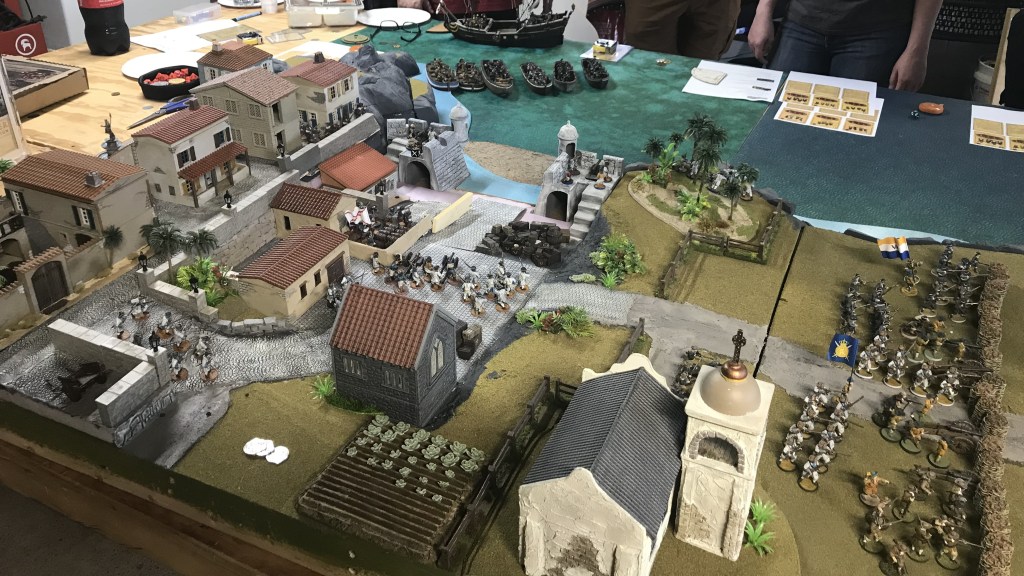
Not all Locations are equally valuable. Here are a few things to think about on the map:
- Threat Level: How vulnerable is it to attack based on the current garrison and adjacency to enemy locations? How much power can it project?
- Strategic Importance: Does holding or losing this location affect domination count, block a route, or open a path deeper into a theater
- Choke Point: Some locations may sit on critical routes where losing them cuts off access to multiple other locations
- Attack Cost: Roughly how many troops would be needed to take it based on the current garrison? How many are you going to need AFTER you win?
- Defense Priority: Is this a location worth reinforcing heavily or an acceptable loss?
- Ripple Effect: What does flipping this location open up or close off for either alliance on the next turn? Can you move troops to the location from other locations to reinforce your position? Does it make you vulnerable to a multi-prong attack?
Prioritize Your Targets by Value
The majority of points in the campaign come from controlling physical locations on the map. Here is a breakdown of the territories per theater in descending order. High-value locations are more valuable targets because they are strategic hubs. But they are harder to hold because they have lots of connection points.
Location Values by Theater
| SE Theater | Pts/Wk |
|---|---|
| Charles Town | 6 |
| St. Augustine | 4 |
| Mobile | 4 |
| Pensacola | 3 |
| Mission San Luis | 2 |
| Hollatchatroe | 2 |
| Chicacas | 2 |
| – | |
| – | |
| – | |
| – | |
| Total Pts/Wk | 23 |
| CAMPAIGN TOTAL | 138 |
| NE Theater | Pts/Wk |
|---|---|
| Boston | 8 |
| Quebec | 7 |
| Montreal | 5 |
| Albany | 4 |
| Fort St. Anne | 3 |
| St. Johns | 3 |
| Placentia | 3 |
| Norridgewock | 2 |
| Port Royal | 2 |
| – | |
| – | |
| Total Pts/Wk | 37 |
| CAMPAIGN TOTAL | 333 |
| Caribbean Theater | Pts/Wk |
|---|---|
| Havana | 8 |
| Curacao | 6 |
| Jamaica | 6 |
| Portobelo | 4 |
| Nassau | 3 |
| Puerto Rico | 3 |
| Laguna de Terminos | 2 |
| Montserrat | 2 |
| Antigua | 2 |
| Saint Eustatius | 2 |
| Cape Canaveral | 2 |
| Total Pts/Wk | 40 |
| CAMPAIGN TOTAL | 240 |
Understanding the “Risks” of the Map
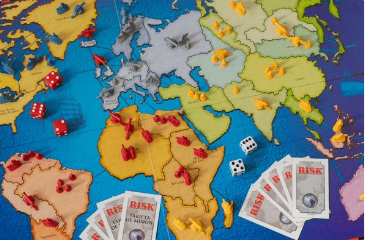
If you have ever played the classic board game of RISK, you already have a minor head start on understanding how this campaign system works. The two share enough common ground to make the comparison useful, but the Summer of Plunder is a different beast in some important ways.
How It Is Similar to RISK
- Adjacency matters. You can only attack or move to connected locations, just like RISK territories
- Territory control matters. Controlling more of the map than your opponent is the path to victory in both games
- New Armies Each Turn. At the start of each turn (week) alliances will generate new Troops to deploy on the map.
- Armies accumulate and contest locations. Attacking and defending forces cancel each other out in a similar way to RISK combat
- Domination wins. In RISK, when you control a continent, you get a boost to your armies. In SOP, we have a Domination Bonus when you control more than half of a theater.
How It Differs From RISK
- Reinforcement Mechanisms. Risk generates armies based on the amount of territory you control. SoP Nations all generate exactly 11 armies every week (33 + 1 for Unaligned per Alliance).
- Reinforcement Bonuses. In RISK, you can collect cards during combat for a reinforcement surge or continental bonuses. SoP gives a small 2-army bonus for Sea Lane Control.
- You do not directly control your armies. In RISK, you can push and pull armies in every territory. Here, your armies are more static once deployed.
- The Map Changes. Because the theaters shift in availability, it adds a strategic layer that RISK does not have. You cannot be everywhere at once, and there are tradeoffs in strategies.
- Sea lanes add a naval dimension that RISK completely lacks.
- The map has a clock. Theaters open and close on a schedule, creating urgency and a phase-based strategy that RISK lacks.
- Coordination replaces dice. RISK combat is resolved randomly. Here, the outcome is determined by how well your community organizes and concentrates its votes.
- Incremental Changes. In RISK, you can take as many territories as you can roll through in a single turn. In the campaign, the combat can only progress between adjacent locations one week at a time, making every location contested and adjacency more meaningful.
The Domination Bonus — A Strategic Teaching Guide

What Is the Domination Bonus?
Each of the three theaters on the campaign map has a Domination Bonus. If your alliance controls more than half the locations in a theater at the end of a week, you earn 4 extra Campaign Points on top of everything your locations already produced that week.
Think of it like scoring a long combo streak in a martial arts video game. When you charge it up enough, you get a little boost. While the Domination bonus cannot win you the campaign on its own, it can absolutely affect the outcomes week to week and will change the strategy of play.
Domination Bonuses Breakdown by Theater
| Theater | Wk 1 | Wk 2 | Wk 3 | Wk 4 | Wk 5 | Wk 6 | Wk 7 | Wk 8 | Wk 9 | Total |
|---|---|---|---|---|---|---|---|---|---|---|
| NE | 4 | 4 | 4 | 4 | 4 | 4 | 4 | 4 | 4 | 36 pts |
| SE | 4 | 4 | 3 | 2 | 1 | 1 | — | — | — | 15 pts |
| Caribbean | — | — | — | 2 | 2 | 3 | 3 | 4 | 4 | 18 pts |
Total domination points available across the whole campaign: 69 pts. Not bad for something tagging along with winning a theater!
How Important Are Domination Points Per Week?
Understanding the true value of domination bonuses requires looking at both the weekly payout and the timing of when those points are available. Not all domination bonuses are created equal. Thematically, these bonuses are meant to reflect the winding down or the escalation of tensions and conflicts in the regions.
- The NE bonus is the simplest to evaluate. A flat 4 points per week for all 9 weeks. Consistent, predictable, and the largest total payout of any single bonus at 36 points.
- The SE bonus is front-loaded. More than half its total value (8 of 15 points) is earned in just the first two weeks. By Week 5, it has degraded to a single point, making early SE domination significantly more valuable than late SE domination.
- The Caribbean tells the opposite story. It starts at just 2 points per week when it opens in Week 4 and builds to its peak of 4 points per week in Weeks 8 and 9. An alliance that establishes Caribbean domination early and holds it through the final weeks collects the biggest per-week bonus payout of the entire campaign
The Area Denial Option
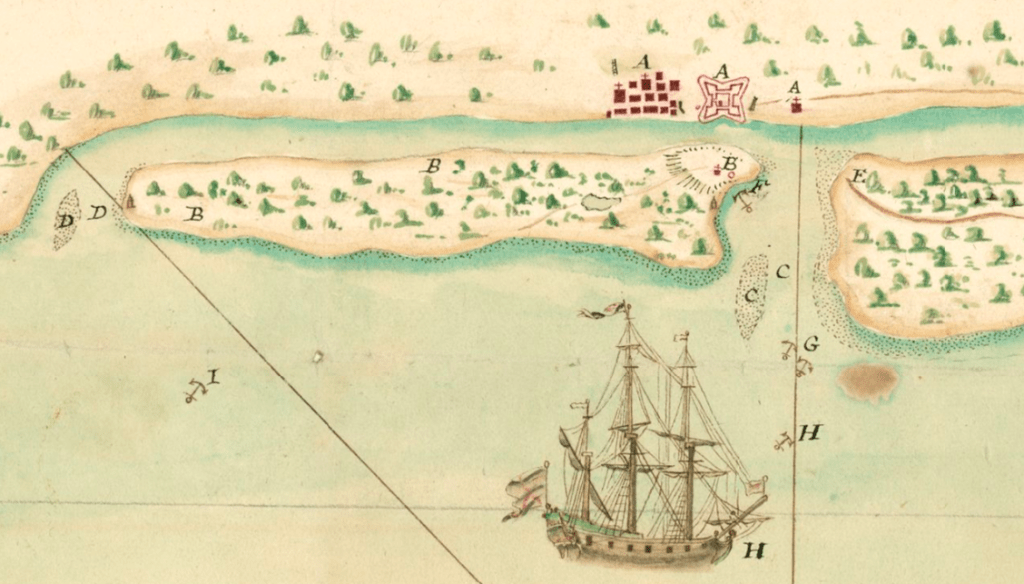
The domination bonus is all or nothing. One alliance gets it, or nobody gets it. There is no splitting it down the middle.
That means there are actually two ways to get value from a domination bonus situation. You can try to WIN it for yourself, or you can try to make sure your opponent DOES NOT get it either.
For instance, if one alliance holds 7 of 9 locations in the NE theater. If the opposing alliance flips just 3 of those locations, the leading alliance drops to 4, which is below the majority threshold of 5. Nobody collects the bonus that week.
Unaligned locations deny ownership. Even if you don’t “win” a location, stalling it to zero is valid. If you aren’t sure you can win, you might be able to push to the edge
Think of it like fouling out the other team’s best player. Nobody scored, but the whole game just changed.
Whether to chase the domination bonus outright or simply deny your opponent a theater is worth a discussion. Whether to commit more troops to a losing theater or focus all in one or not is a real tradeoff, and it depends on your alliance’s overall position on the scoreboard.
What Does the Domination Bonus Mean for Your Alliance Practically?
Every alliance has a finite number of army points to spend each week. Understanding how domination bonuses work gives commanders and players the information they need to make smart choices about where those points go.
Some questions worth thinking about each week:
- Does your alliance currently hold a domination bonus, and is it worth defending?
- Is your opponent collecting a domination bonus that could be disrupted?
- How many weeks are left in a theater, and does that change the value of chasing its bonus?
- What is your current points position, and does that make denying more attractive than winning?
There are no universally right answers to those questions. The map, the score, and the weeks remaining will all influence what makes sense. That is what makes the campaign interesting.
Takeaways from the Domination Bonus
- High Value Locations are worth more. Locations are the real engine of your campaign score. 1 Location can be worth twice the value of the bonus.
- Let domination be a side effect of good play. If your Alliance is winning or holding locations efficiently, theater control tends to follow on its own. Consistency is typically better than big wins/losses
- When you are behind, think about denying instead of winning. Knocking an opponent below the domination threshold costs less than taking the whole theater and still slows them down every single week.
- Do not sleep on the SE bonus. That theater closes after Week 6, and any week you miss is gone forever. Decide now what your long‑term plan is for the SE and how you’re handling the transition into Weeks 5 and 6 — both your attacks and your defenses. And how you are/aren’t going to redistribute your troops.

The Importance of Sea Lanes
The Age of Sail is an era where the seas were the highways of the world. No army moved, no supply line functioned, and no empire expanded without controlling the waters around it. Queen Anne’s War was not just fought in forests and frontier forts. It was fought in harbors, on open water, and along the shipping routes that connected colonies to their home nations.

Oak & Iron players are running their own mini campaign on the water, but the outcomes of their games ripple across the entire map in ways that the land game can’t ignore.
What Are Sea Lanes?
Sea lanes are controlled exclusively through Oak & Iron games and represent the naval struggle for dominance along the major shipping routes of the campaign.
- Sea lanes are controlled exclusively through voting from Oak & Iron games
- There are 6 total sea lanes, 2 per theater
- Unlike land locations, ownership does not carry over from week to week. Control resets to neutral every single week, meaning last week’s victory earns you nothing this week
- Neither alliance ever permanently owns a sea lane
How Sea Lane Control Works
Oak & Iron players within an alliance pool their votes together, and the results determine which sea lanes their alliance contests that week.
- All three nations within an alliance pool their Oak & Iron votes
- The top-voted sea lane earns 2 Naval pts, the second earns 1, and the Admiral gets 1 choice pt to allocate independently
- Whichever alliance accumulates the most Naval pts on a given sea lane wins control for that week
- A tie means neither alliance benefits
- Winning a sea lane unlocks army movement, something no land player can do on their own. Each level of control opens up a different strategic tool.
- Control of 1 sea lane in a theater allows the movement of up to 5 armies between friendly locations within that theater
- Dominating both sea lanes in a theater also grants 2 free reinforcement armies from Europe
- Control of at least 1 lane in 2 different theaters allows the movement of up to 5 armies between theaters

Reinforcements From Europe
The only way to add new armies to the map outside of weekly player votes is through European reinforcements, unlocked exclusively by controlling both sea lanes in a single theater.
- 2 armies per week adds up quietly over time. An alliance controlling both sea lanes for all 9 weeks can add 18 free armies to a theater by the end of the campaign. An alliance that consistently controls both sea lanes in a theater is not just moving armies, it is growing them. It is not dramatic week-to-week, but over the course of the campaign, those free armies accumulate into a meaningful advantage.
- This bonus is particularly valuable in theaters where your alliance is running thin on troops
- The benefit of 2 free armies may not add campaign points directly, but they can be enough to flip or secure a location.
- Reinforcements from Europe arrive at the start of the new Week, immediately after results are tallied and before any strategic choices are made. They resolve before troop‑movement limits for that Week (including sea‑lane closures or theater lockouts) take effect.
Sea Lane Strategy Considerations
The Single Theater vs. Multiple Theater Decision
There is a genuine tension between concentrating Oak & Iron votes on one theater versus spreading them across multiple theaters, and both approaches have real tradeoffs.
- Because of the limited number of naval resources, no single Alliance can control them all, no matter how they vote.
- Concentrating votes on one theater increases the odds of owning both sea lanes and allows you to move troops around in that theater.
- Splitting votes across multiple theaters opens up cross-theater movement and broader denial options, but risks winning “nothing” if the opponent concentrates their naval power in one place
- Controlling one lane in two different theaters enables cross-theater movement but sacrifices the reinforcement bonus
- The right call depends on where your armies are, where they need to go, and what your opponent is doing on the water
- Weeks 5 and 6 are critical in the Southeastern Theater because they determine whether your Alliance can still move troops in or out during a pivotal moment in the campaign.

Denying Your Opponent
Sea lanes follow a similar area-denial principle to domination bonuses. Sometimes the goal is not to win a lane for yourself, but to prevent your opponent from using it.
- Winning just one of the two sea lanes in a theater blocks the opponent from securing the reinforcement bonus
- Denying both sea lanes in a theater shuts down the opponent army’s movement entirely for that week
- A well-timed denial can strand opponent armies in a closing theater with no escape route
The SE Theater Closing Connection
Sea lanes become especially critical as Week 6 approaches, when the SE theater closes, and armies have nowhere left to go without naval support.
- Armies stranded in the SE when the theater closes cannot move and are “lost.”
- An alliance that plans ahead and secures the relevant sea lanes can redeploy those troops into active theaters before Week 7 begins
- Neglecting Oak & Iron may leave valuable armies sitting idle on a closed map for the rest of the campaign
- The window to act is not Week 6. It is the weeks before it
- Remember, you can only move 5 troops per cross-linked theater
Practical Considerations for Commanders and Players
Oak & Iron players and land commanders are playing two sides of the same coin, and coordination between them is just as important as coordinating land votes.
- A single Oak & Iron game can influence army movement worth far more than its Naval pts suggest
- The number of Oak & Iron games played is smaller than the number of Blood & Plunder and Port Royal games. This increases the importance of coordination and planning.
- The Admiral’s weekly choice pt carries real weight when applied thoughtfully
- The ability to move armies freely across a theater, or deny that same ability to your opponent, can be the difference between a well-defended position and an exposed one.

Playing Together: Coordination, Communication, and Every Vote Counts
Why Coordination Matters
- The campaign is designed so that individual player votes combine into National team points, which in turn combine into Alliance-wide pts.
- Without coordination, three nations can accidentally split their force across vastly different locations and accomplish nothing offensively or leave critical areas undefended.
- With coordination, even a modest number of players can concentrate enough army pts to flip a location or deny a domination bonus
- Discord is the engine that makes coordination possible. It is where Commanders share weekly priorities, players report what they are planning, and alliances function as a team rather than a collection of individuals
The Danger of Voting Without a Plan
- Every vote that goes to a random or low-priority location is a point not going where your alliance needs it
- Splitting votes too broadly potentially dilutes your alliance’s impact across the map
- A location that finishes >=5th place among your nation’s votes earns nothing. Those pts are effectively wasted
- Uncoordinated voting does not just fail to help. In close contests, it can actively hurt by pulling army pts away from locations that needed just one or two more to succeed
- Checking in with your Commander and teammates before submitting is one of the most impactful things a player can do
Every Vote Matters
This one is for the casual players who wonder whether their single game even matters. It does. Here is why:
- Army pts from all three nations stack together on the same location. It’s not an exaggeration to say that a single 1 pt vote can be the difference between a location finishing in 3rd place versus 4th place within your nation’s results, which is the difference between earning army pts and earning nothing. This has proven true multiple times over the last 5 years.
- It is a global campaign, but that sounds bigger than it is. With fewer than 1,000 players worldwide, mathematically, there are fewer than a few dozen voters per location (if they spread out). If the results of two locations are close, it doesn’t take many points to swing the outcome. There are times during the campaign when a single pt can legitimately tip a sea lane battle, push a location over a threshold, or deny your opponent a domination bonus
- The campaign has no minimum contribution. Every game played, every entry submitted, and every vote cast is an actual contribution to your alliance’s standing on the map.
- The players who feel like their contribution is too small to matter are often the ones whose votes end up being the most decisive.
How to Make Your Vote Count MORE
- Check the Summer of Plunder Discord before submitting your entry
- Know your Commander’s priority locations for the week
- If you cannot check Discord, voting for a location your alliance already holds is always a safe defensive contribution
- Teaching a new player doubles your pts for that game and brings another vote into the alliance fold
- Playing at a public venue earns a bonus pt that costs you nothing extra
Final Thoughts
The campaign map has a lot of moving parts, and if this article felt like drinking from a firehose at times, that is completely understandable. For as much as is going on under the hood, we think it is a fairly elegant system, and we hope this breakdown makes it feel a little less mysterious and a little more fun to engage with.
The best part about Summer of Plunder is that YOU get to decide how deep you want to go. Just want to log some games, have a good time, and maybe walk away with some prizes? Absolutely welcome. Want to just play some cool new scenarios? Sure. Go for it. Want to dive into the crunchy strategy, coordinate with your Commander, and obsess over controlling sea lanes and domination bonus math at midnight? There is plenty of room for that, too!
At the end of the day, Summer of Plunder is about what it has always been about. Getting your models on the table, rolling some dice, and spending time with friends, strangers, and the occasional Blundermonkey. Everything else is really just an excuse to do more of that. And remember if things aren’t going your way, you don’t have to resort to pistols; it’s just a game.
Keep checking in, keep logging games, and keep watching the map. There may or may not still be some surprises on the horizon before this campaign is done. (wink)
See you on the map… err… Discord.

Pingback: Prizes for Week 2 - 2026 Summer of Plunder - Blood & Pigment
Pingback: Prizes for Week 3 - 2026 Summer of Plunder - Blood & Pigment