The world of Blood & Plunder covers a fairly expansive timeframe from the 17th-18th Centuries and reaches into theaters from South America to the Canadian region of North America. But the majority of the action happens in the Caribbean regions of the Spanish Main. That region is lush with thick jungles and palm trees. So today that’s what we’re going to talk about… Palm Trees & Jungle Wargaming Scatter Terrain.
In tabletop wargaming, nothing is more important than …. the well… the tabletop. Obviously, you have to have miniatures, dice, tokens and all the things to play a game. But for me, the tabletop is the foundation the rest of the game stands upon. And it’s the terrain that makes all the difference in the “wow” factor of the game. A well-built gaming table with an immersive gaming environment significantly enhances the overall experience. In a pirate-themed wargame that could mean open seas, Caribbean islands with white sandy beaches, jagged rocks, palm trees, and jungle terrain.
What is Scatter Terrain?
Scatter terrain refers to generic terrain objects that can be “scattered around” on a wargaming board that doesn’t play a major role in the overall objectives, but may provide cover or affect movement. It tends to be generic items like trees, crates, or rocks. But not all scatter terrain is created equal. There are things to consider when building your tree bases or jungle terrain. Below are some of my top tips/suggestions for building your own scatter terrain.

Table of contents
- What is Scatter Terrain?
- Tips for Making Wargaming Scatter Terrain
- What Should You Use To Make Your Tree Bases?
- Where to Buy Palm Trees and Jungle Terrain for Scatter Terrain
- How to Building Your Own Modular Palm Tree Scatter Terrain
- OPTIONAL RULE: LIMITED VISIBILITY
- Gallery of Palm Tree and Jungle Scatter Terrain for your Pirate-Themed War Games
- Conclusion
- Additional Content Suggestions
Tips for Making Wargaming Scatter Terrain
In this section, we briefly delve into a few key tips for crafting compelling scatter terrain to enhance your wargaming experience. If you’re new to terrain building, hopefully, it will offer some valuable insights on maximizing playability, unleashing creativity, and elevating your tabletop battles.
Scale and Proportions
Blood & Plunder is a 28mm scale miniature game or roughly 1:60 scale. If you are looking at model train terrain the best two options are S-Scale (1:64) which runs a little small or O-Scale (1:48) which runs a little big. As a whole, I prefer larger terrain over smaller, especially with trees.

- Scaling your terrain elements appropriately for miniatures helps to maintain a realistic visual balance. Some plastic trees may appear too small or too large, looking awkward on the gaming table. Fortunately, most small trees can be clipped to function as bushes.
- While building terrain, it’s important to keep one of your miniatures nearby and periodically hold it up to the terrain to ensure what you’re doing fits the proper scale.
- When selecting terrain or building custom pieces, the leaves on flora and fauna are what help keep things looking realistic. Think about the size of leaves in real life. Plants with leaves that are larger than a minis look a little odd. A few on the table may look ok, but if there is a lot, it feels out of perspective.
- Coconuts tend to be about the size of a human head or smaller which can help determine the scale of palm trees.
Playability and Miniature Placement
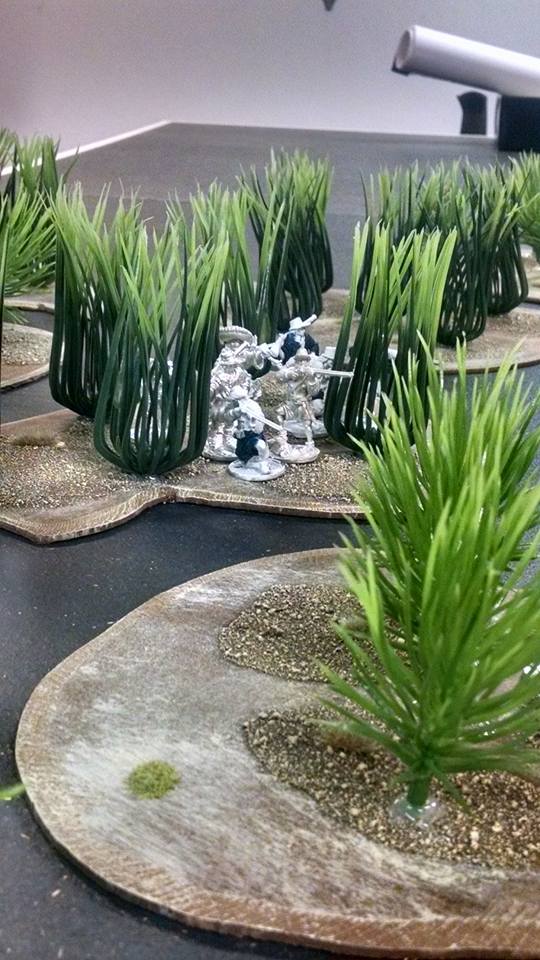
Real jungles are dense with flora and fauna, hindering movement and visibility. However, replicating such complexity in terrain can impede miniature gameplay.
- Dense jungle terrain looks good but translates to impassable regions where models can’t move. If you’ve ever been to the Caribbean, that is 100% true to real life, but if you do 100% impassable terrain it severely limits unit movement and makes it hard to play.
- Be sure to design terrain with enough open spaces for placement and movement of miniatures during gameplay. Overcrowding the surface of the area terrain makes it impossible for minis to move into the piece.
- Adding some pathways or walkways that restrict movement in the areas creates interesting bottlenecks or limiting movement to offset the benefits of being in cover.
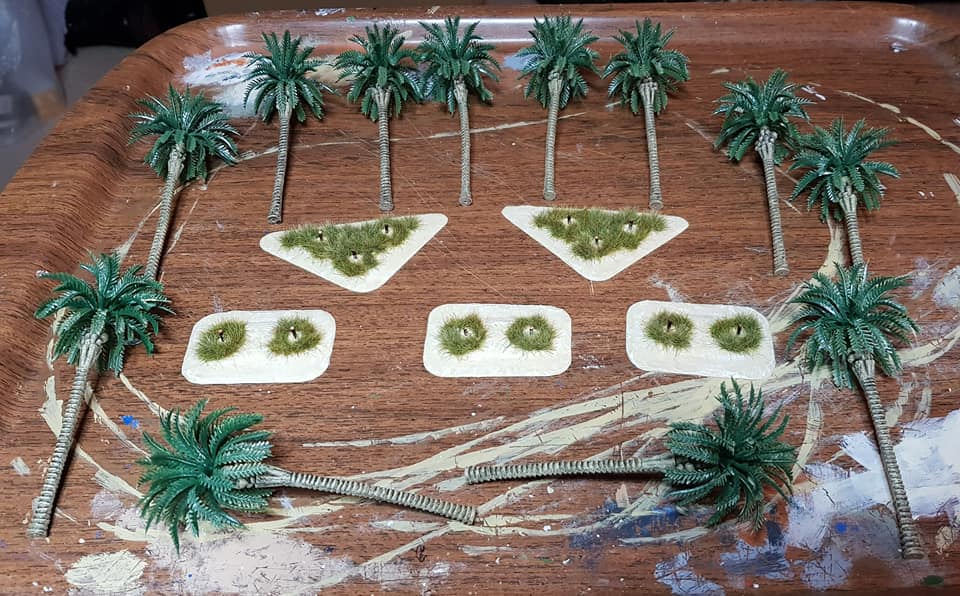
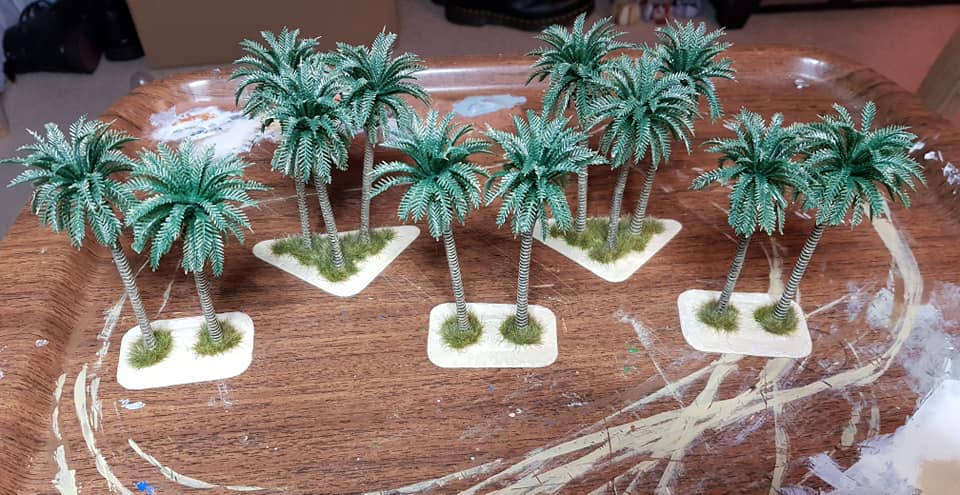
- Modular designs with trees and scrub bushes on thin MDF discs or washers allow easy adjustment, though they slightly increase terrain height.
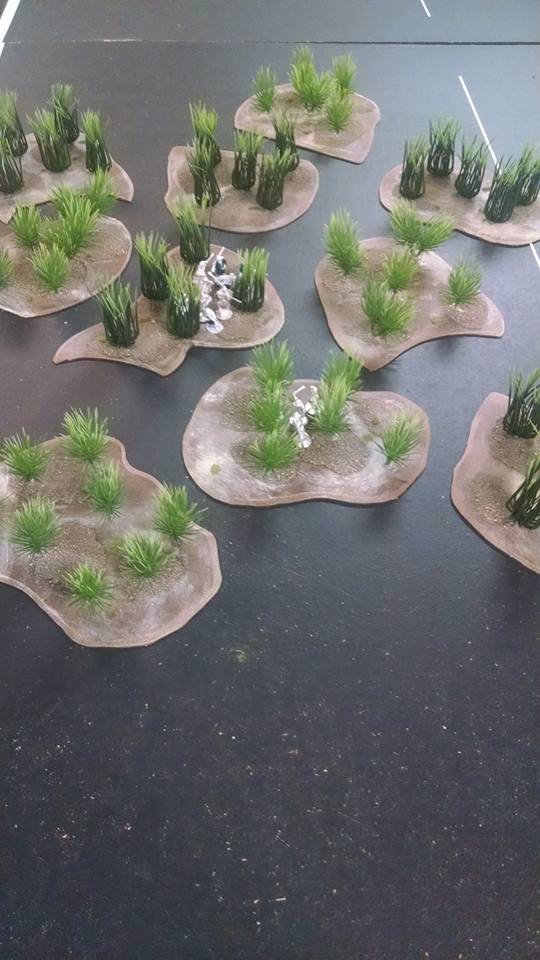
- I like putting trees and scrub brush on thin MDF discs or washers to make them modular. I then build flat open-area terrain templates and stack the trees/bushes on top. The benefit is that this allows you to shift your trees and push them out of the way to place minis in the area. For gameplay purposes, it makes things exponentially easier.
Dense Jungle Terrain

Sparse Jungle Area Terrain

Replayability and Modularity
- Creating “generic” modular pieces allows you to rearrange your game boards to keep games dynamic and offer additional versatility in scenarios.
- Some folks like to use round discs or squares for everything. While that is simple, it leads to cookie-cutter layouts that are all the same. Using oblong shapes automatically allows you to add variety.
- Attaching trees to a fixed board layout where you have 2’x2′, 4’x4′ or larger segments may look more natural, but can lead to repetitive gameplay as players learn optimal cover spots. Keeping trees separate from the board allows for customization and increased replayability.

Transportability & Durability
- If you travel with your games, you may need to consider the ease of transporting your terrain. Opting for lightweight materials and designs that can be disassembled or stacked is a plus. This favors the style where trees are either mounted on discs, magnetized or use pins to insert them into the bases on the fly.
- Designing tree-based for efficient storage can be challenging. Under-bed storage containers are one of the best options. However, these containers have a 7″ height limit. Keep that in mind when building things as putting 6″ trees on 1-2″ foam terrain is problematic if the lid has a dip in it. Taller 8-9″ tree models which won’t fit. You can lower taller trees by 0.25-5″ by mounting them at an angle or hitting them with a hairdryer/heat gun to bend them.
- If you transport things a lot, consider using more durable materials like MDF rather than cardboard or foam.
- Sealing your terrain with a sealer can help it withstand regular handling during gameplay and packing it in and out of storage. Rather than use expensive aerosols, I opt to coat mine with 2-3 coats of watered-down PVA/white glue from the dollar store (50/50 mix) using a cheap hand sprayer. The glue route takes longer to dry and finish, but it’s MUCH cheaper. If you buy the glue at “back to school” you can get it for a fraction of the price. I’ve found bottles for as low as $0.10-0.25 apiece!
- Ensure that terrain features are stable and won’t pose a hazard of tipping over during gameplay. I sometimes use small rocks or washers at the base to add weight to the bases.
- Avoid leaving sharp edges on rocks, wood, or other structures. You don’t want to risk scratching up your minis and ruining paint jobs.


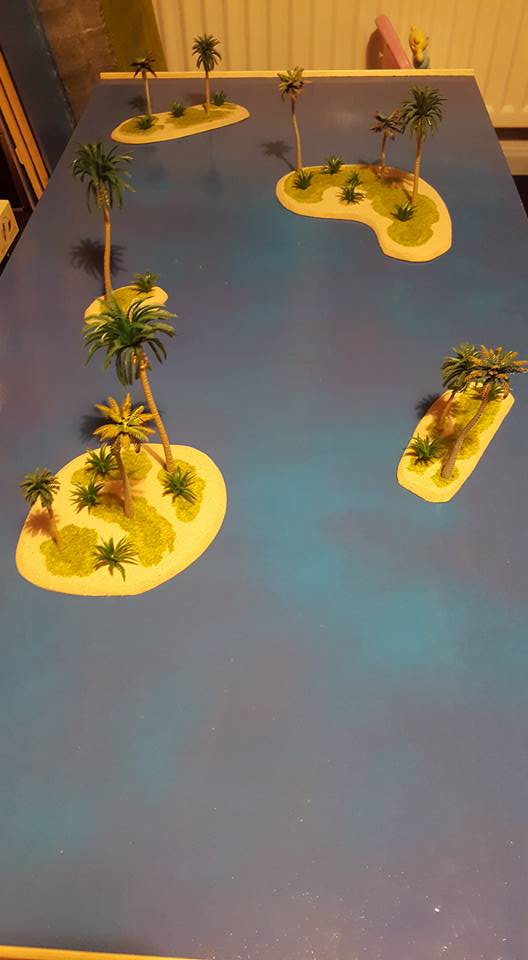
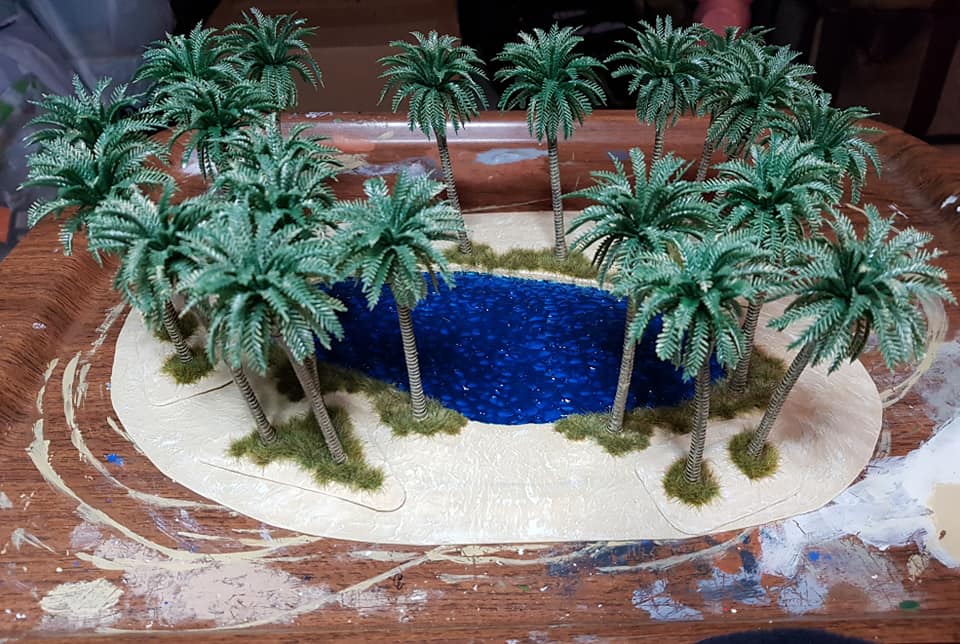
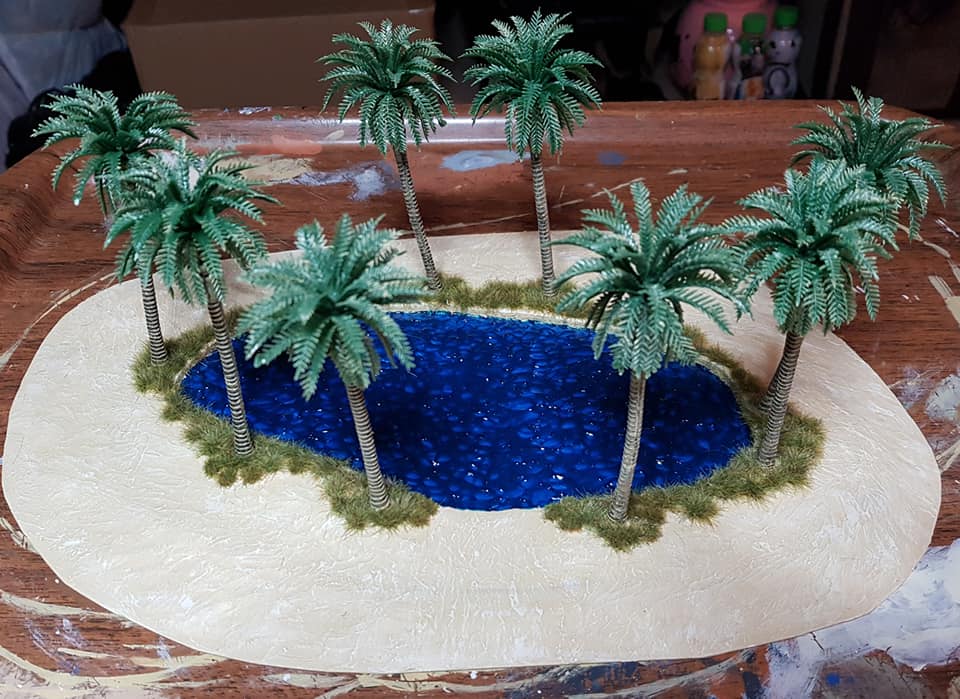
An EXCELLENT example of making terrain modular and transportable by Mick Allen. The water oasis and area pieces are separate from the small palm trees. Since all of the trees are removable it works well for changing the setup and ease of storage and transport
Visibility, Elevation, and Line of Sight
Consider the game’s tactical elements when building terrain, ensuring it complements gameplay.
- Factor in line-of-sight mechanics when placing taller elements on bases. Do you want partial cover or total obscurement for minis?
- Introduce various elevations for added visual appeal, but keep in mind the 1″ threshold triggering a Climb action. Keeping the height clear can avoid potential disputes about movement and line-of-sight before gameplay begins.
- Note that units making a ranged attack from an elevation of 2” or higher than the defending unit inflict a +1 penalty to ranged saves. The ease of accessing these elevations is a factor. When units move into them, they tend to camp there for most of the game. Creating too many of them can slow down your gameplay and units sit back and snipe at range.

What Should You Use To Make Your Tree Bases?
- Chipboard/Cardboard: This is the easiest and cheapest option as it’s pretty much “free” if you use recycled cereal boxes or shipping materials. They can be susceptible to warping over time, especially when exposed to moisture.
- Foam Core: Many dollar stores have foam core poster boards. These are among the cheapest options available. The downside is they are lightweight and tip over easily. They are also a little more susceptible to damage. But if you put some drywall compound or modpodge on them you can toughen them up. Adding a few small rocks and pebbles as part of the base can help minimize tipping.
- CDs: For you young people those are the round shiny things like records that music used to come on. These are excellent for durability and precut. Unfortunately, they are all the same size and can make the board super generic. But they are solid options to work in the mix for all manner of terrain.
- MDF: This is my personal preference and recommendation. It’s sturdy and heavy enough to keep things from tipping over. The downside is heavier and a lot of it makes for heavier transport.
- Water bottle/soda/Pringles can lids: These can be sanded/flattened to use as the base for the trees themselves and used to make the tree markers that you place on another larger area terrain piece.
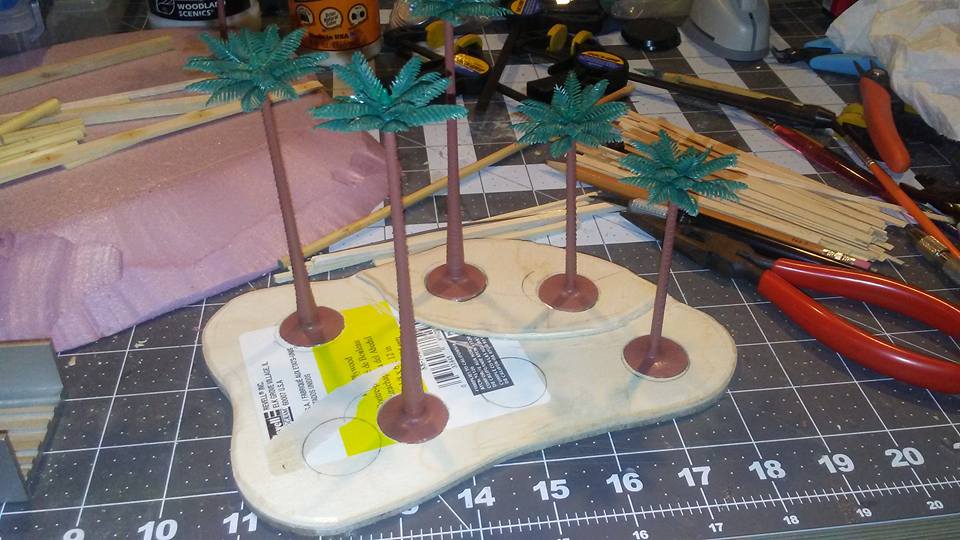
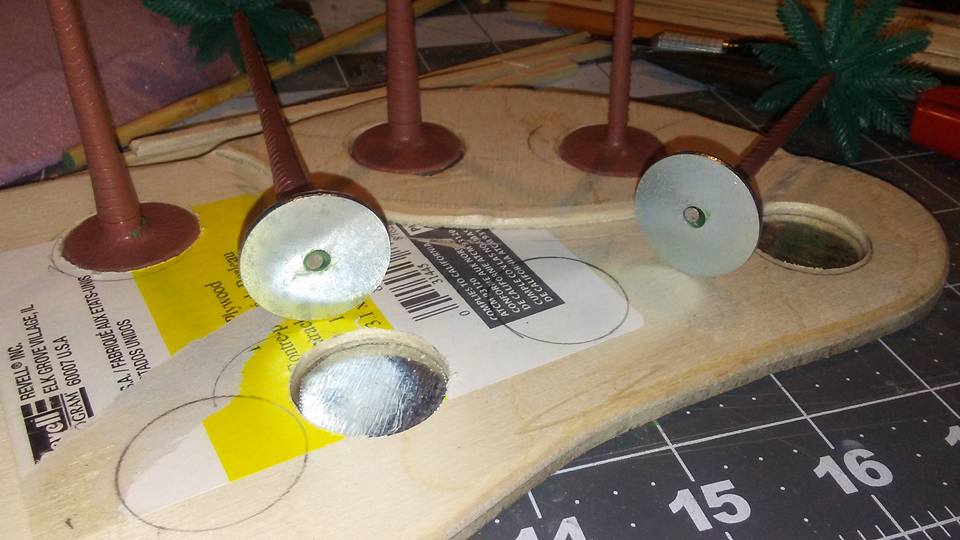
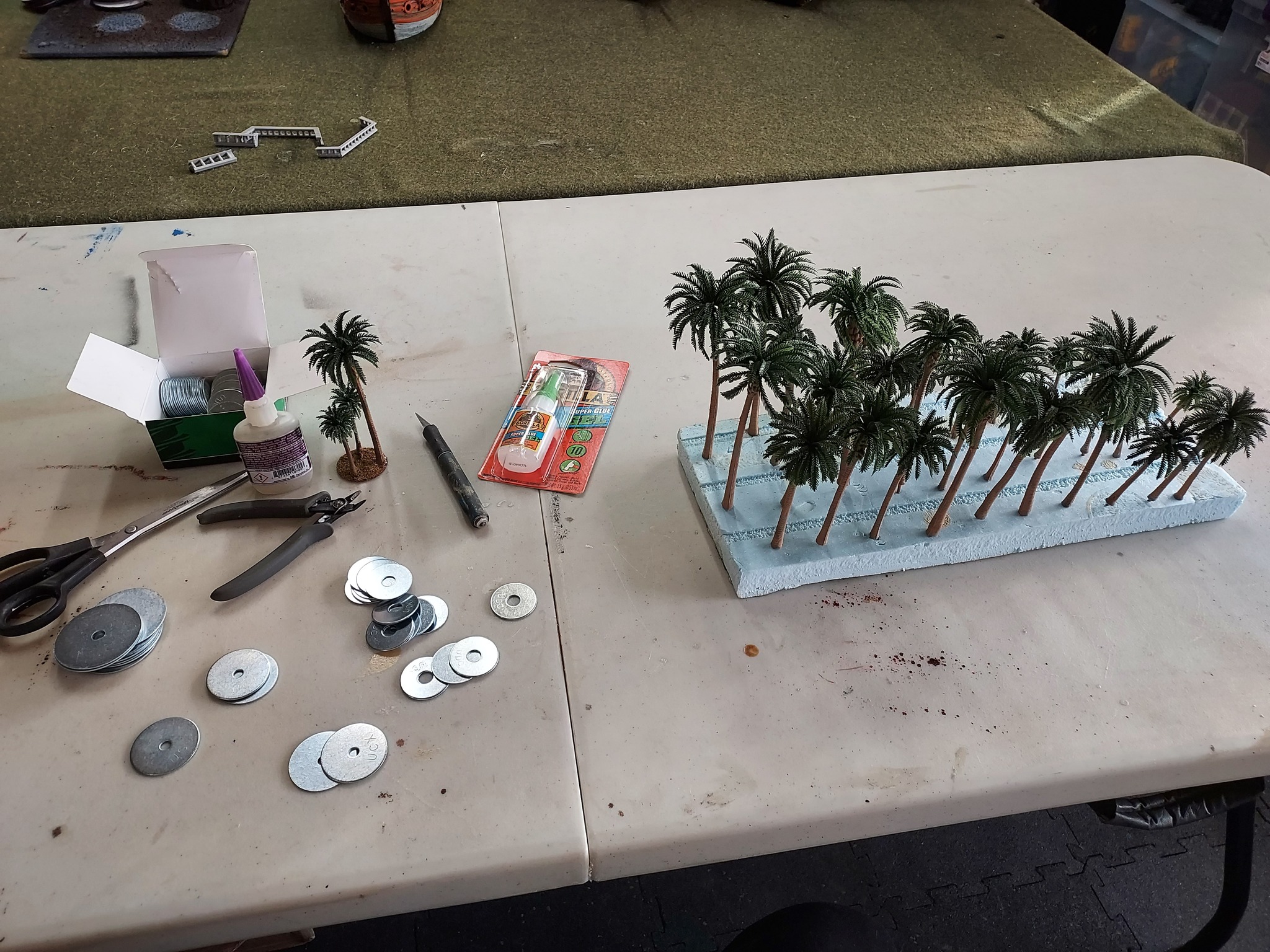
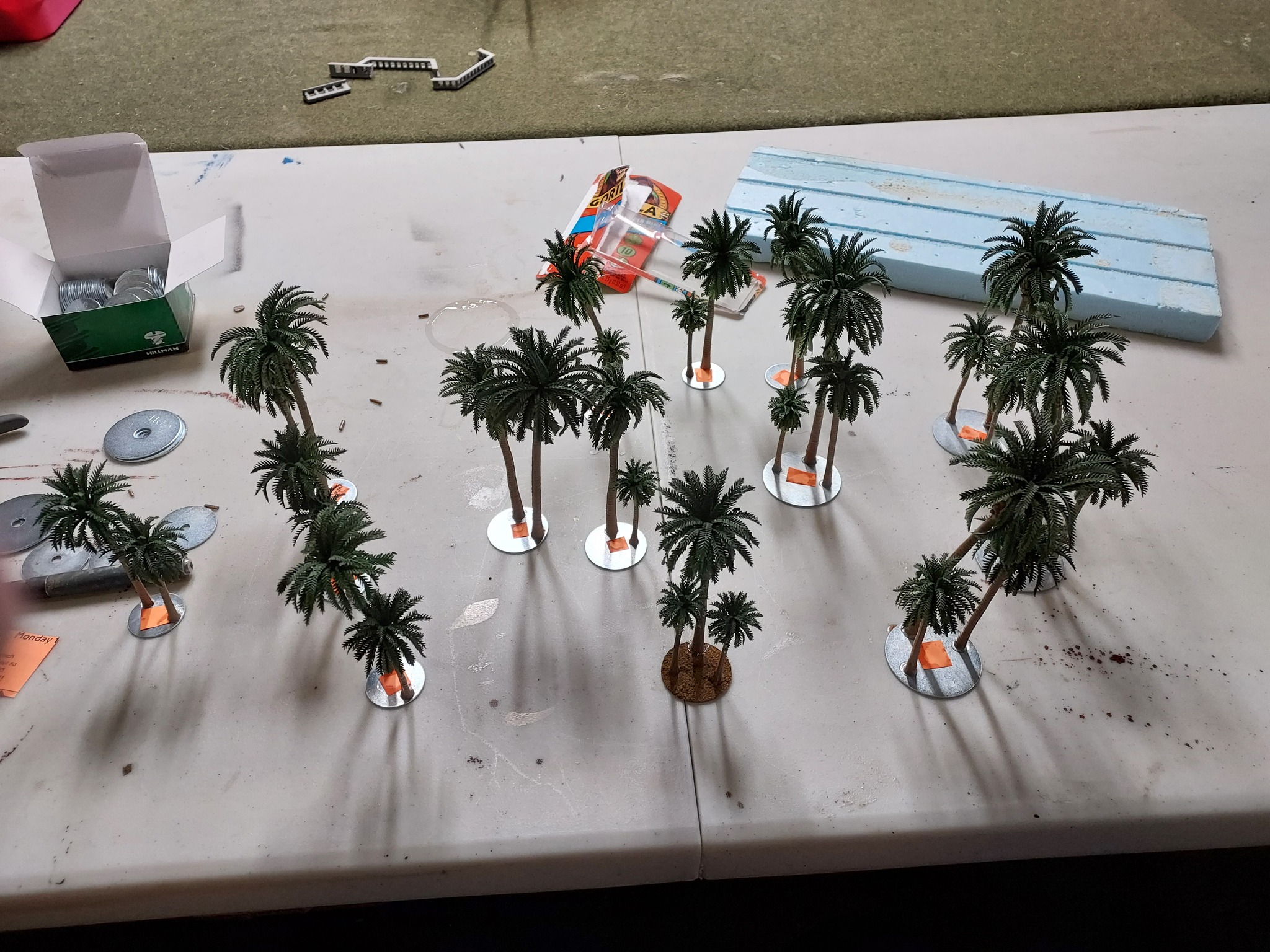
- Metal Washers: These are an excellent option for getting good/heavy supports for your trees that prevent them from tipping over and keep things modular.


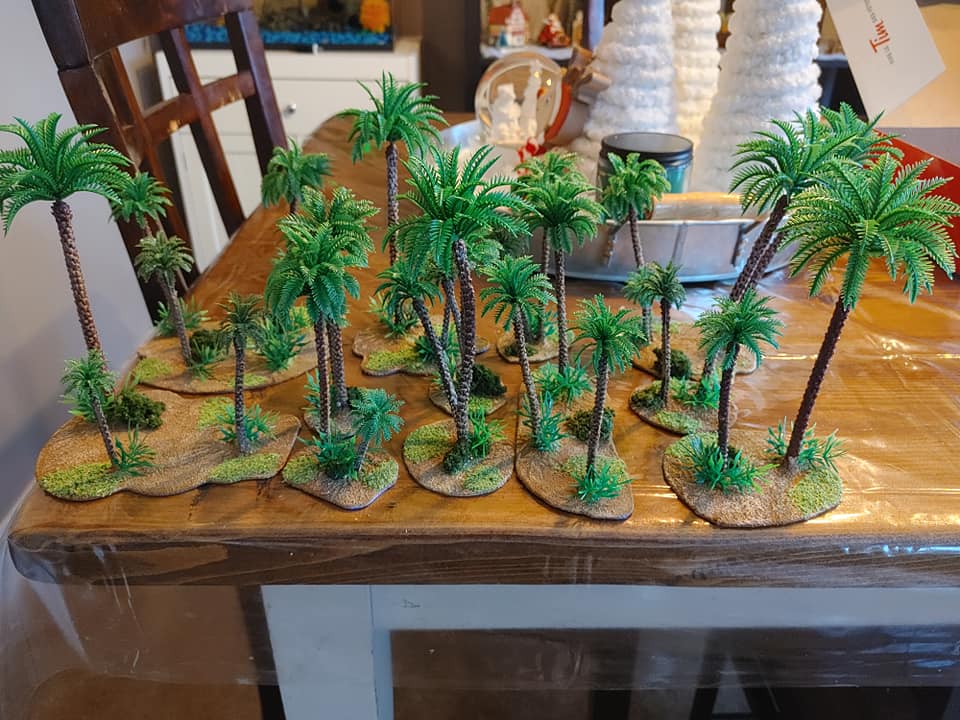
Here is an example of some palm trees mounted on washers by Gregory Padilla
Where to Buy Palm Trees and Jungle Terrain for Scatter Terrain
There are lots of options for palm trees and sources vary. We’ll give you a few of our suggestions below and some Amazon links for ease of access. Many sites offering steep discounts if ordering directly from China (be mindful of the risk of fraud and inaccurate pictures!).
Cake Toppers as Terrain
Some cheap plastic birthday and specialty cake toppers make for good wargaming terrain. The benefit of this style of trees is that they come with built-in bases and are freestanding. The downside is they tend to be more toy-ish and lack realism. They are also very cookie cutter so they all look the same. But if you have a large board or run tournaments these are still a solid option, especially if you integrate them among other trees.
At $9.99 for 25 trees this is one of the cheapest options, roughly $0.40 a tree. You can get them here:
YOOHUA 25PCS Coconut Palm Model Artificial Trees/Cake Toppers


Low-Cost Model Train Terrain
The Model Train world and wargaming overlap on multiple levels. These inexpensive plastic trees work well. They come with thin pegs, to insert into foam and MDF terrain. You may need to trim them for MDF as they can be long. For foam, you may need some glue or magnets if you travel a lot as they may bend foam and work themselves loose over time if you remove them from the base terrain between use.
$9.99 = 18 pcs HUIANER Palm Tree Model Trees. I like this style as they offer 5 types of varying heights from 3.1″ – 6.3″. This helps add realism to your terrain as real trees are all different sizes. 18 trees for $10 makes them $0.56 apiece.


Bright Creations Miniature Palm Trees – Miniature Desert Palm Trees for Dioramas and Crafts (2 Styles, 9 Sizes, 32 Pieces). $8.39 for 32 Trees makes them $0.26 apiece.


OrgMemory 36pcs Palm Trees, Ho Scale Bushes, Plastic Trees for Projects 1.5-6 inch(3-16 cm), Miniature Trees for $13.49
Woodland Scenics – Classics Trees – Palms

Woodland Scenics is one of the premier providers of wargaming and hobby terrain in the industry. Originally starting as an architectural modeling firm they branched into the model railroad/train space, but a large number of their products also fit the wargaming crowd. These are top-notch, high-quality items and fall into the premium product category.
Although their trees are more expensive at $3-5 per tree, they are ready to use straight out of the package. The time and effort saved by using ready-to-use trees should be factored into the overall cost.
Here are a couple of different options for Woodland Scenics Palm Trees available on Amazon:


Pegasus Hobbies Palm Trees
Pegasus Hobbies offers a wide variety of premium wargaming terrain, they come in colored plastic and are ready to go straight out of the box. While they aren’t prize-winning colors and could still use a bit of touchup to tone down the fake plastic look if you want to take them to the next level. They are taller than others and add variety to the table.


Here are a few photos of the Pegasus Hobbies palm trees painted up and read for gameplay. You can see a preview of the items in an unboxing video here: https://www.youtube.com/watch?v=I24Rq9F29D8


Photos by Joseph Forster (left) and Keith Jenkins (right)
Charlie Foxtrot Models
Nestled in Cornwall’s southeast countryside, Charlie Foxtrot Models, is a one-man shop owned by Colin Farrant. a seasoned modeler and gamer. Launched in 2014 it was inspired by his building of terrain for Bolt Action. The company has a range of products designed to enhance the aesthetics and playability of your terrain. While they don’t sell palm trees directly, they sell MDF kits that are useful for building some impressive terrain.
To be fair, I’ve not personally used them as they are a UK-based company and shipping is a bear, but I’ve seen them featured on multiple tables and they look top-notch! Several items feature small oasis pools near the base of the trees which adds a fun dynamic to the gaming table.


Their design allows you to temporarily remove the trees or bushes from the MDF base so you can place your minis in the area terrain and get the benefits, without having the problem of minis tipping over or running into trees.


If you’re in UK or don’t mind the shipping, give them a visit at https://www.charliefoxtrotmodels.com/
As a bonus tip, they have Wagon Shed for their WWII line that is generic enough to function for Blood & Plunder and is an awesome piece to pick up as well!
How to Building Your Own Modular Palm Tree Scatter Terrain
Below is a quick outline of the steps I use to build my palm tree scatter terrain.
Step 1. Get Some Wooden Discs for the Base
I ordered a set of thin wooden discs from an online Chinese retailer. I used both 1.5″ and 80mm (3.2″) discs for variety. These are also EXCELLENT as bases when building objective markers or other scatter terrain.


Step 2. Cut Some Chunks of Foam Core Posterboard to add some height
You can get inexpensive foam core posterboard from your local Dollar Tree or Dollar store. These are excellent for inexpensive crafting options. I kept scraps from other projects, cutting small irregular shapes and stacking them two high. Using a pencil I stepped holes in them for the pegs on the palm trees to slide into. I secured the foam in place with Alene’s Tack Glue. For the trees themselves I glued them to the bases with hot glue.
On several of the bases, I added some small rocks. Several of them are white rocks I had left over from one of the kid’s terrariums. They are white so they are hard to see. Apparently, I didn’t take dedicated pics, but you can see some in the one in the drywall compound pics below.


Step 3. Add Some Drywall Compound to the Base
I add some drywall compound to hide the cracks and tie things together. I’m partial to the Dry-Dex pink stuff so you can tell when it’s fully dry and ready to go, but it can crack easily on larger projects. The stiffer wooden discs are stable enough that it’s not an issue. Others prefer Sculptamold, which is a leading wargaming terrain product.
I use a simple butter knife or a dental tool from a sculpting set I have to smear the drywall compound on the bases. Then dipping my fingers in a glass bowl of water I smooth things out and do some fine-tuning. Let that dry overnight


Step 4. Add a Base Coat of Paint
I slapdash apply a coat of “Bleached Sand” craft paint with a giant makeup brush to go fast rather than perfect. With the number of layers that will go into things, if there are some minor unfilled cracks, I don’t worry about it.


Step 5. Add a Brown Wash
Before the “Bleached Sand” is even fully dry I apply a medium brown wash. I’ve used a few different washes over time and can’t remember the exact shade in this one. I “think” it was cinnamon brown. I let it sit overnight.


Step 6. LOTS of Drybrush Layers
Again using a big makeup brush I drybrush multiple layers of colors on the bases. Focusing on the greys on the rocky bits and the browns on the dirt areas with some of the lighter colors across all of it to just give it some depth of color.


Step 7. Apply a layer of Sand for Texture
Using some generic white / PVA glue I hit most of the flat spots. Dipping them in sand it adds some texture to the bases. Let it dry an hour or two. I don’t have pictures of this phase.
Step 8. Add Flocking
Adding some watered down glue I sporadically hit several areas with glue and sprinkled flocking onto the bases to add some vegetation.


Step 9. Add Some Flora & Fauna
Again letting things dry for a bit, I eventually looped back to add some tufts and miscellaneous bits I have collected from my terrain bits box. Sources of the materials I used:
- Army Painter Tufts
- Static Grass
- Reindeer Moss – any craft store like Hobby Lobby or Amazon
- Floral Moss – any craft store or Dollar Tree or Amazon
- Snipped bits from a Christmas. If you get small single sprigs you can transform them into wild plant life.
- Tiny flowers from a wreath from Goodwill. I found a sprig from Hobby Lobby that matches it if you want to buy them your own. They are a little large for the scale but they aren’t bad to add some variety and color to the builds.


OPTIONAL RULE: LIMITED VISIBILITY

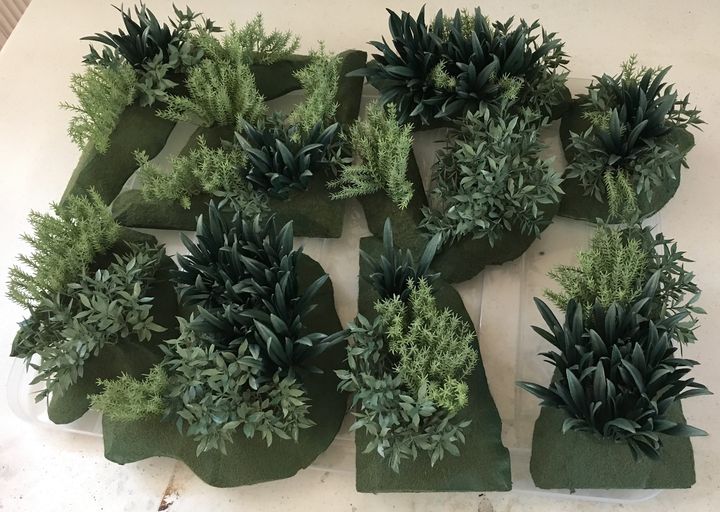
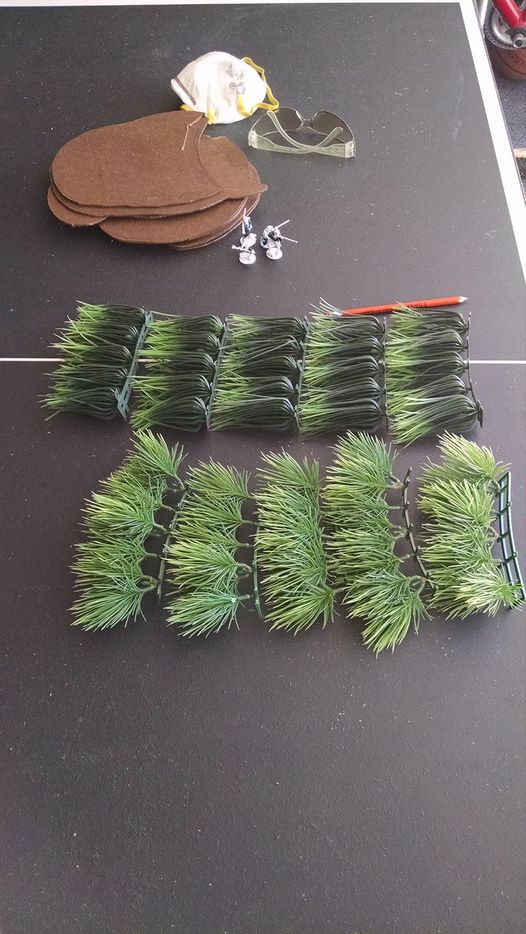
Limited Visibility is a scenario rule representing conditions like fog, smoke, or darkness, where visibility is reduced. This rule can also apply to specific terrain areas agreed upon by players. Players should determine the density of a terrain area and assign a visibility range to it in inches. The denser the terrain, the shorter the range. For instance, a dense jungle might have a visibility of 4”, while a palm tree grove in a village could have a range of 6-8”. The visibility range dictates how far a unit can “see” into or out of the terrain. Units beyond this range are considered out of Line of Sight.
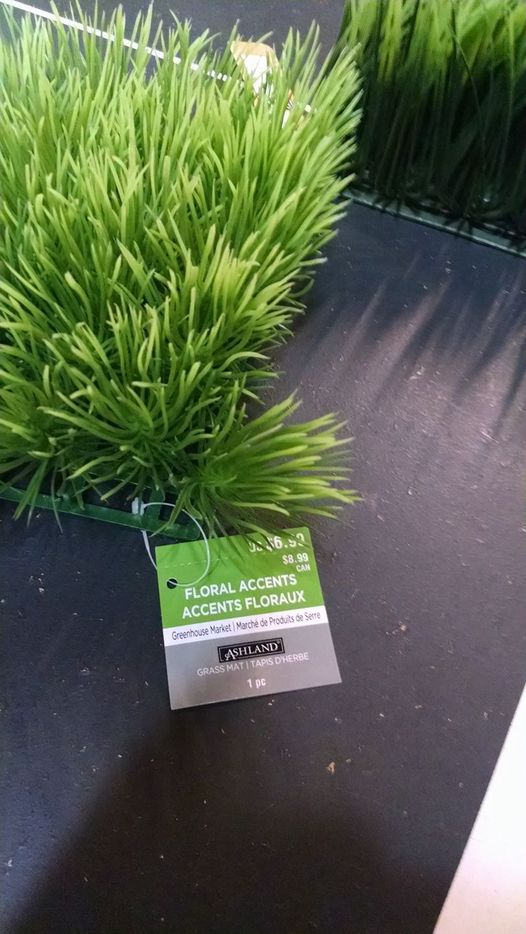
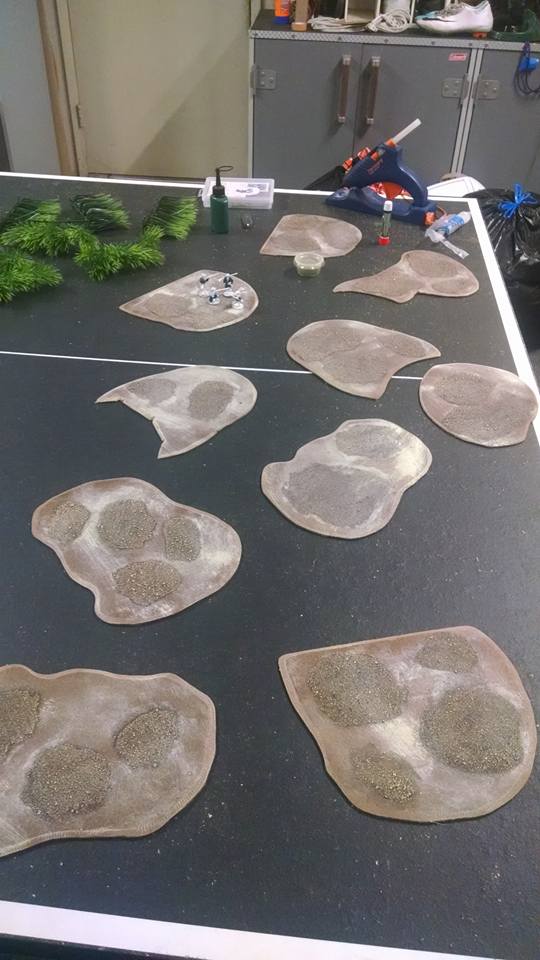
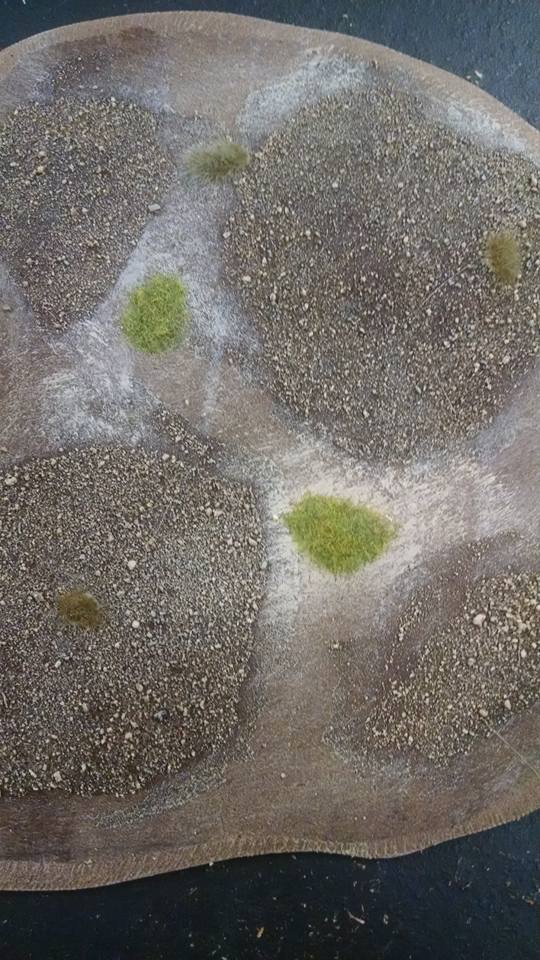
To simplify determining terrain visibility, I created two types of area templates for our local group. Templates with lighter, sandy edges represent sparse woods with a 8″ visibility. The darker green and brown templates signify dense woods with a maximum visibility of 4″. Both templates allow for stacking trees or scatter terrain on top while providing a clear visual indicator of how they impact gameplay.


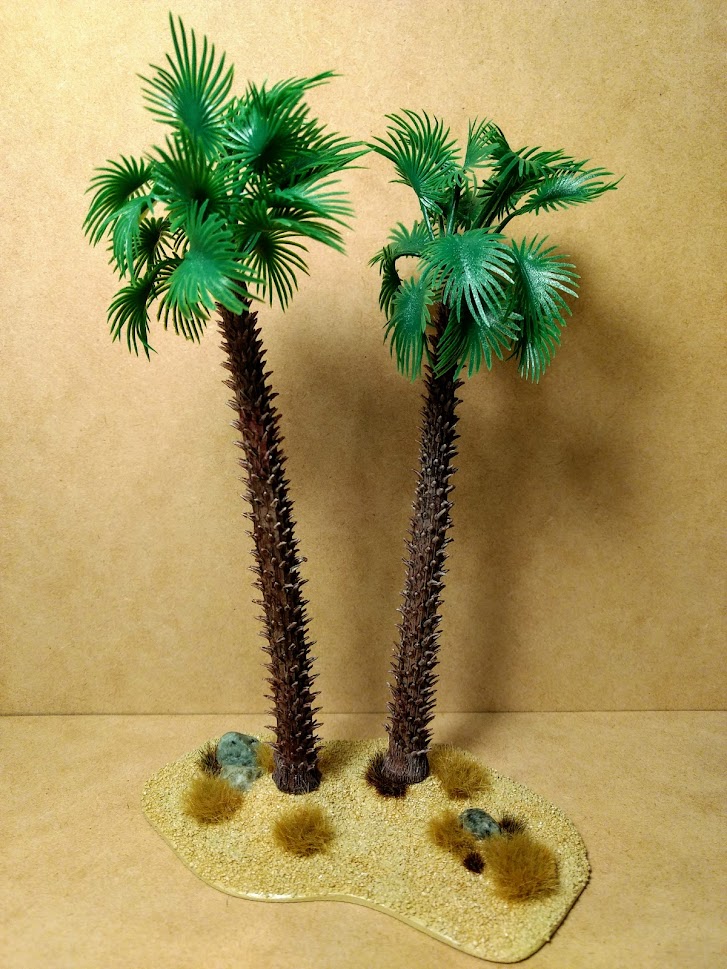
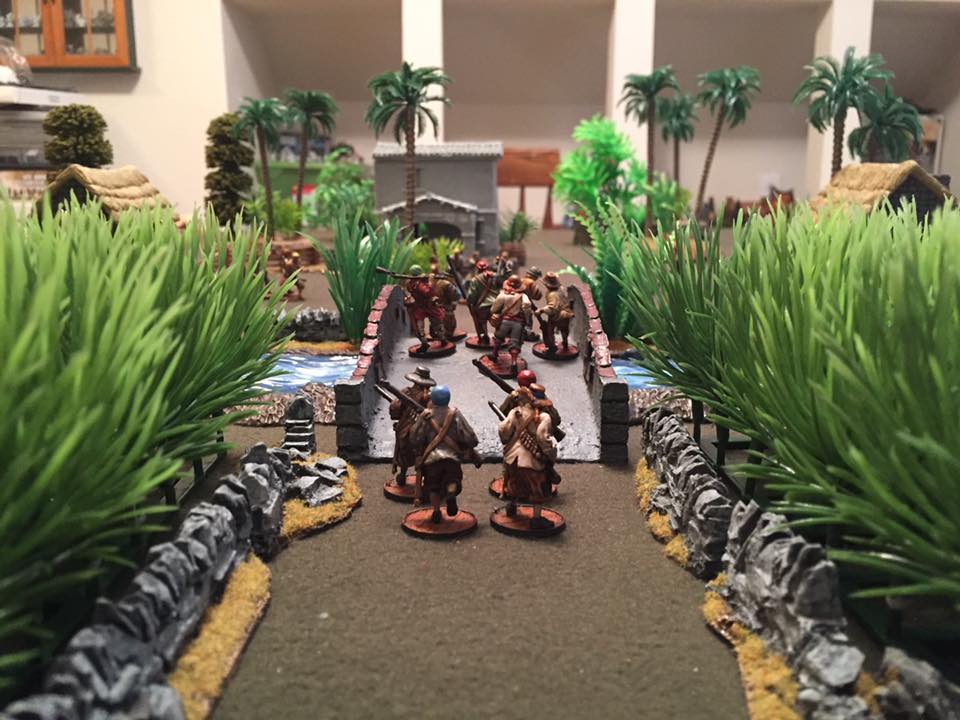
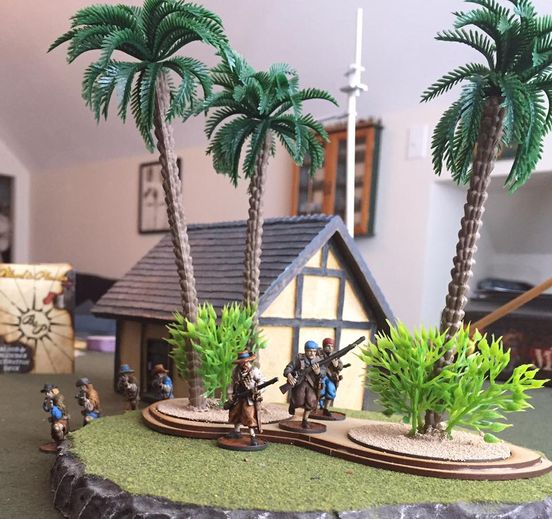
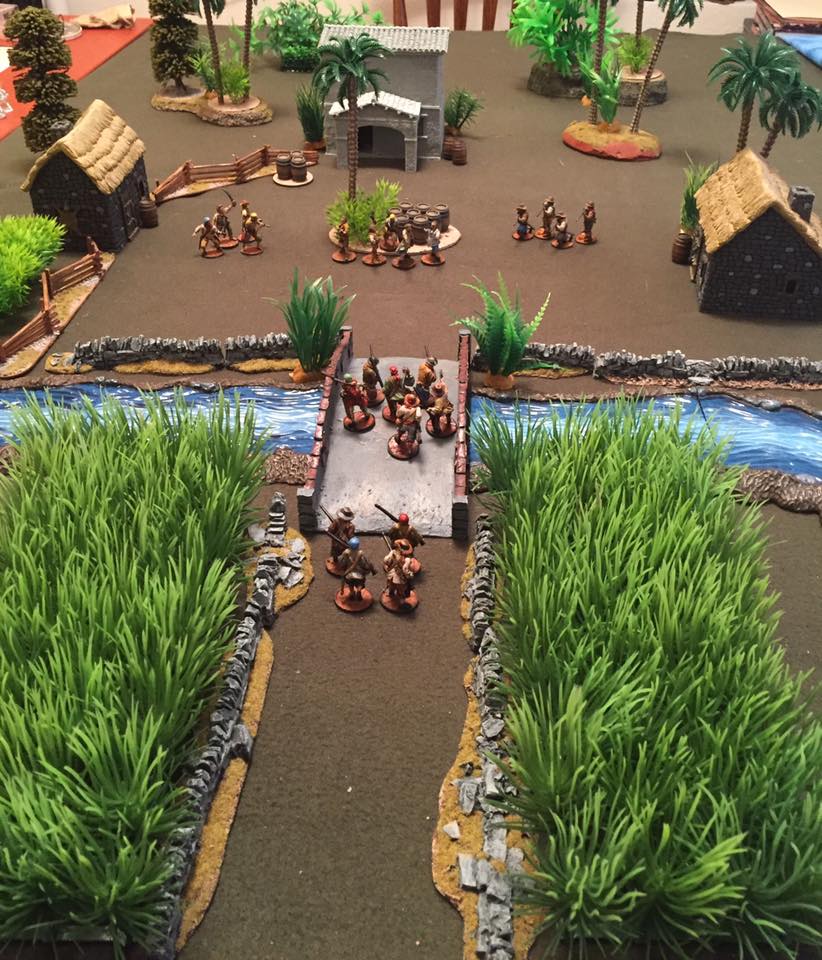
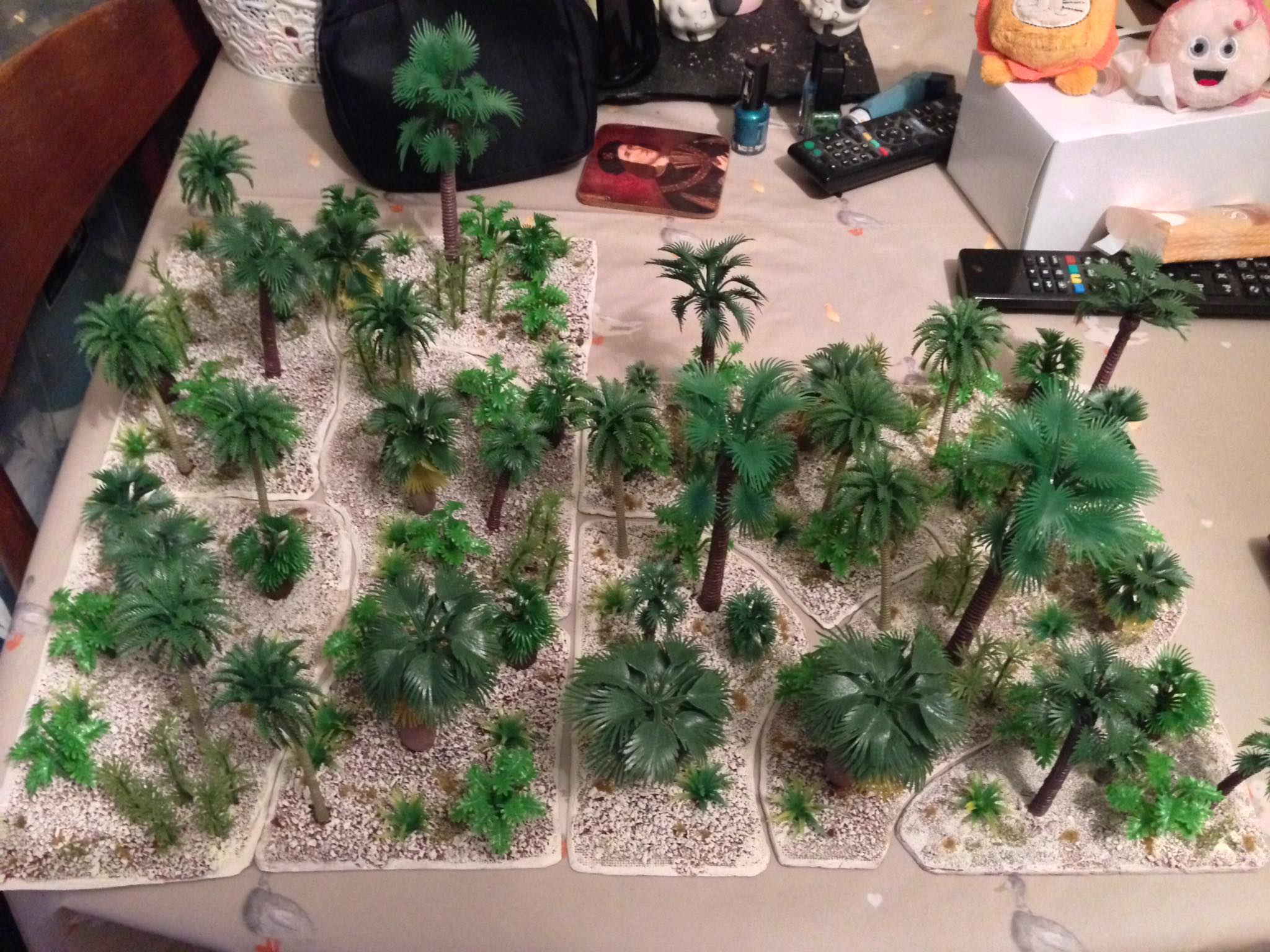
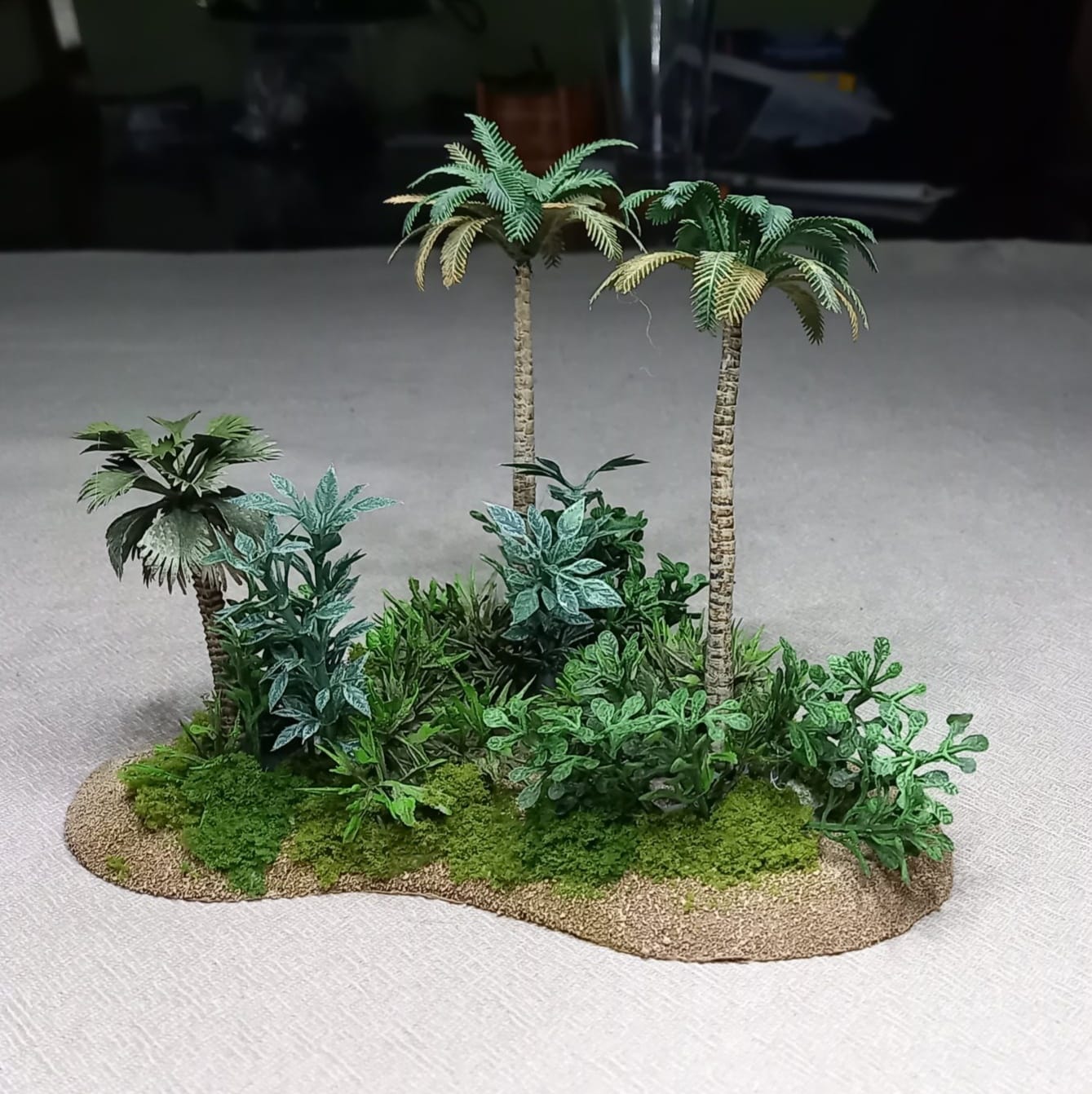
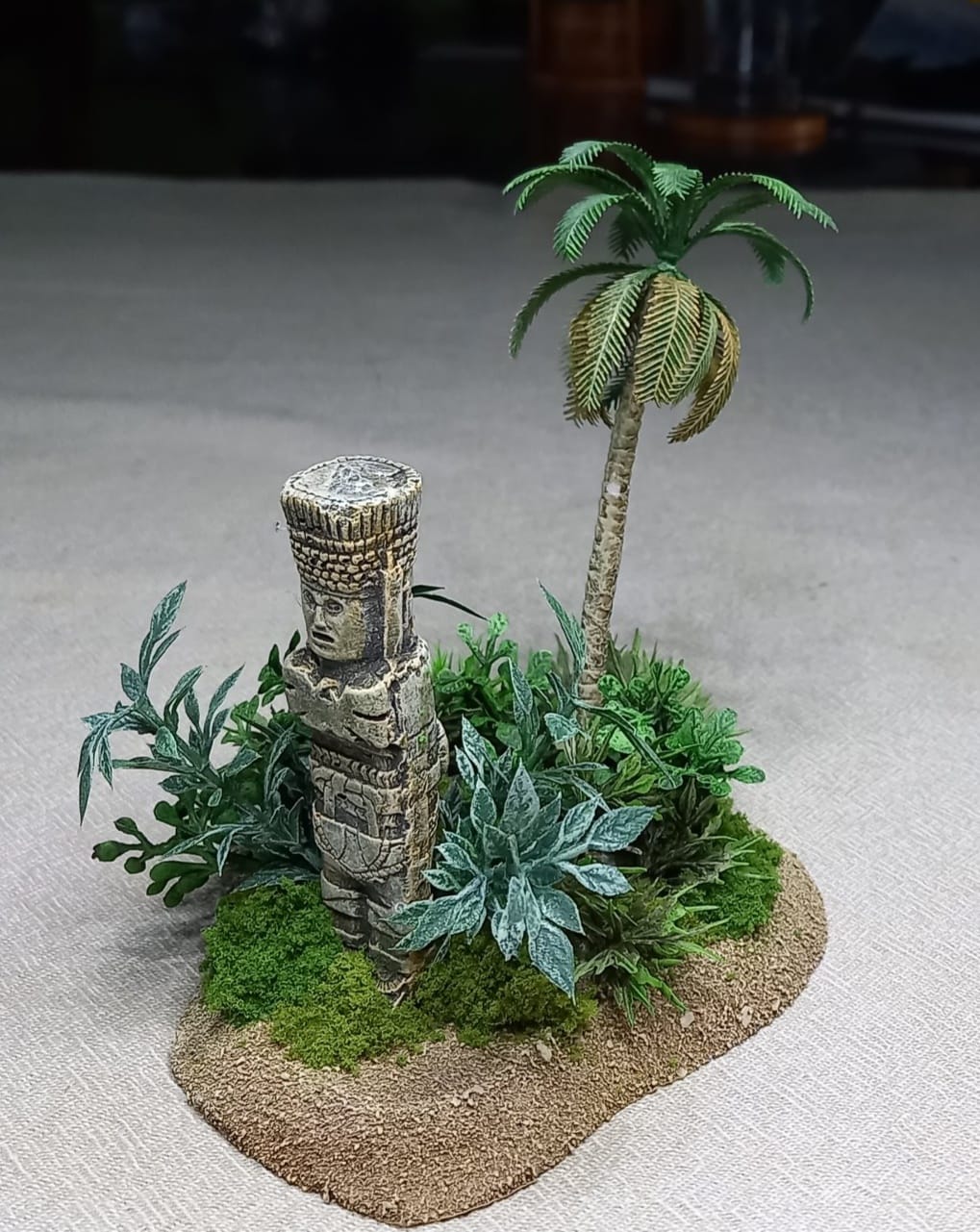
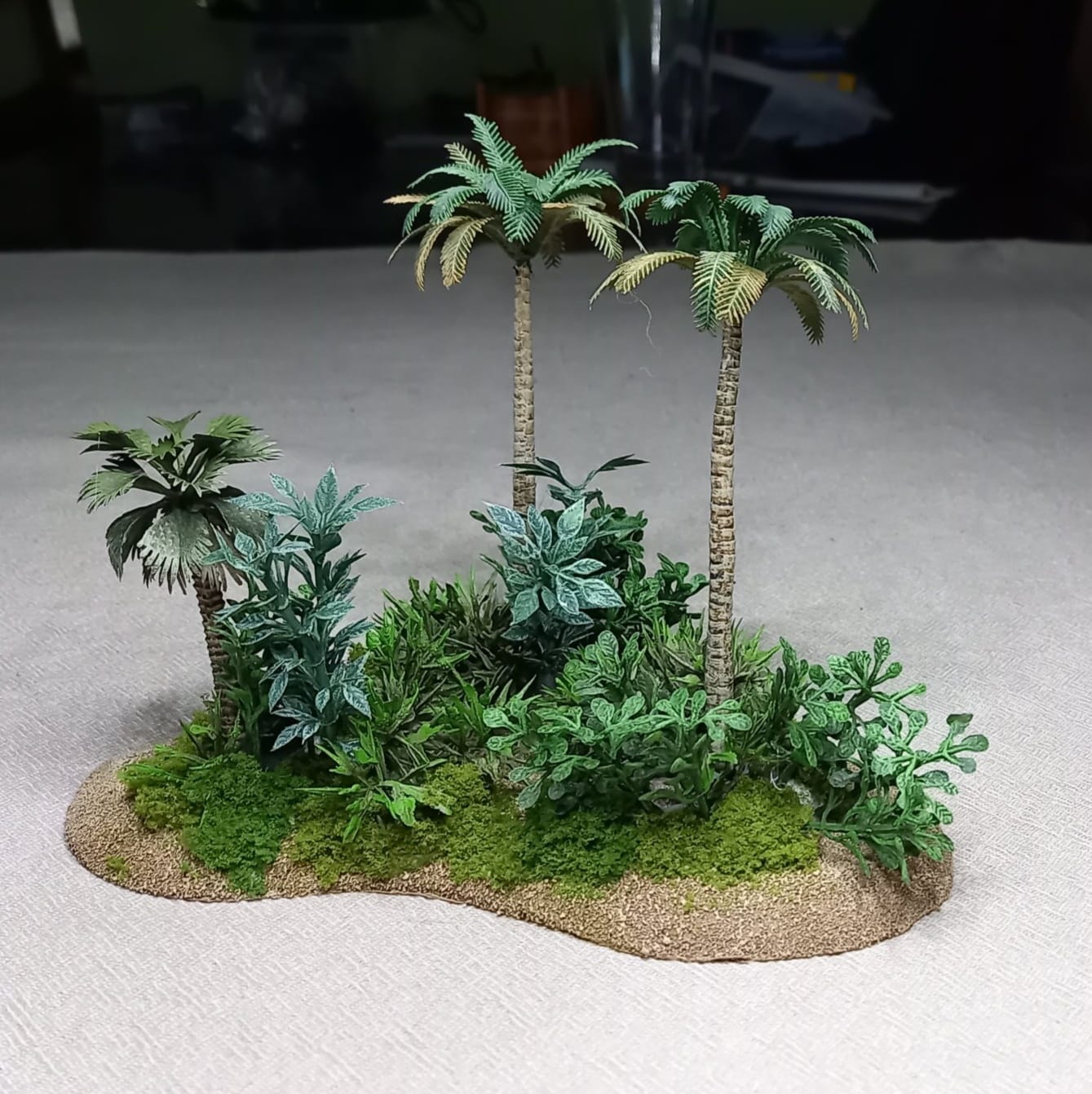
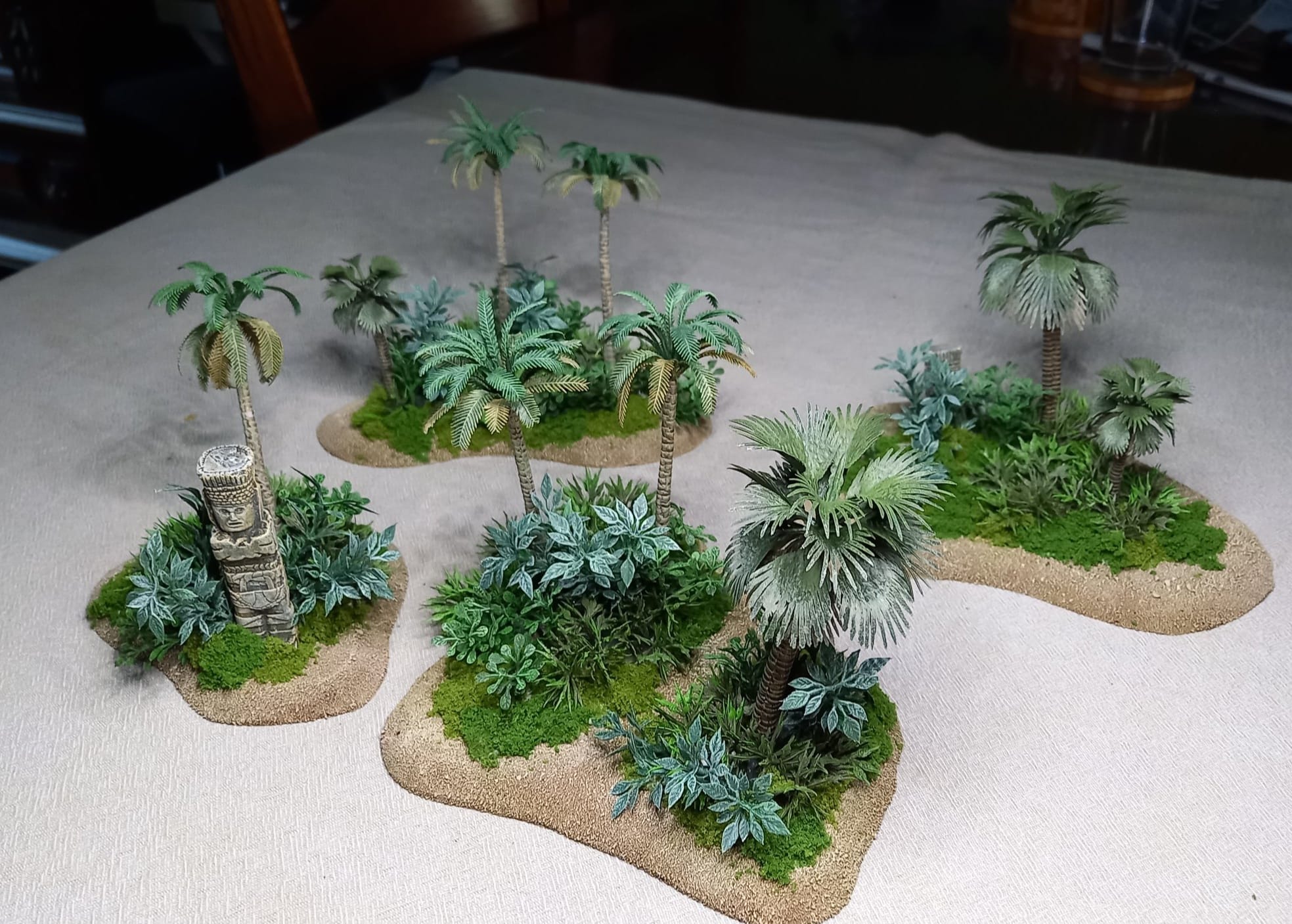
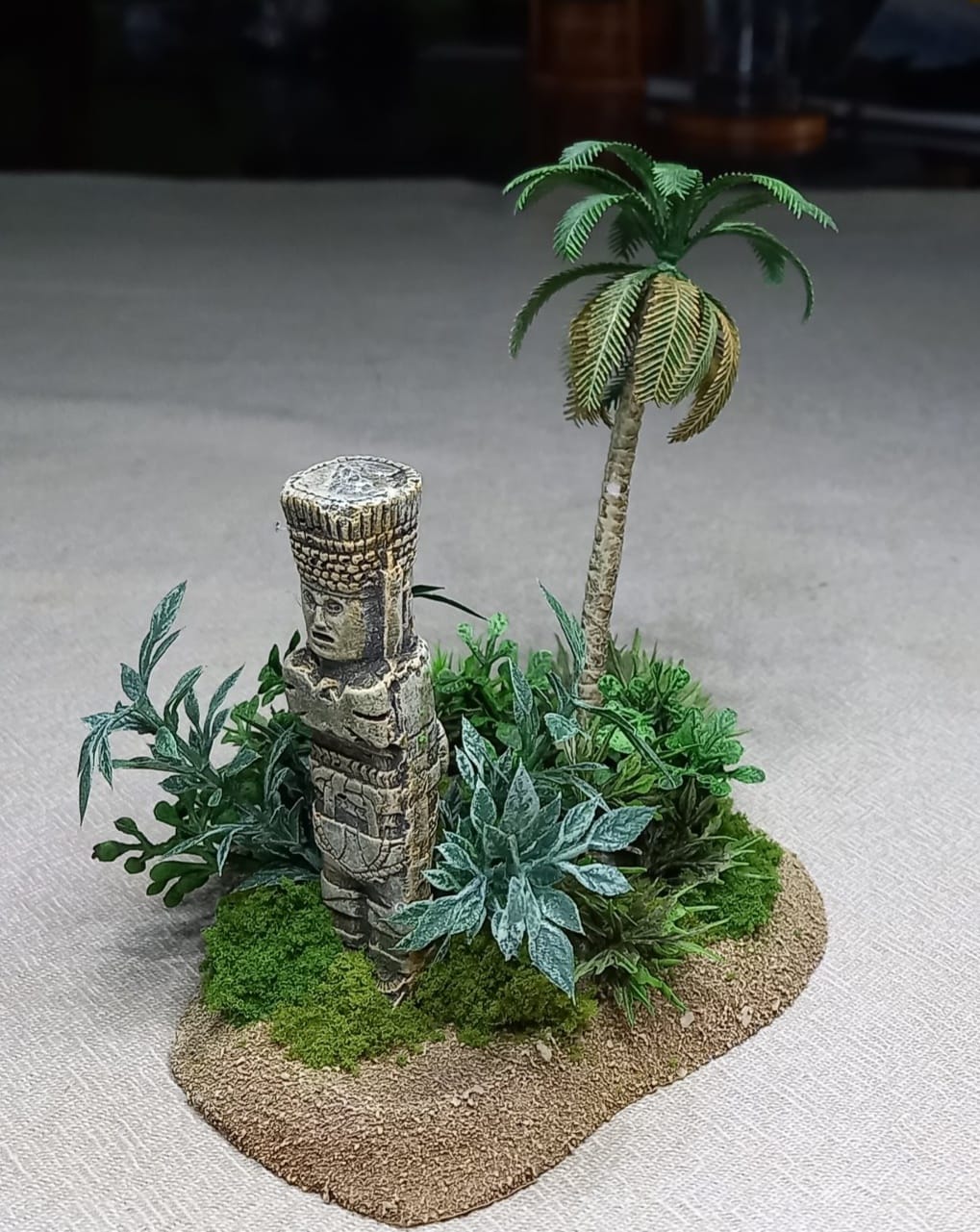
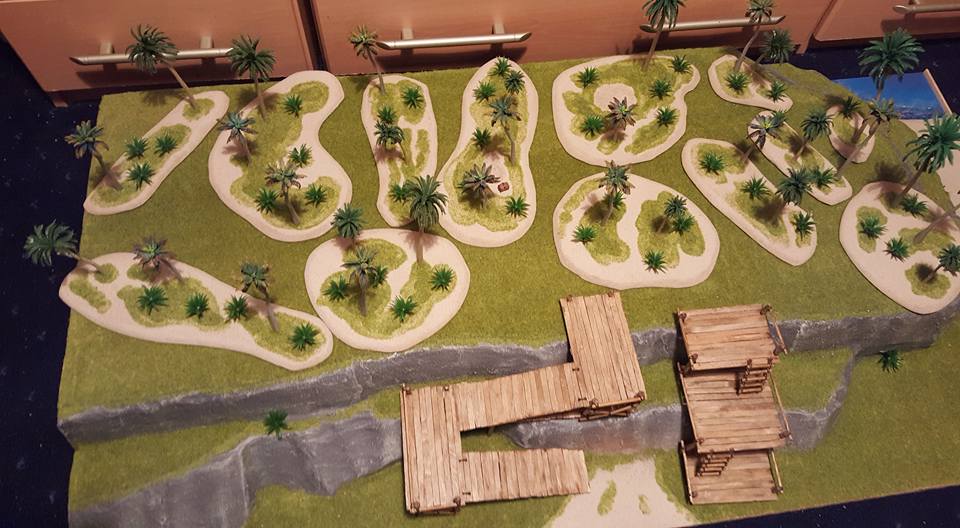
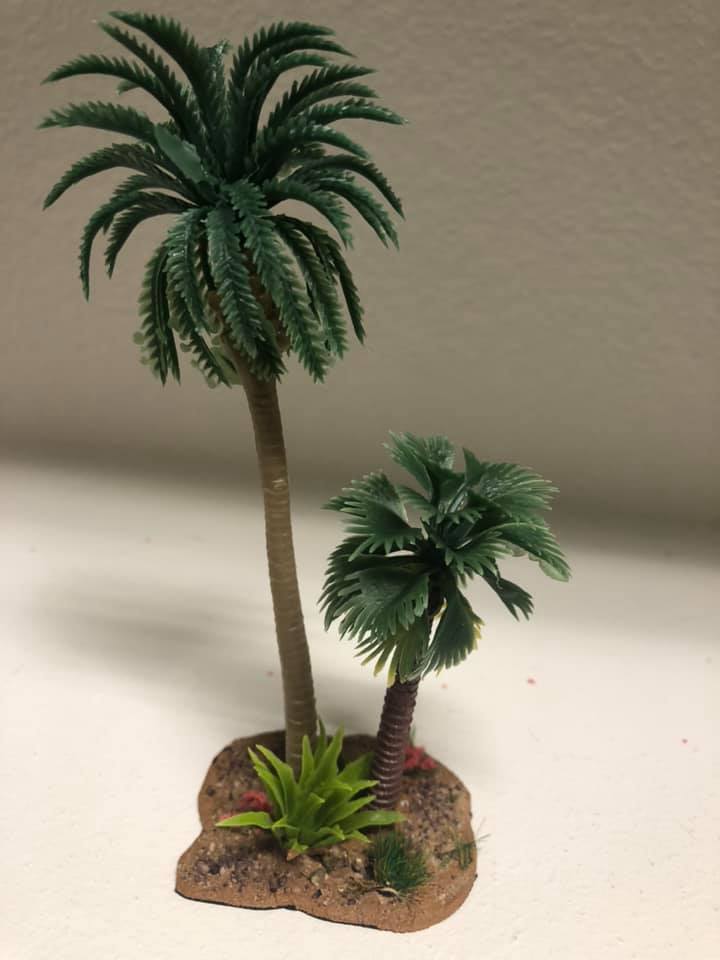
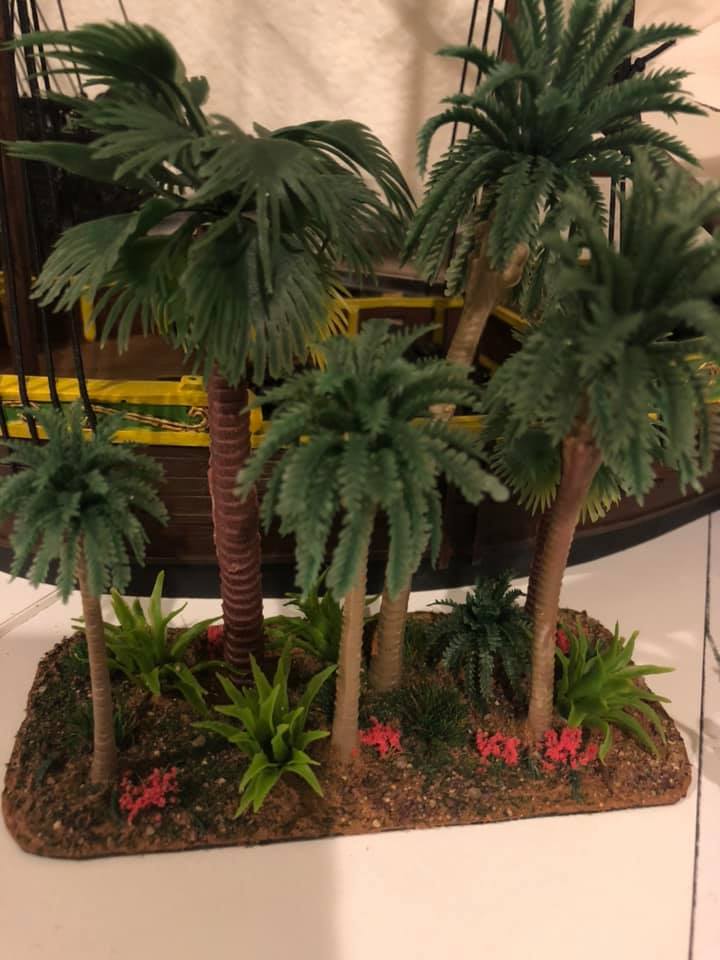
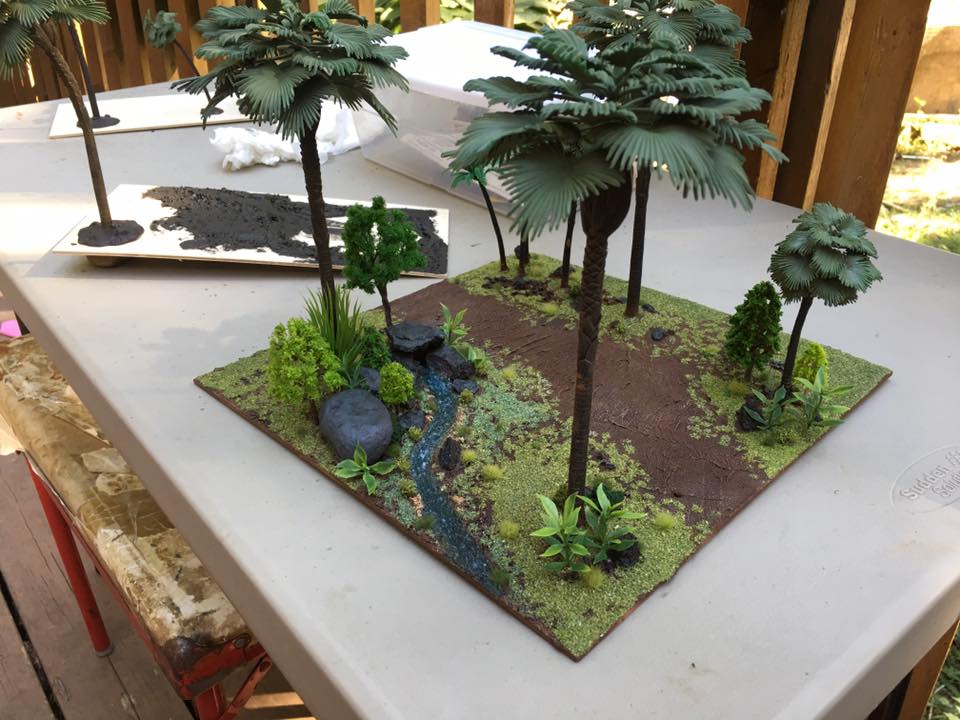
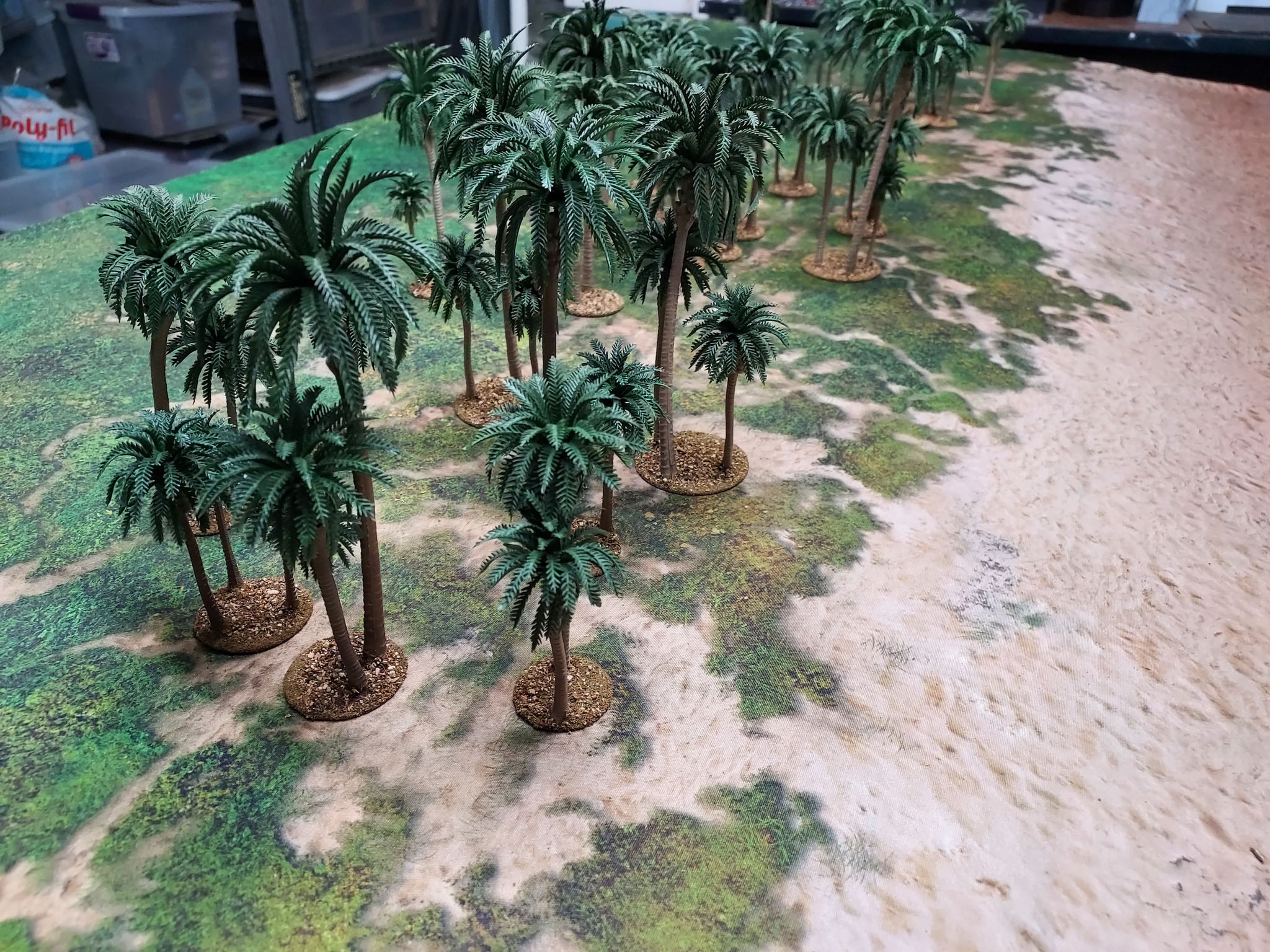
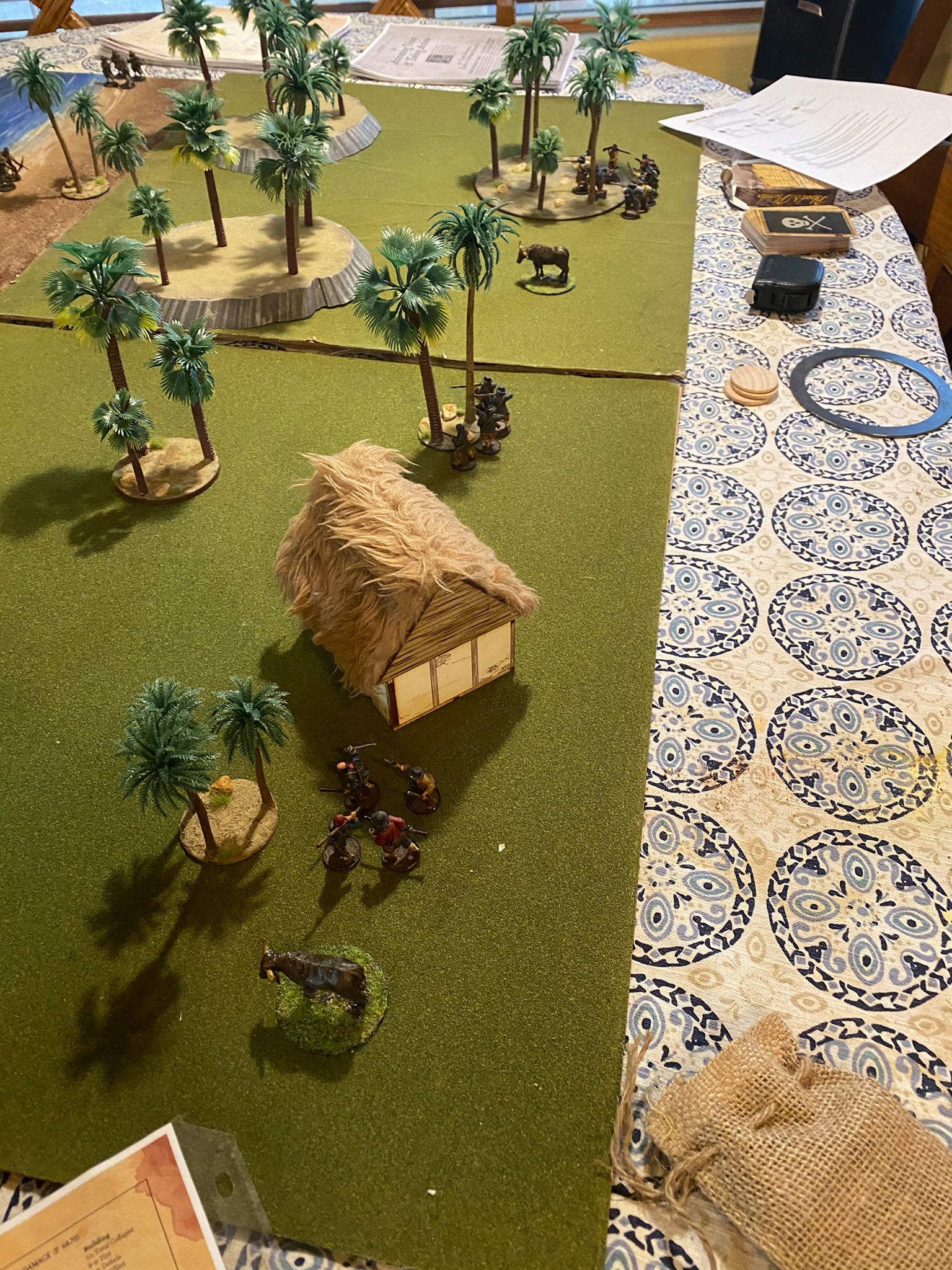
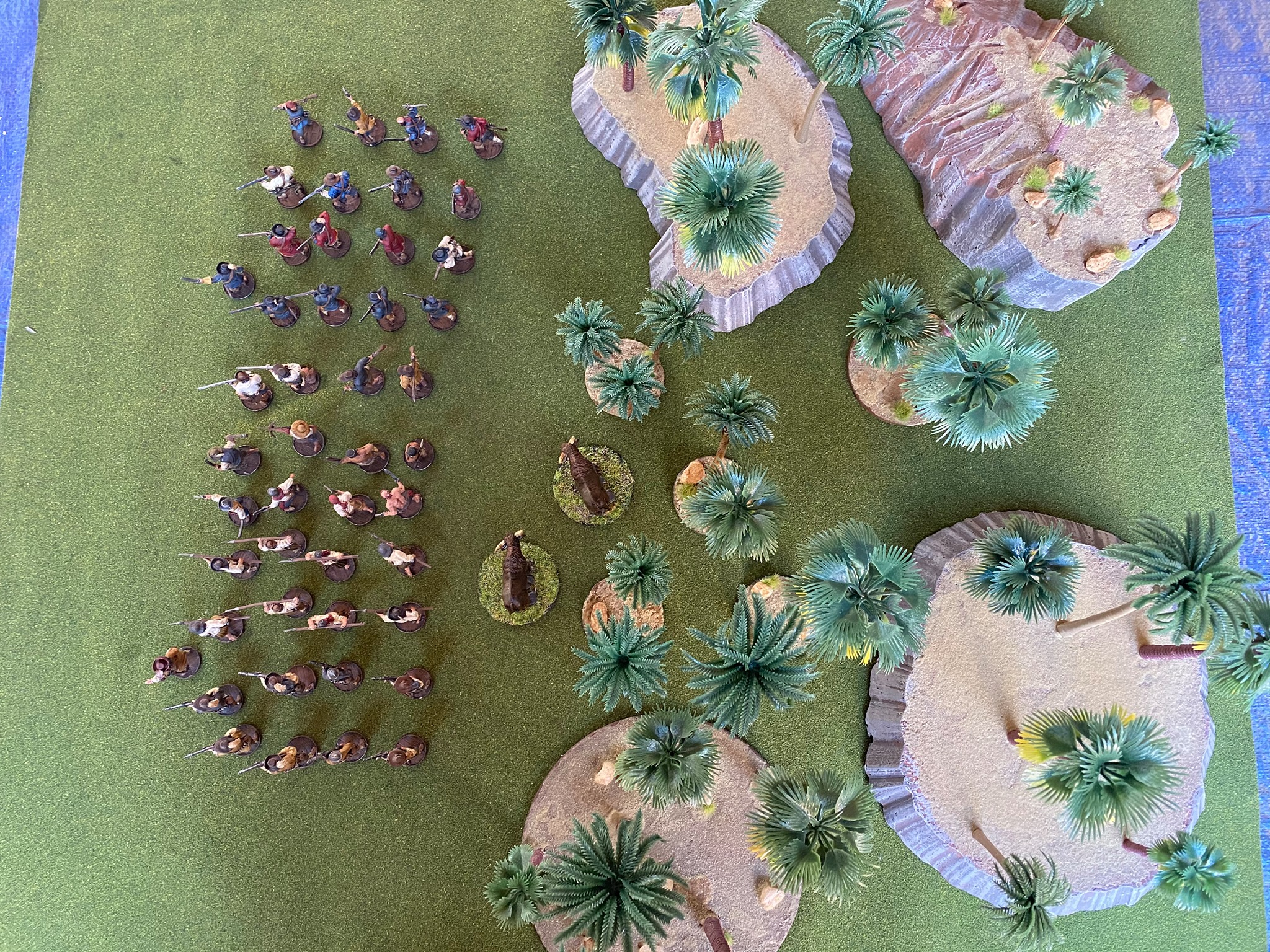
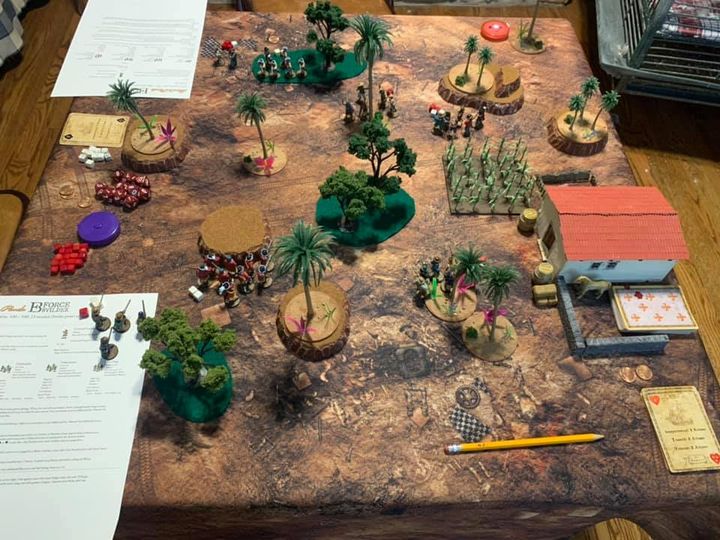
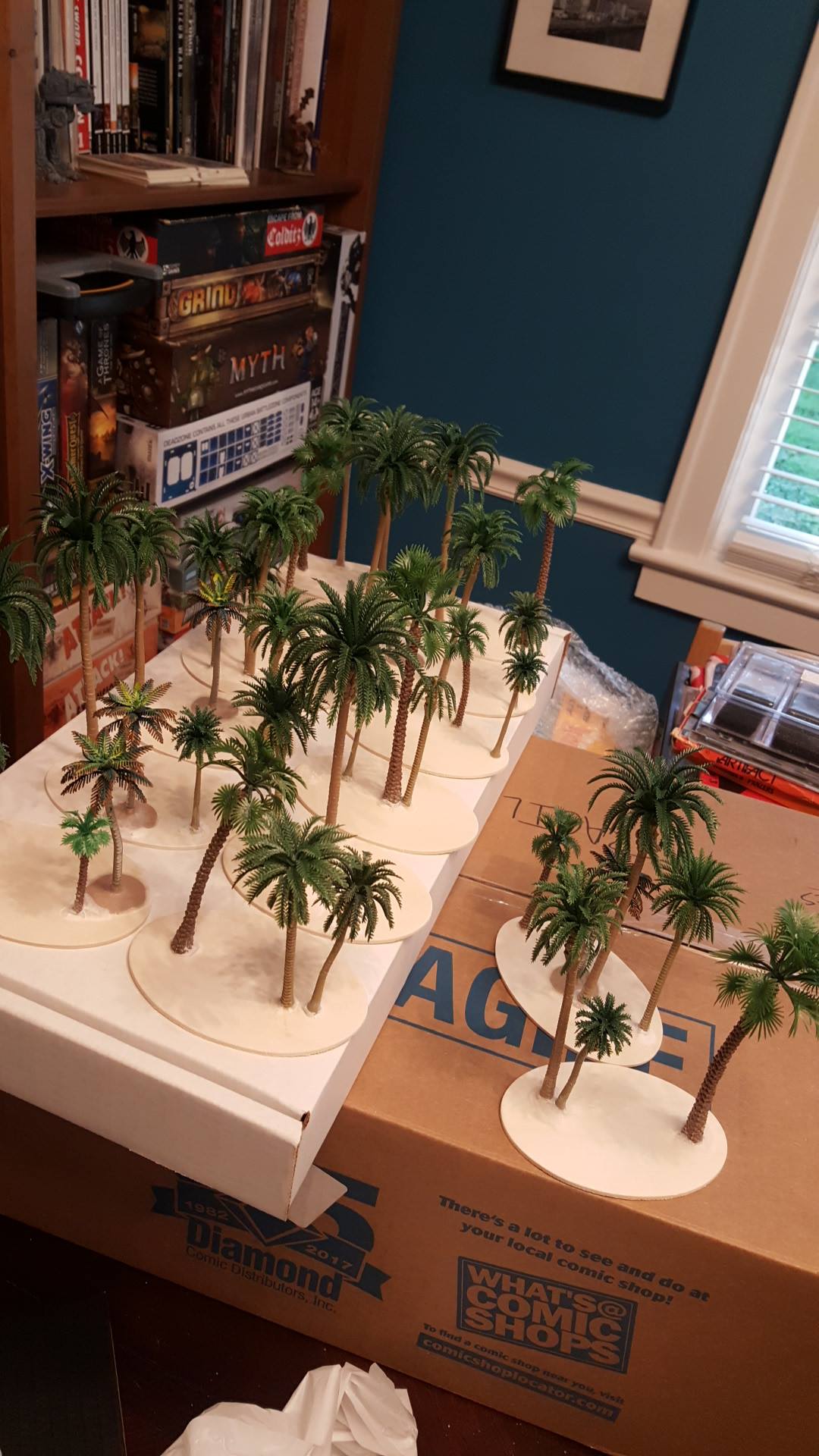
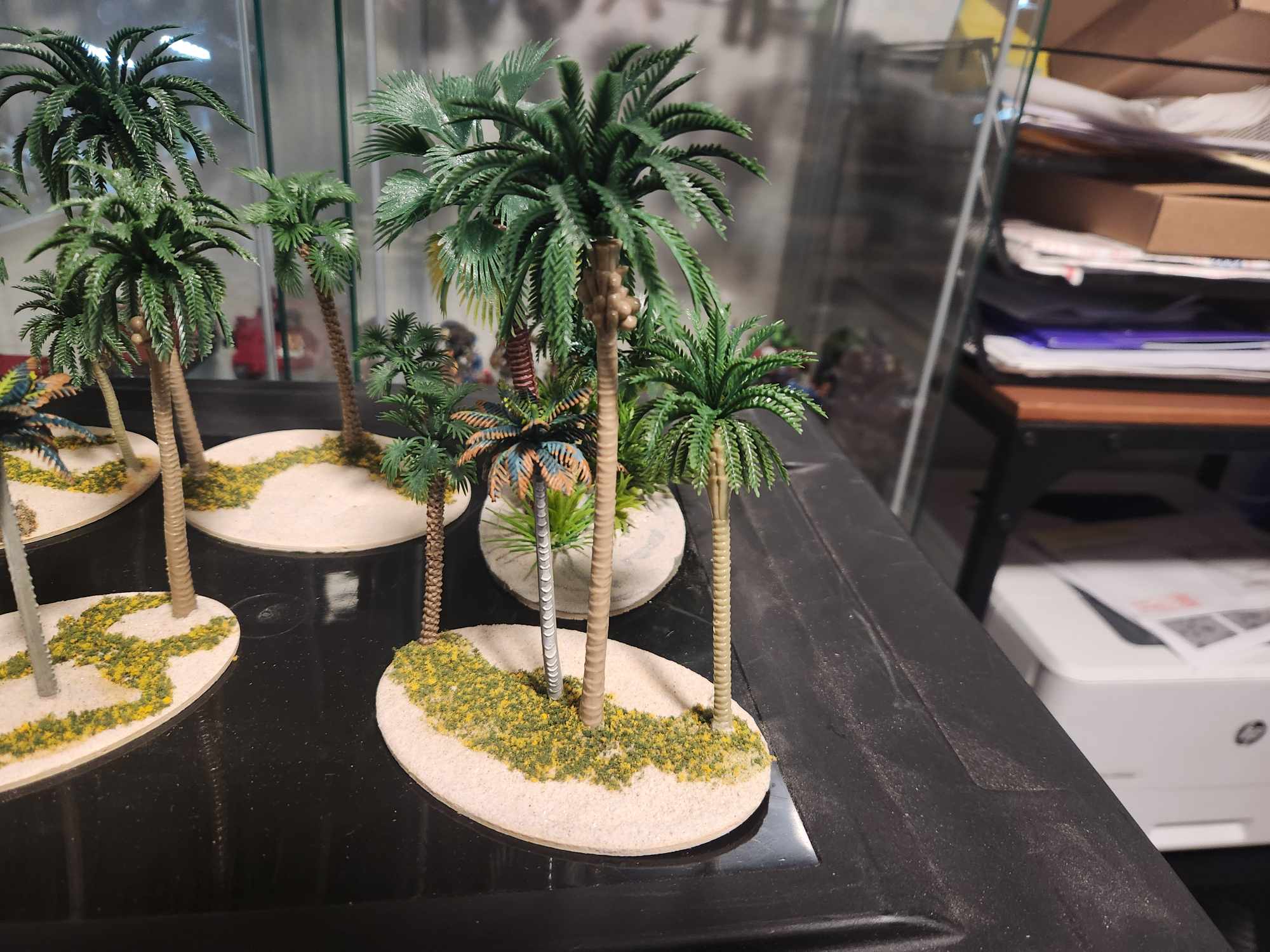
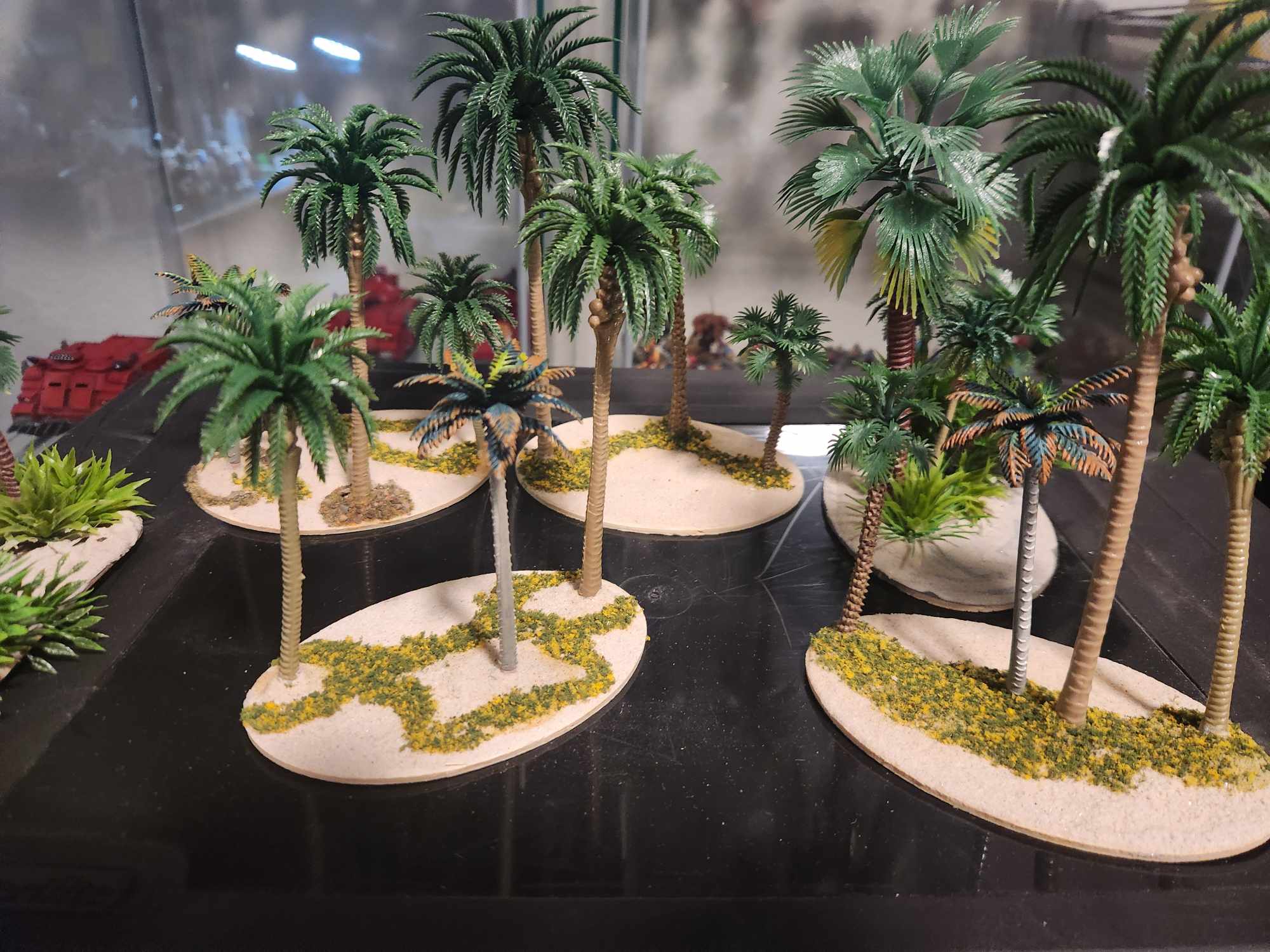
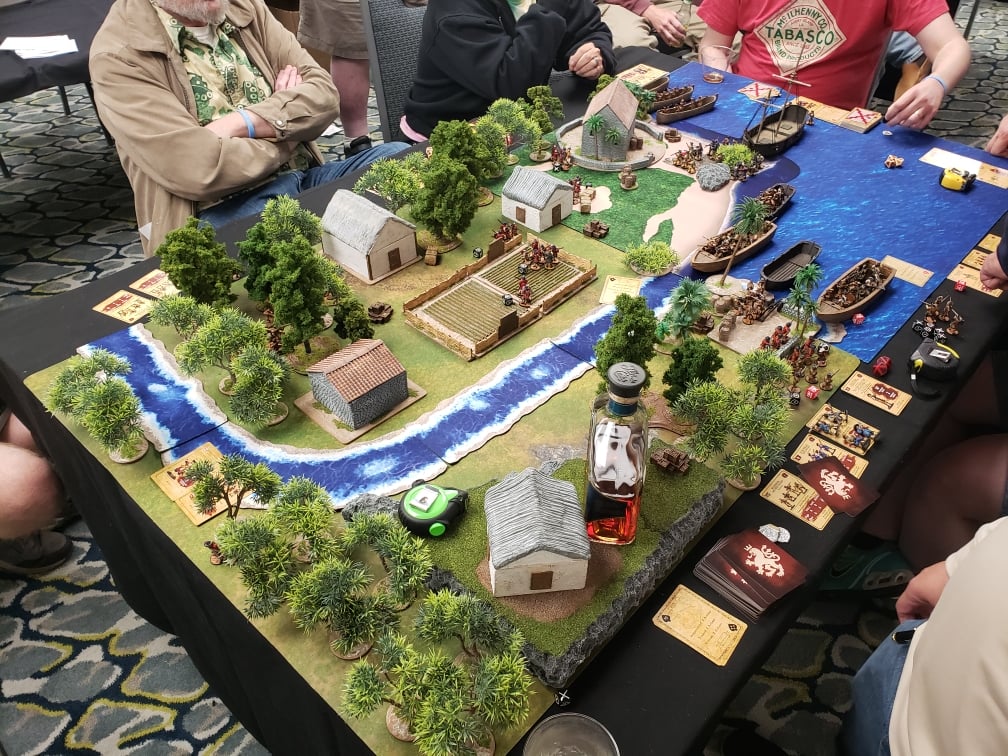
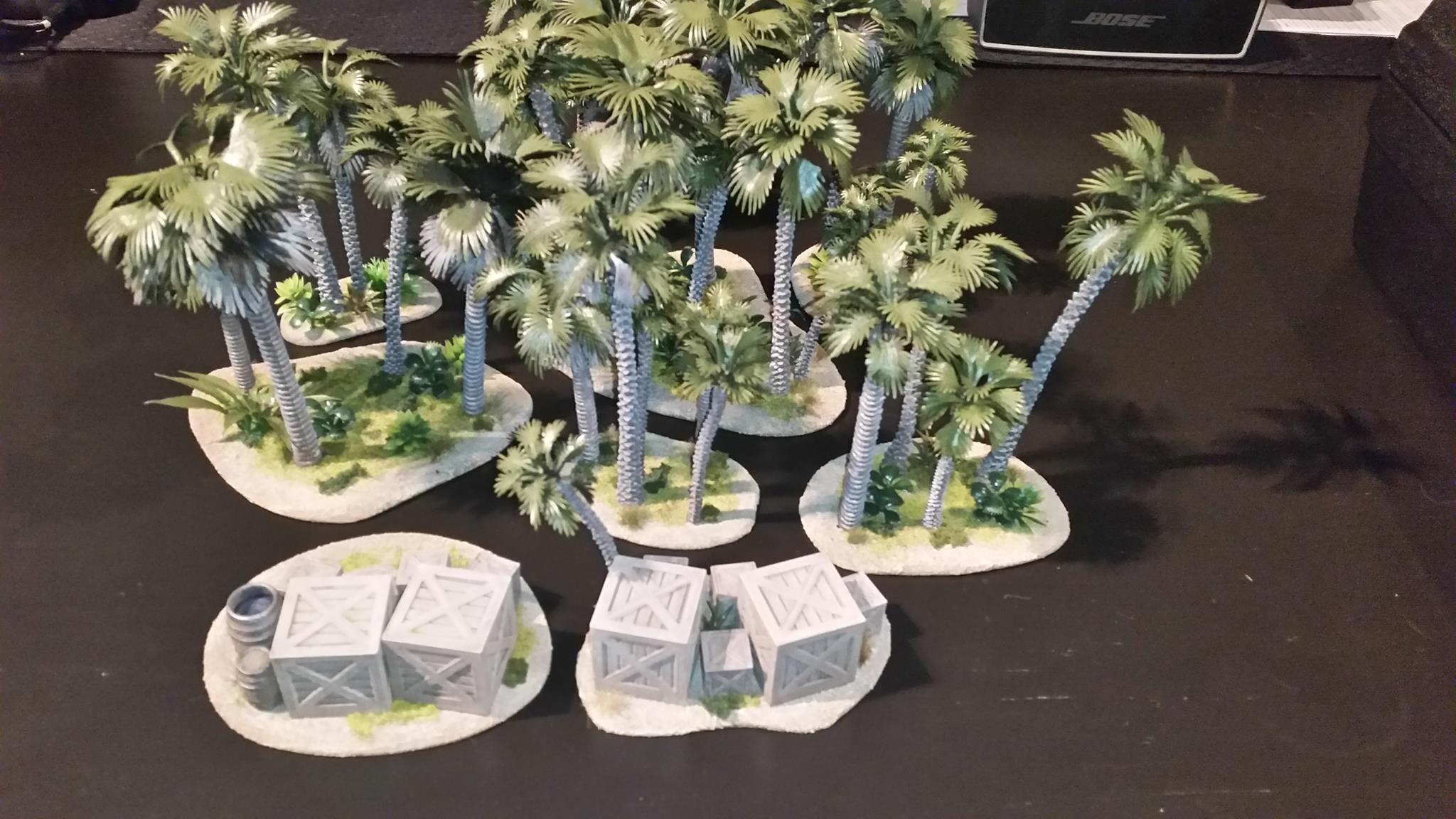
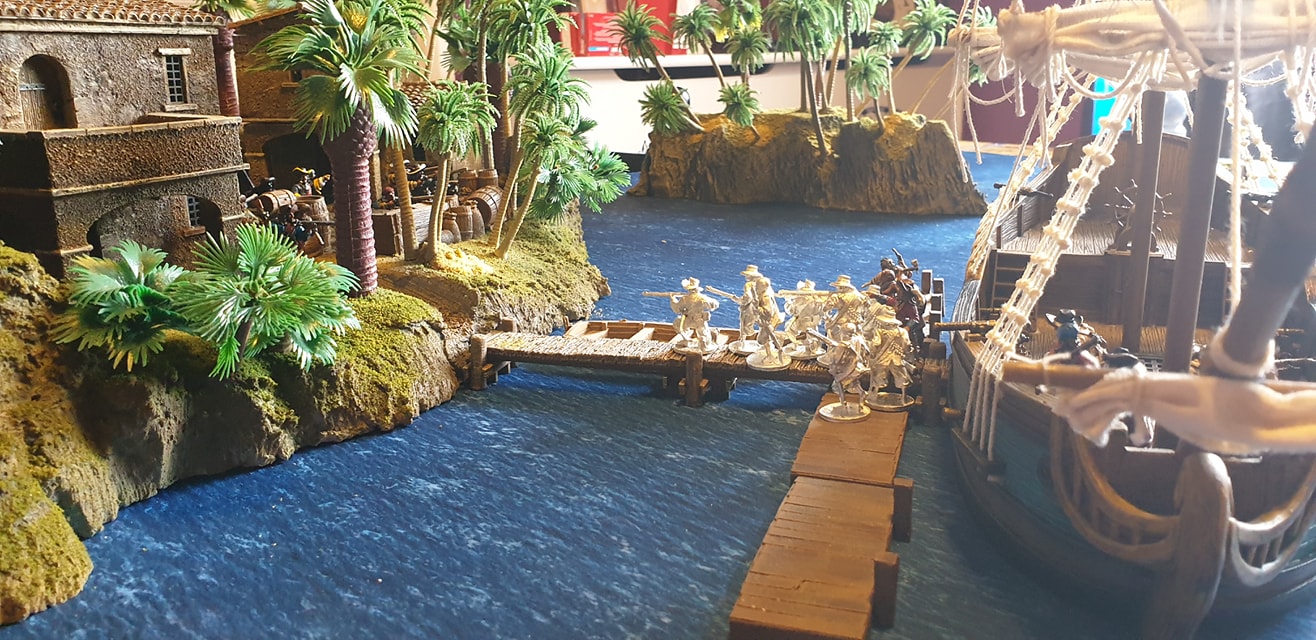
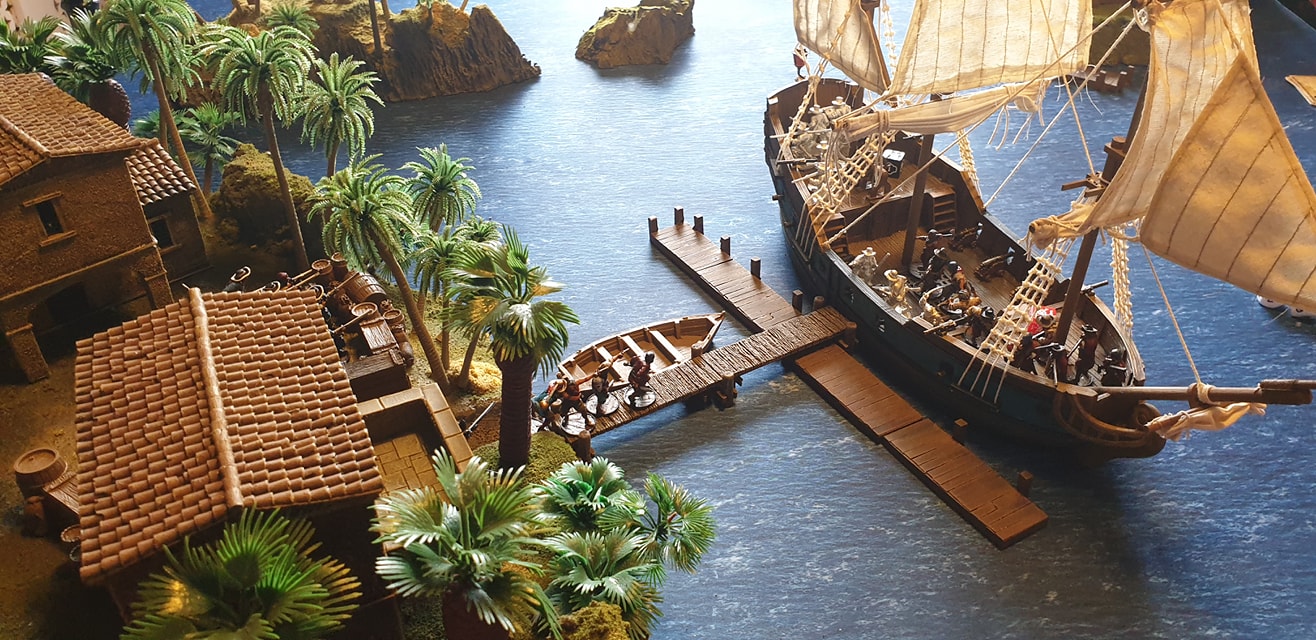
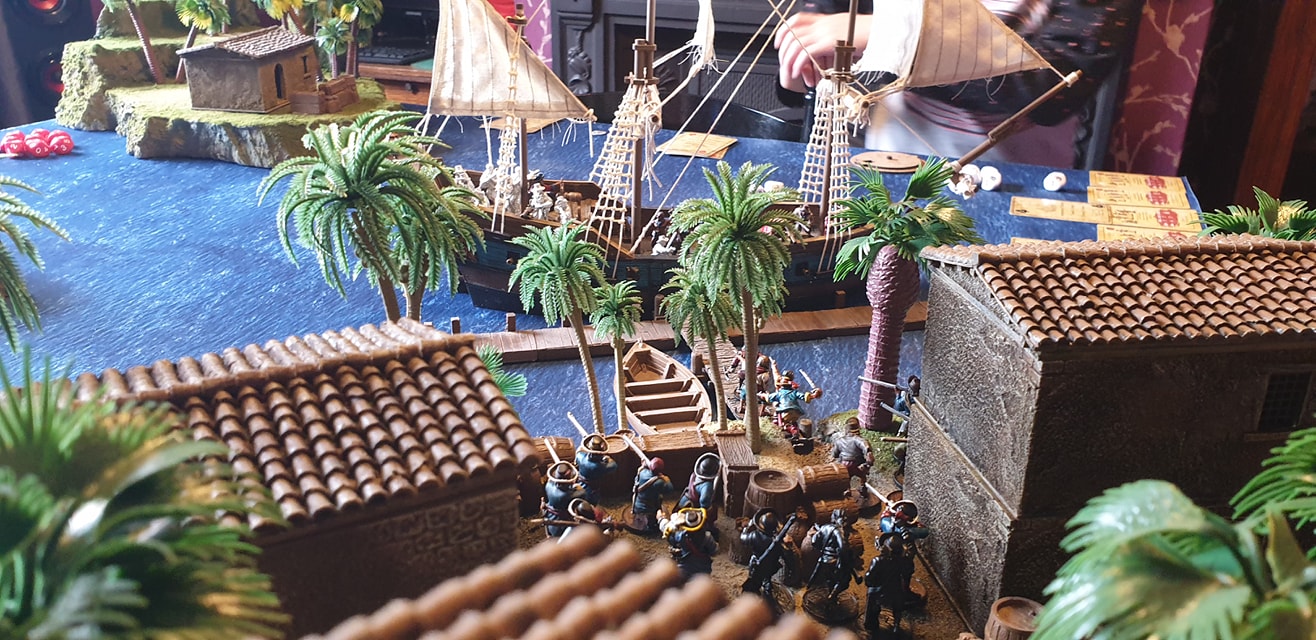
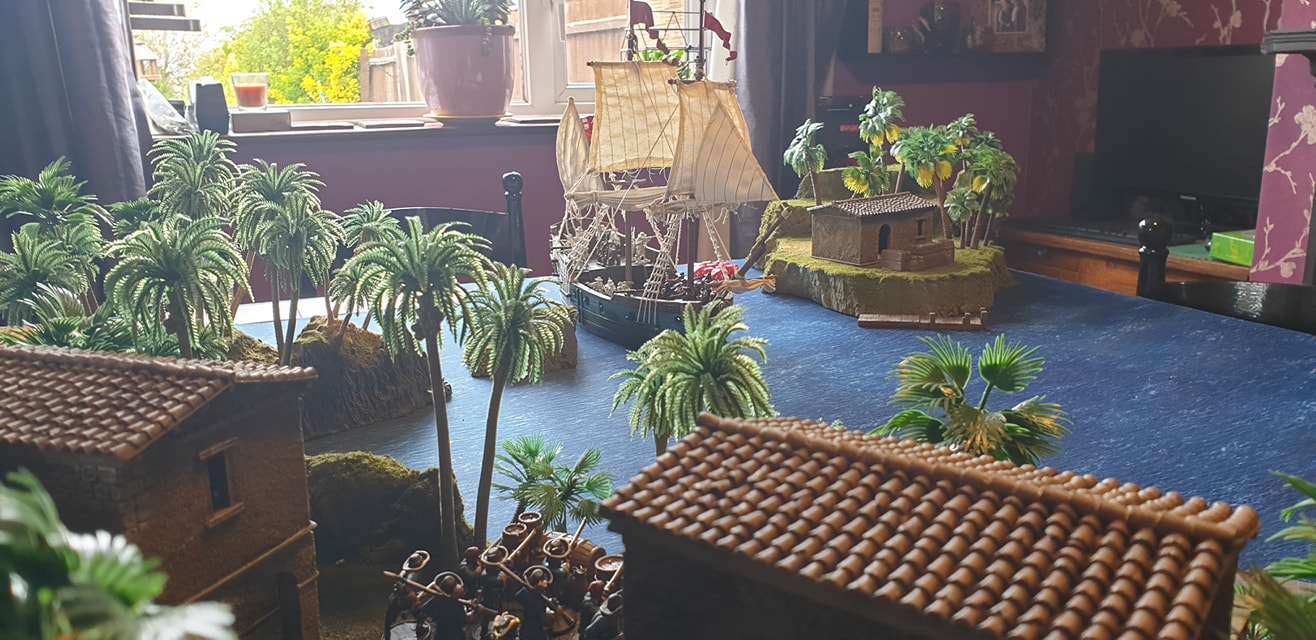
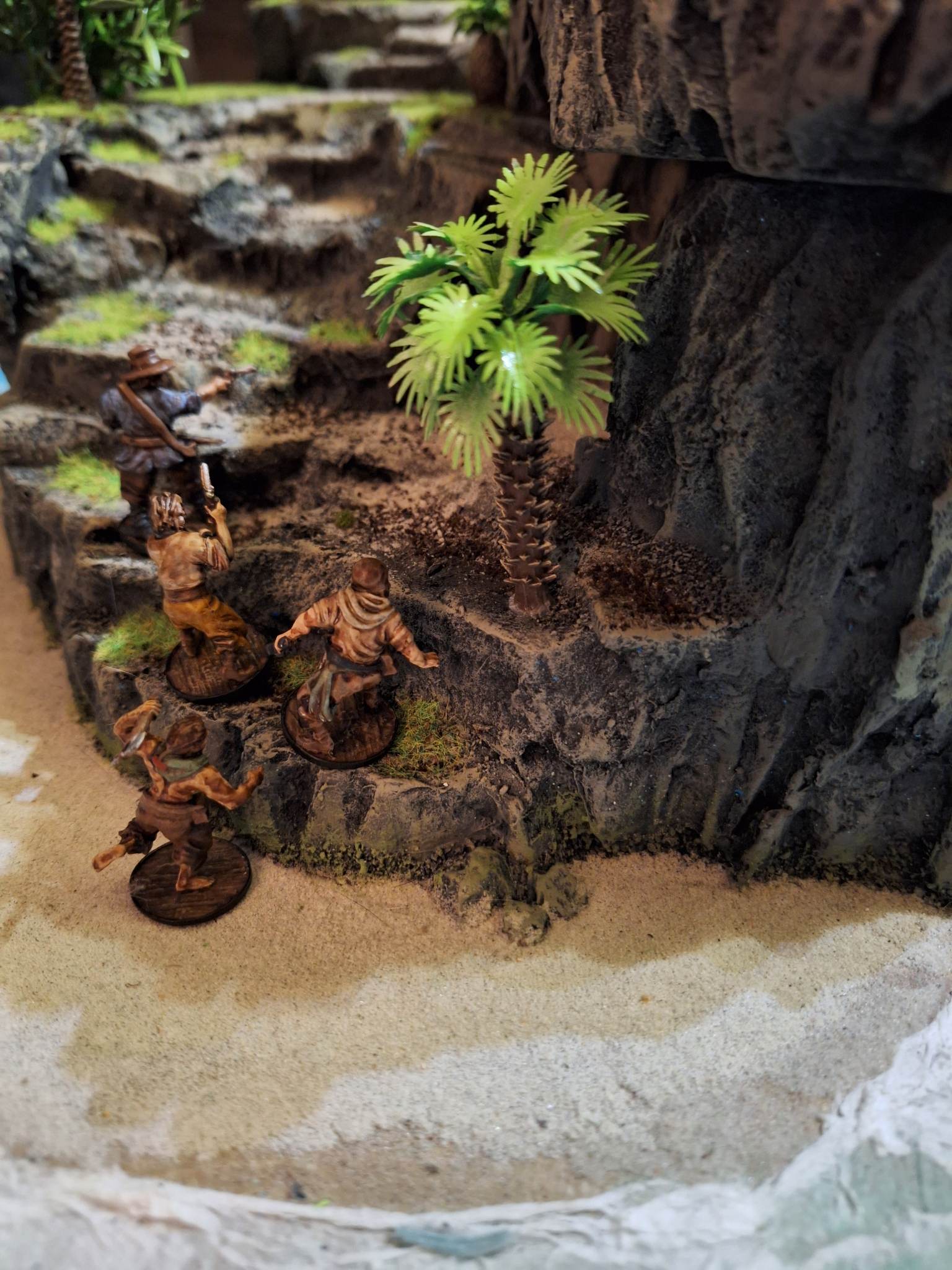
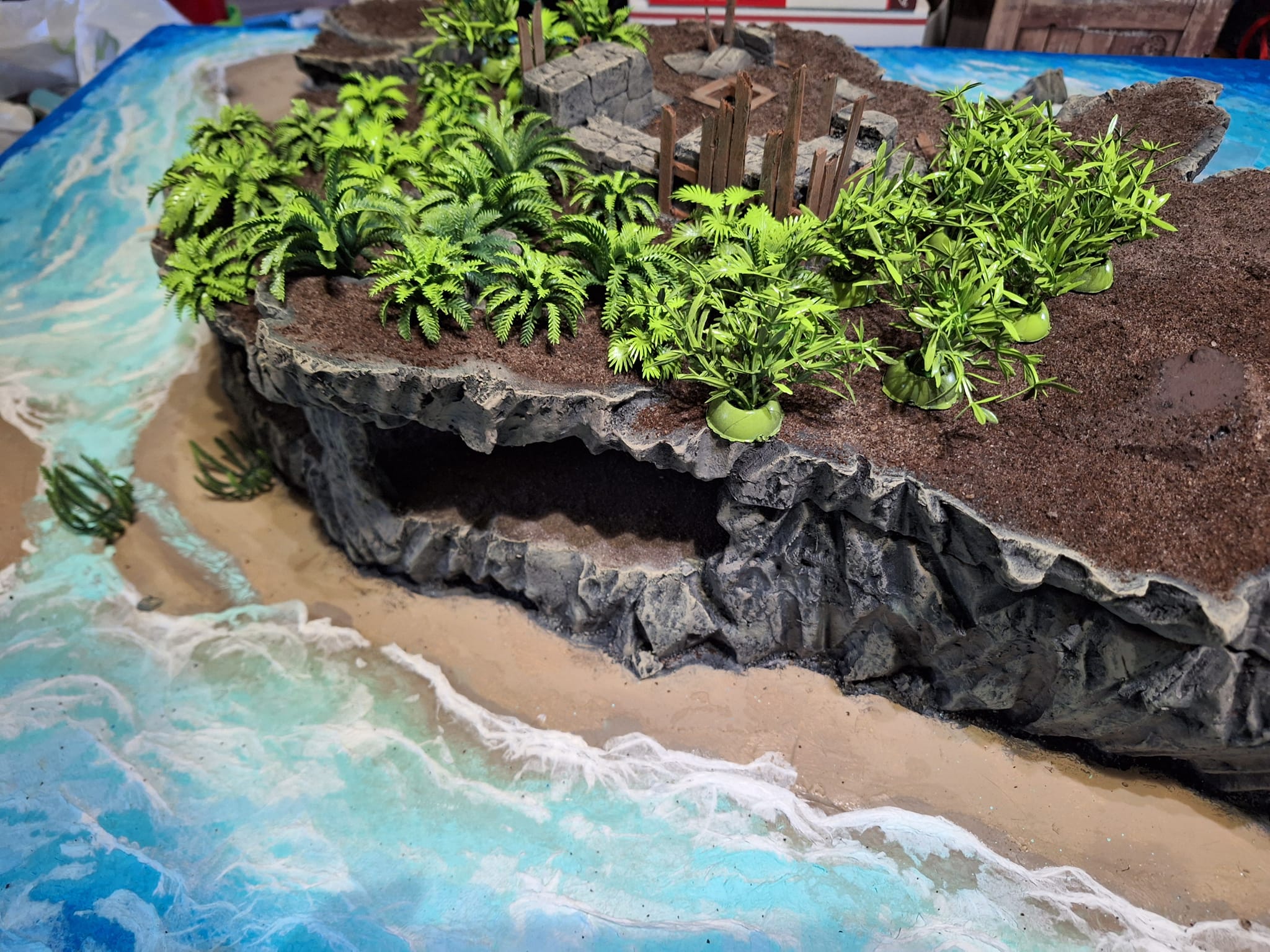
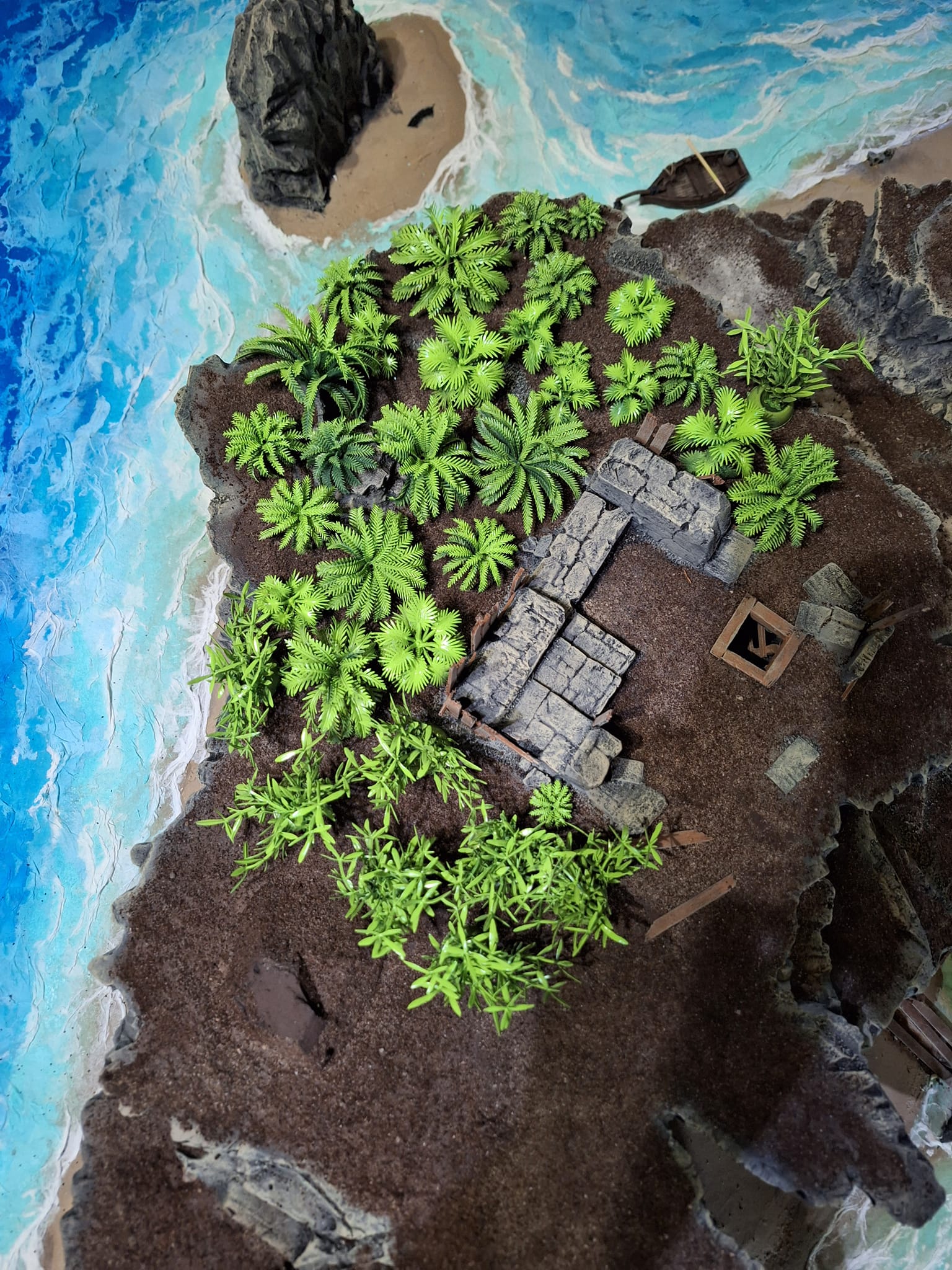
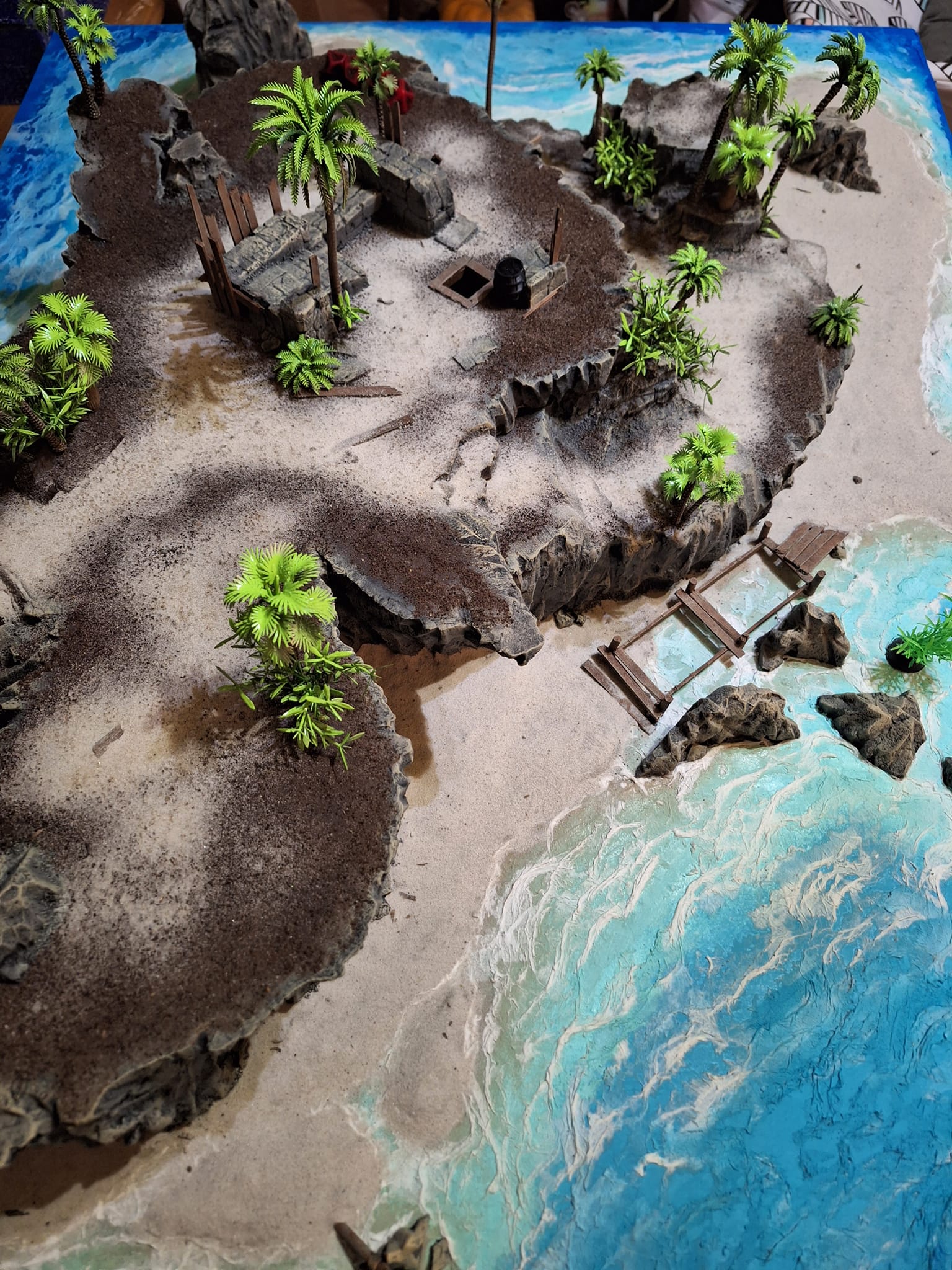
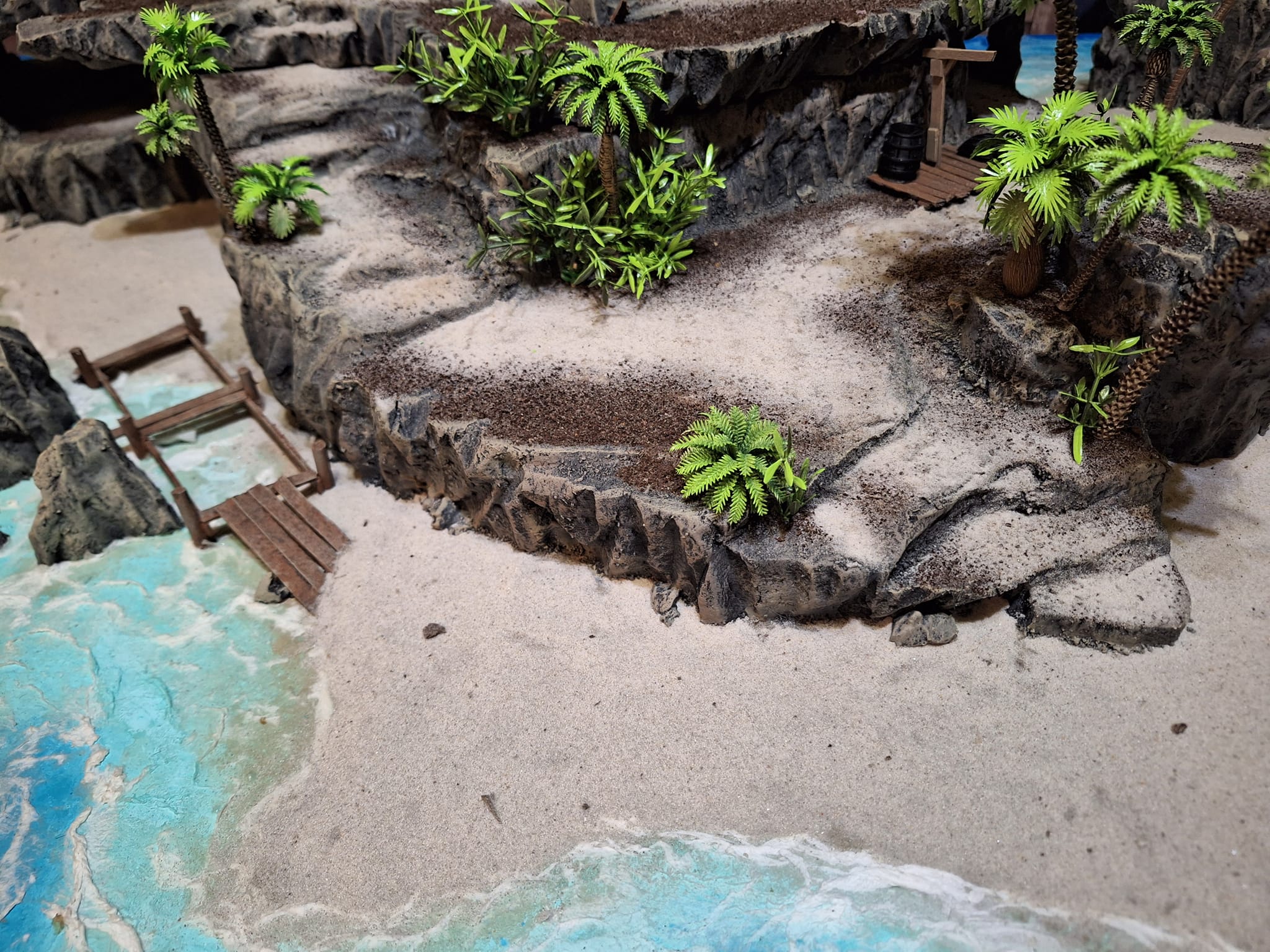
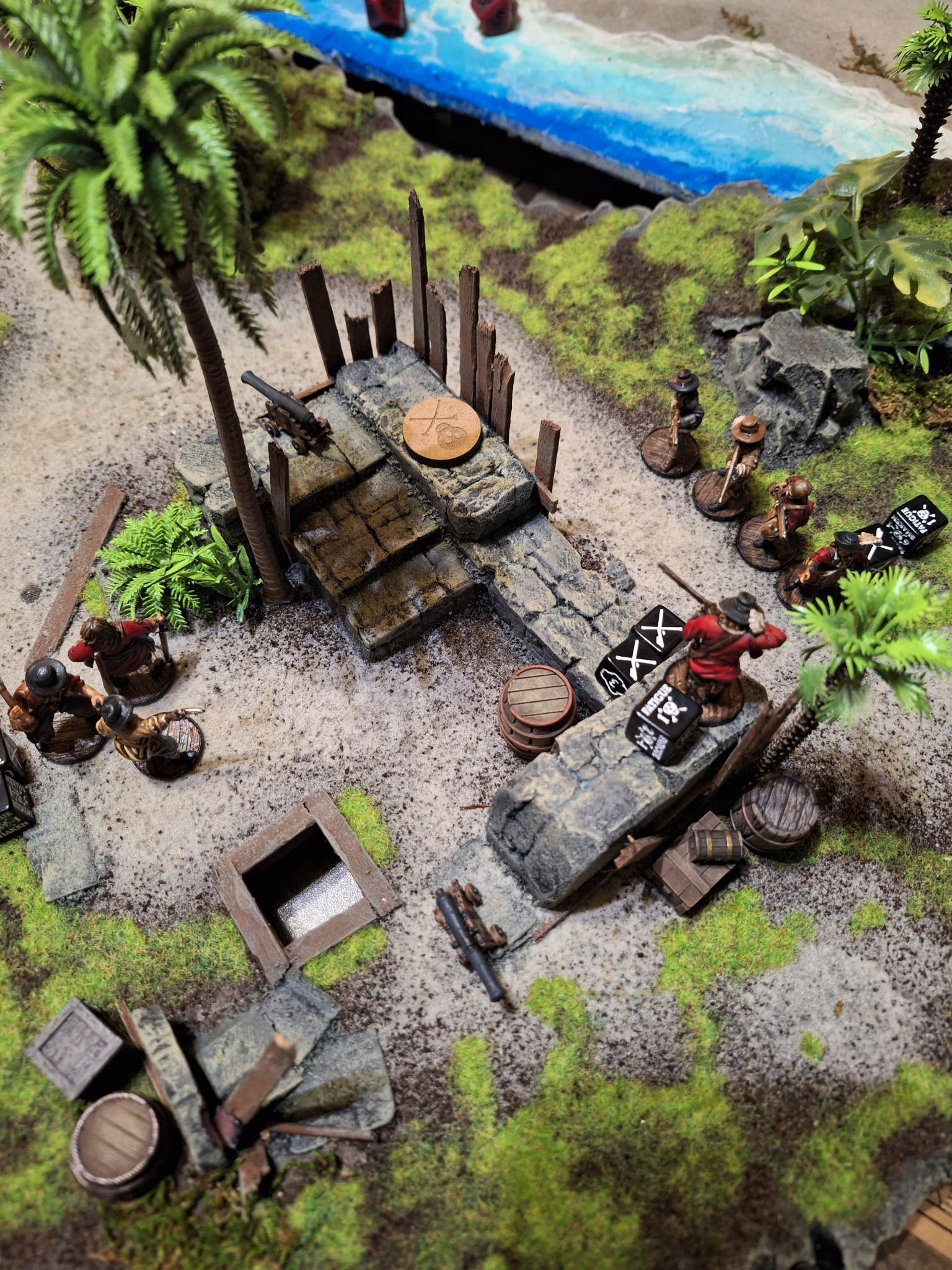
Gallery of Palm Tree and Jungle Scatter Terrain for your Pirate-Themed War Games
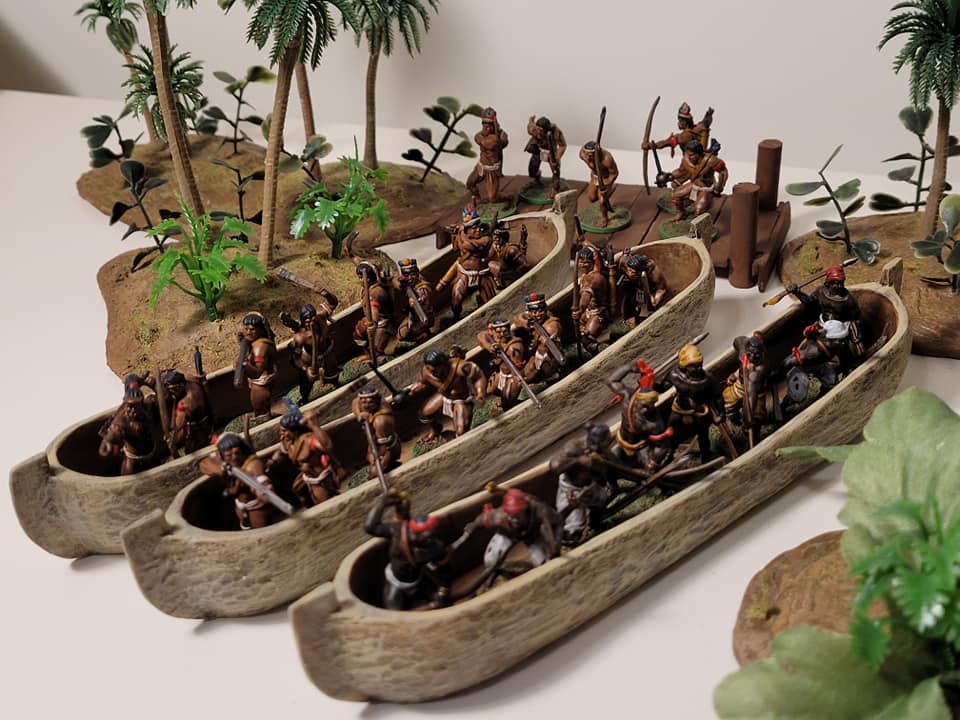
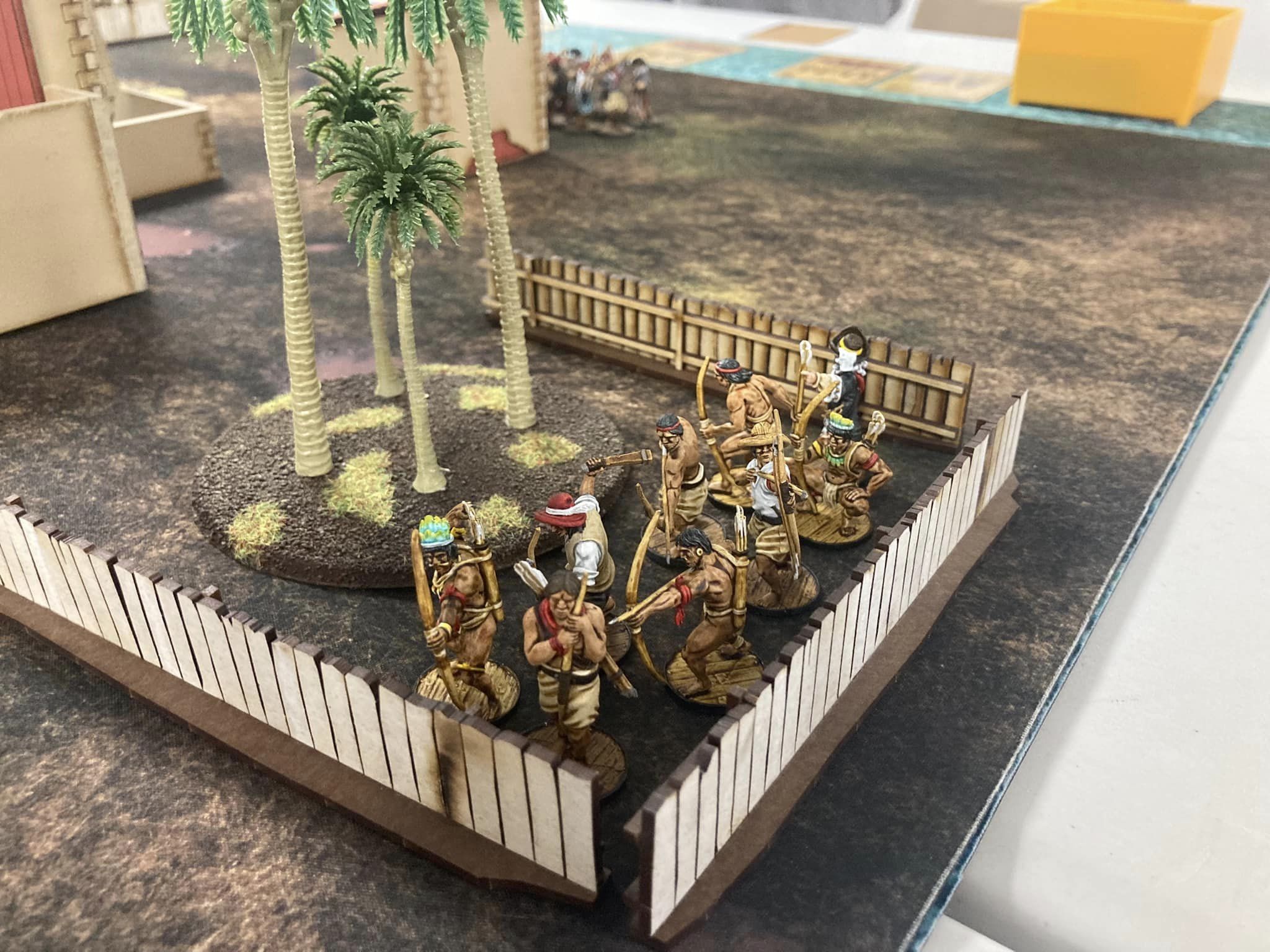
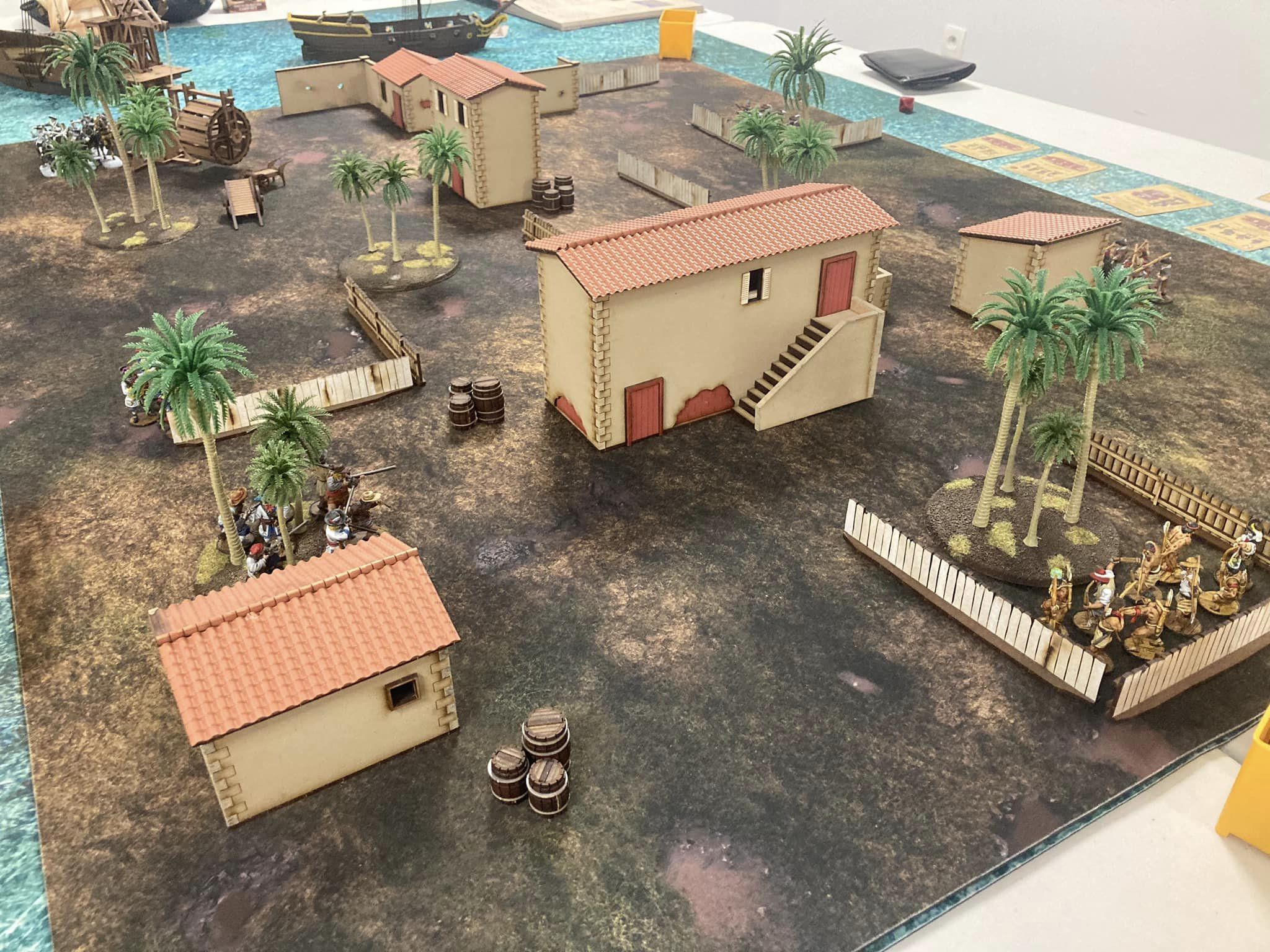
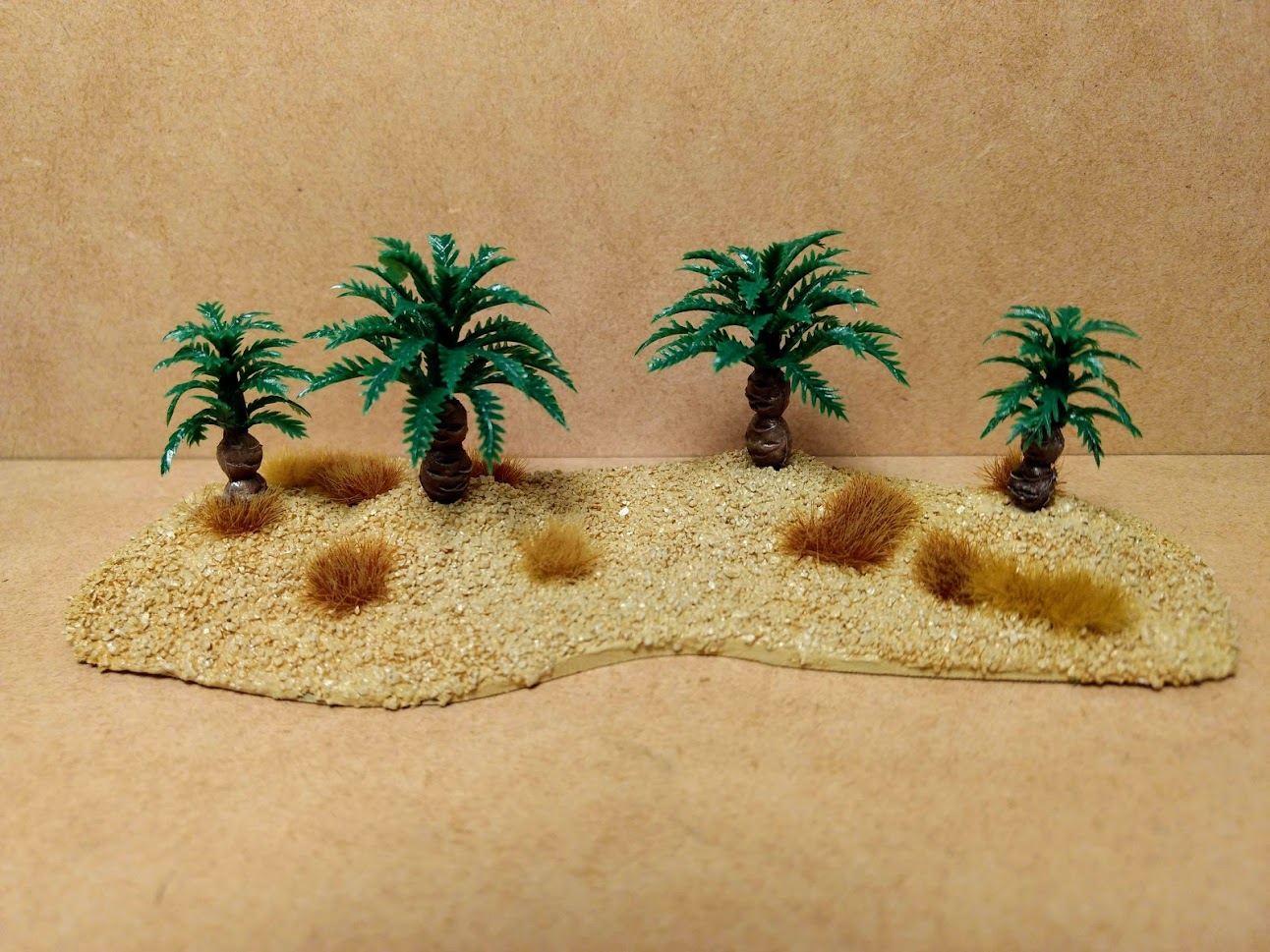
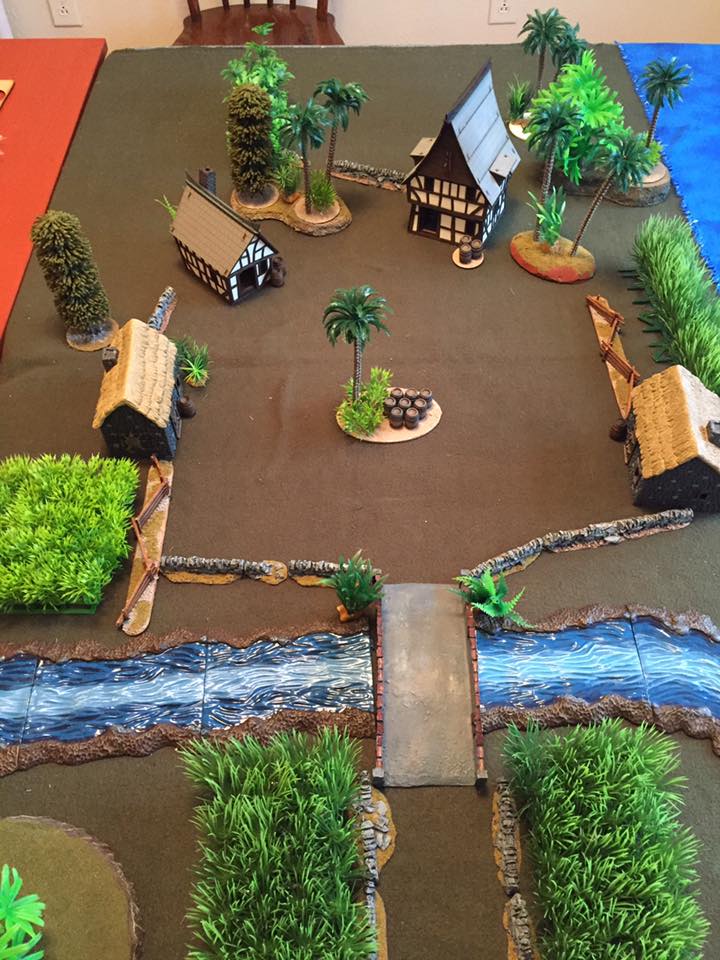
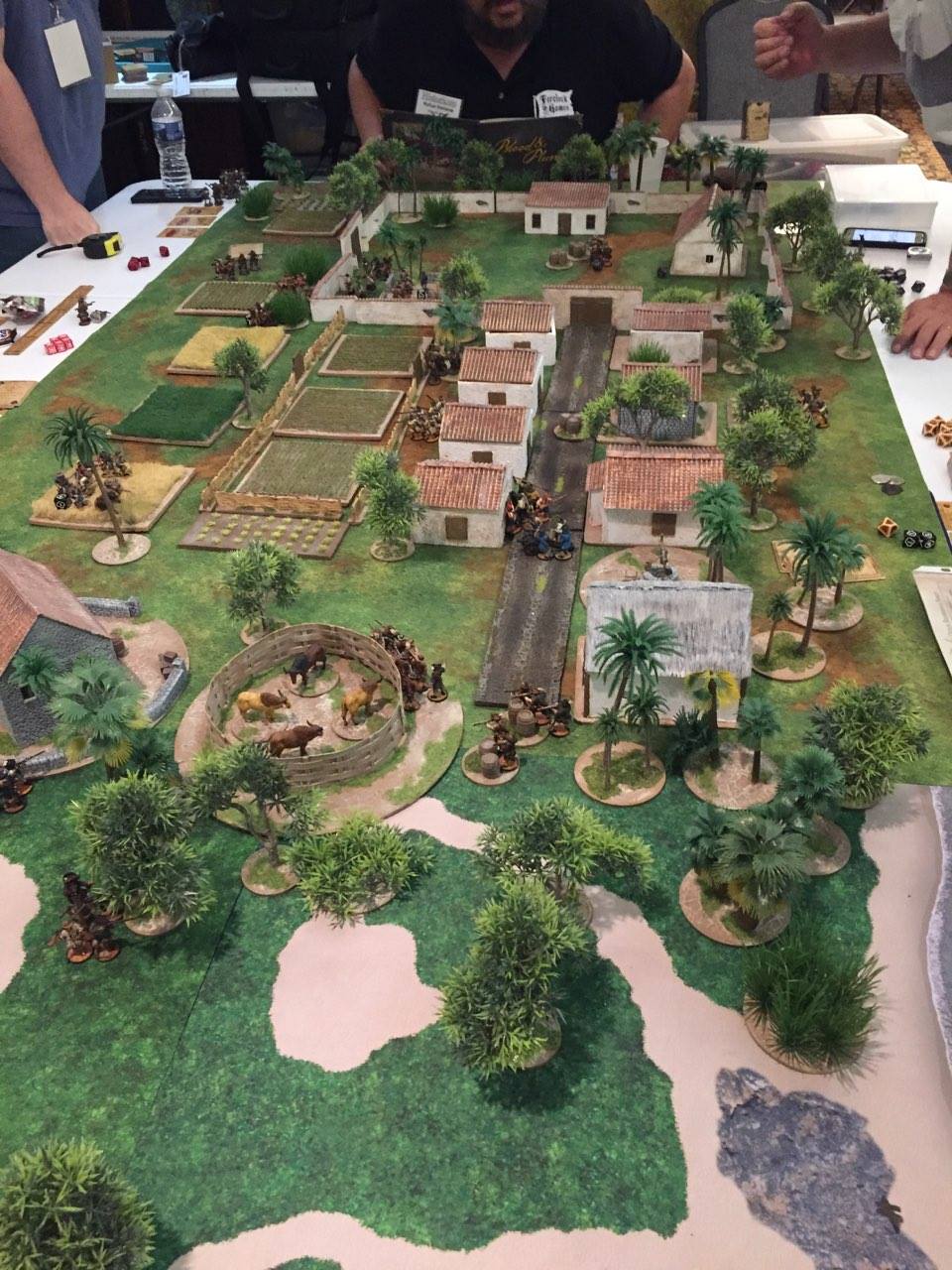
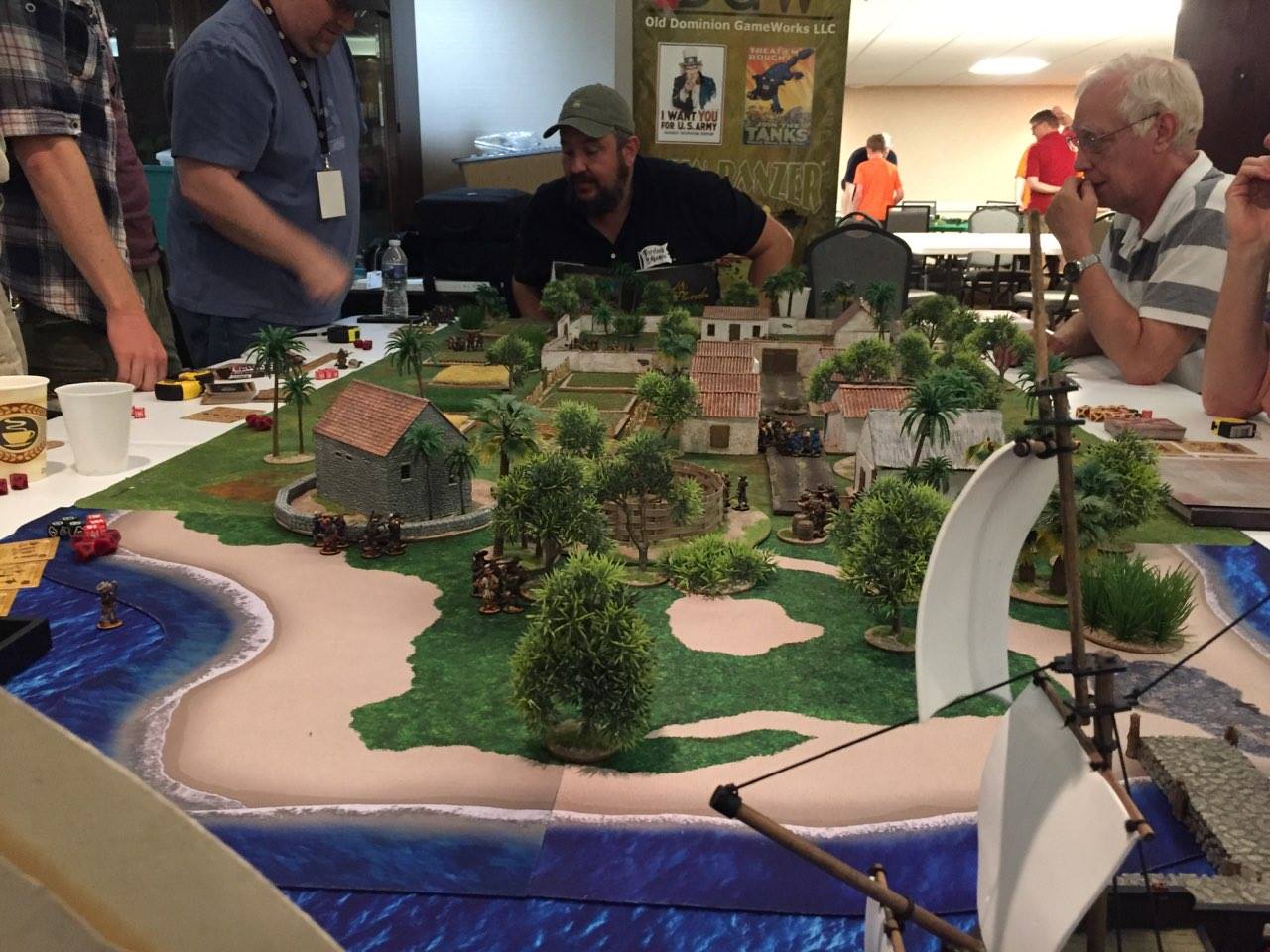
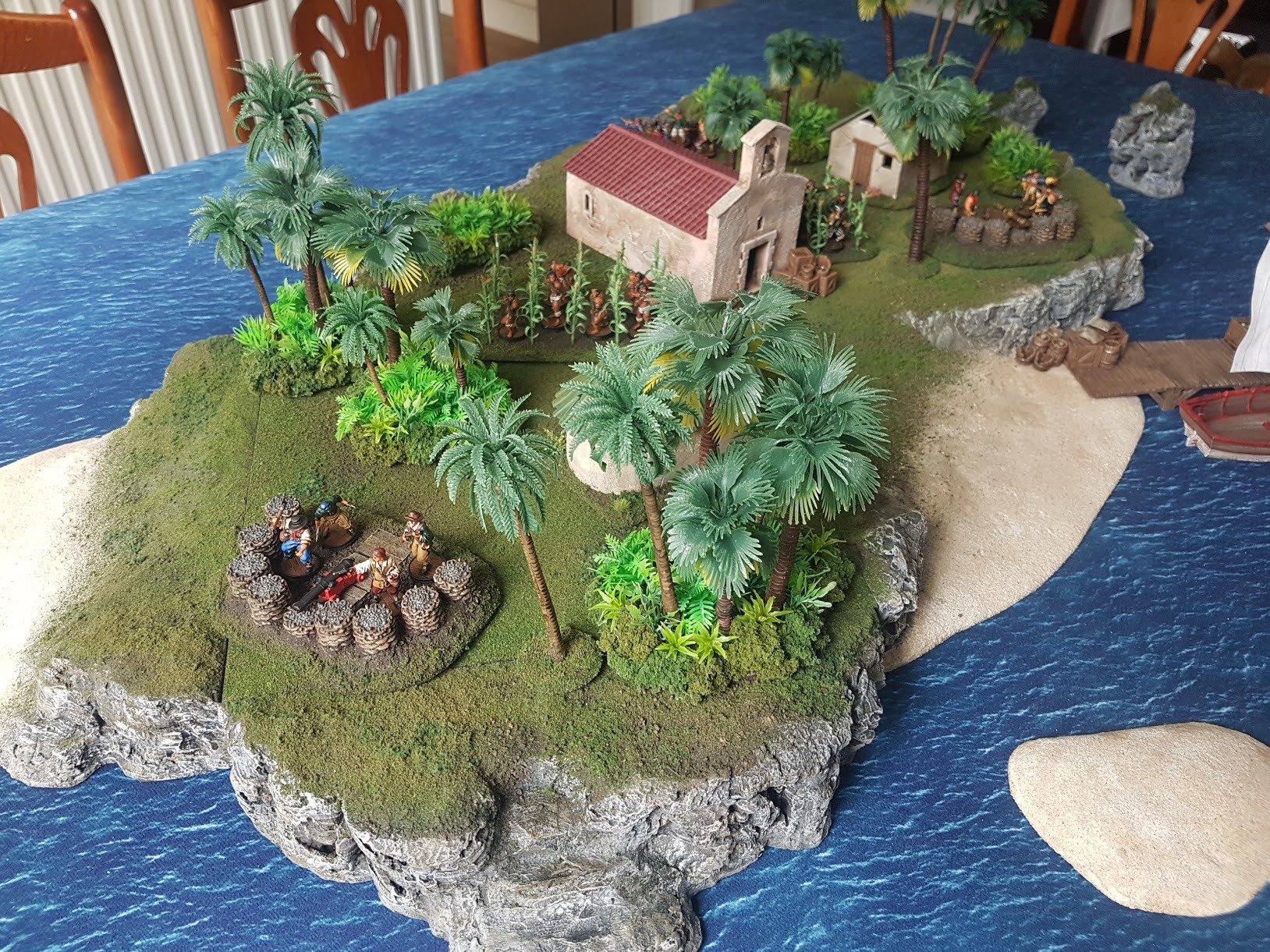
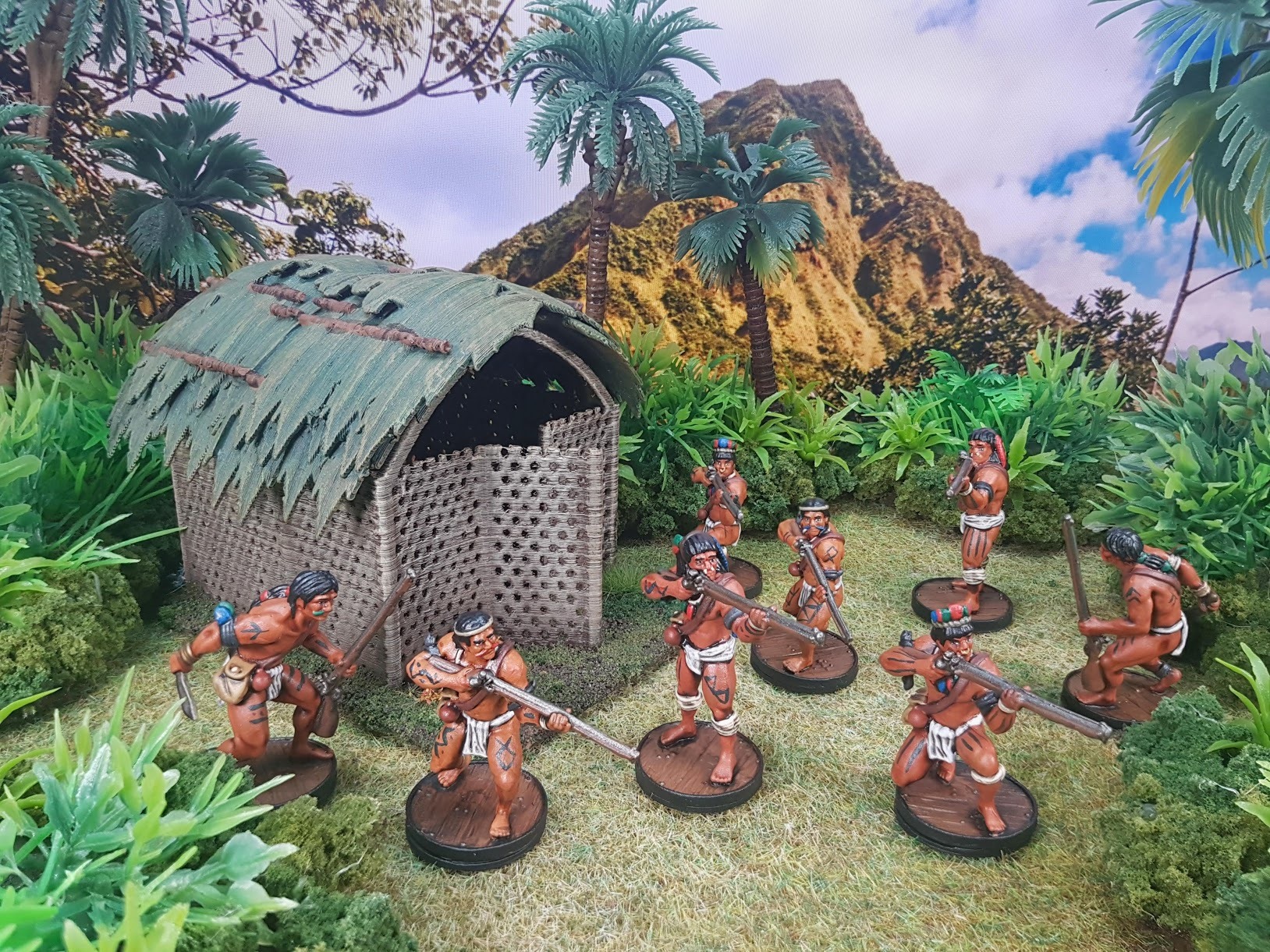
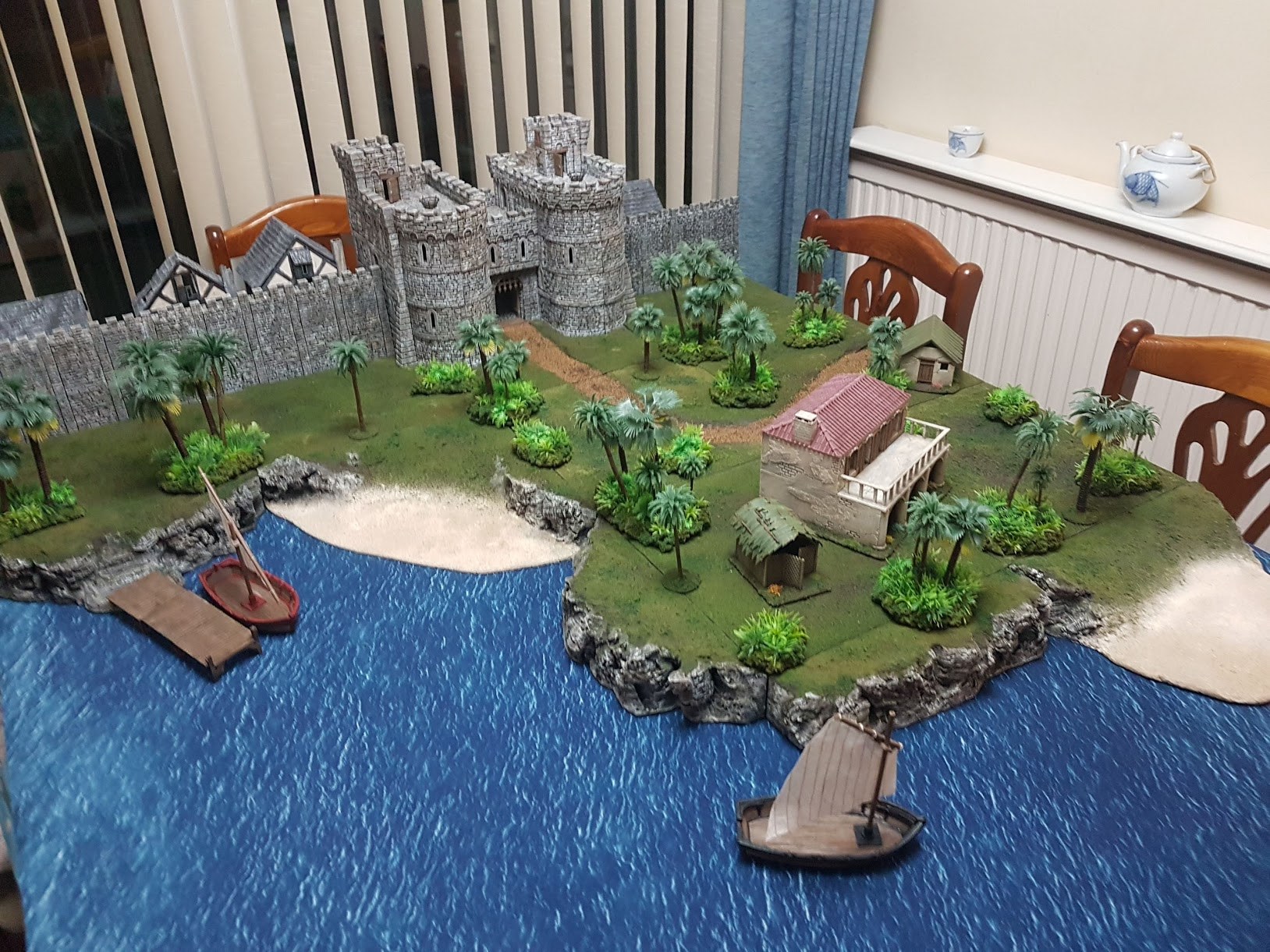
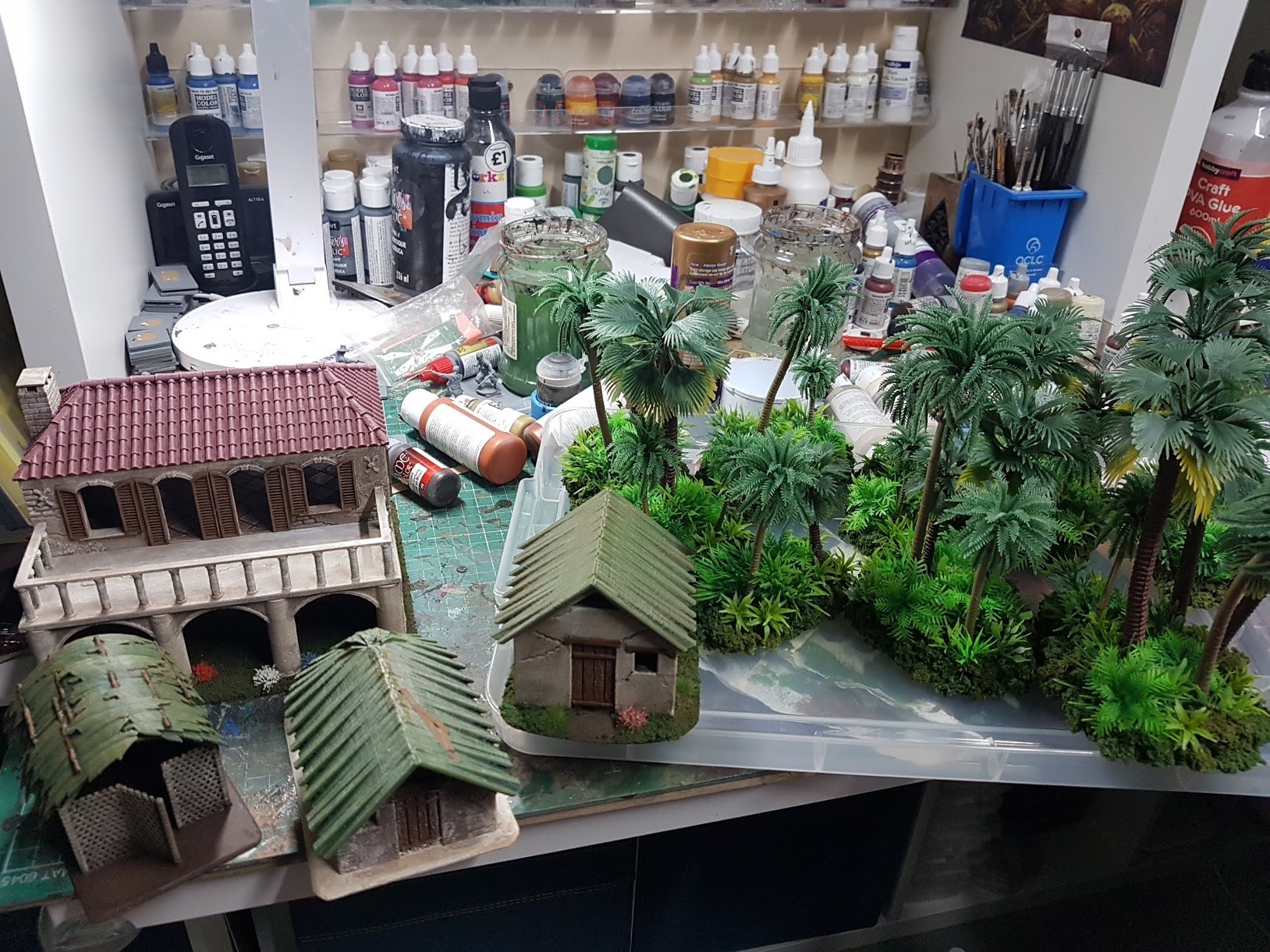
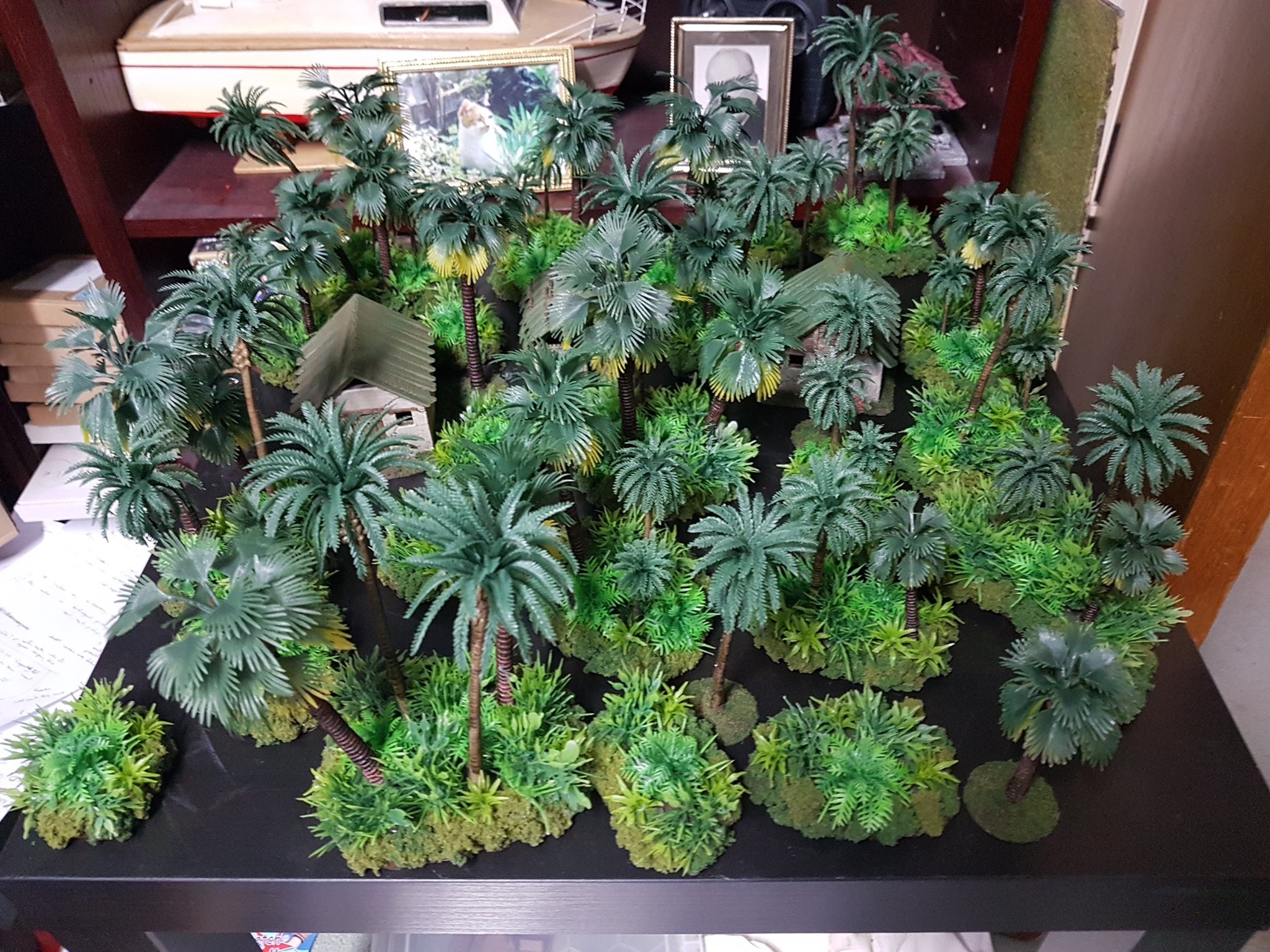
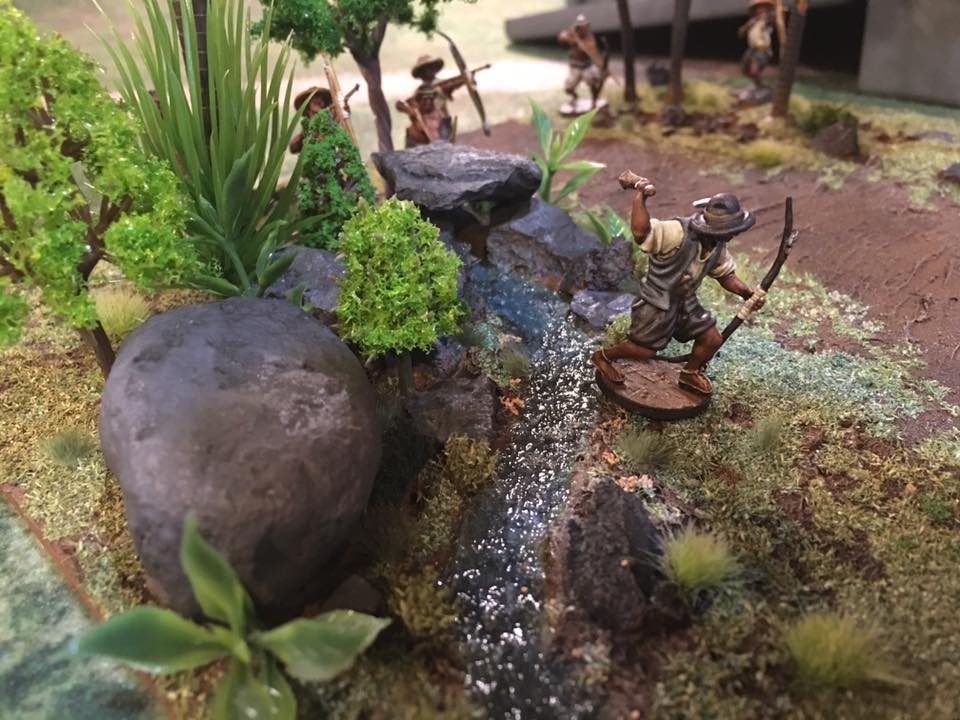
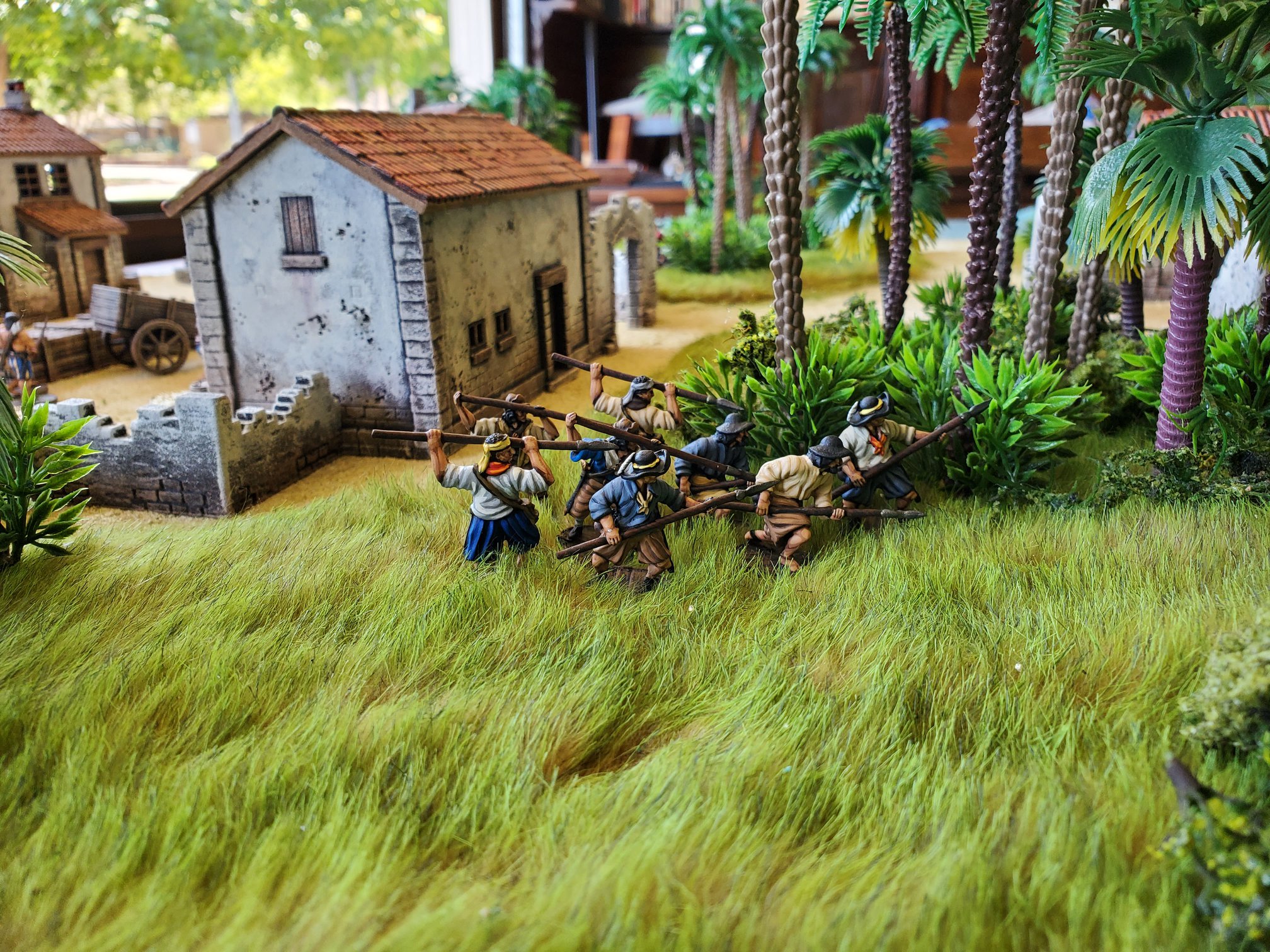
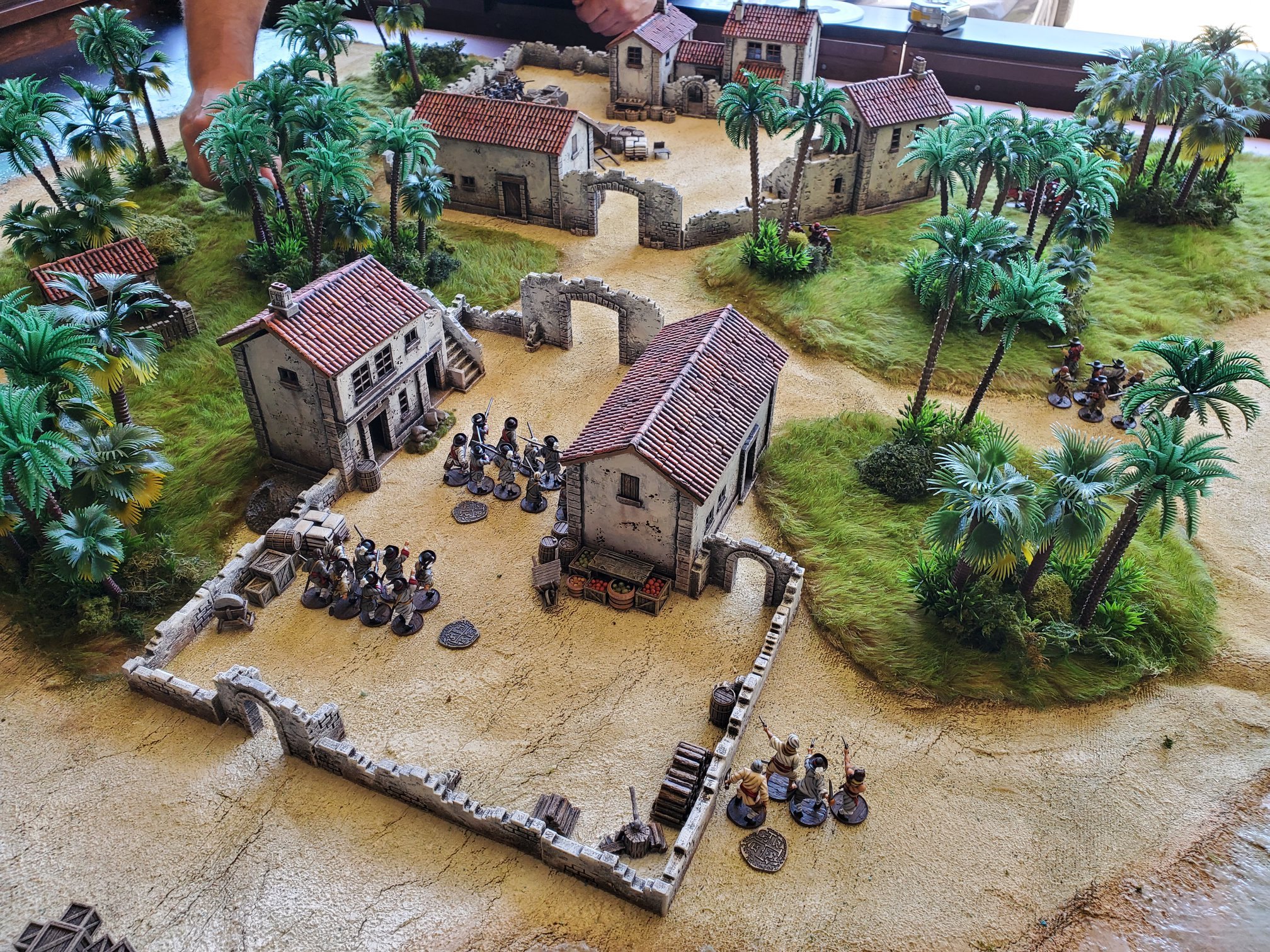
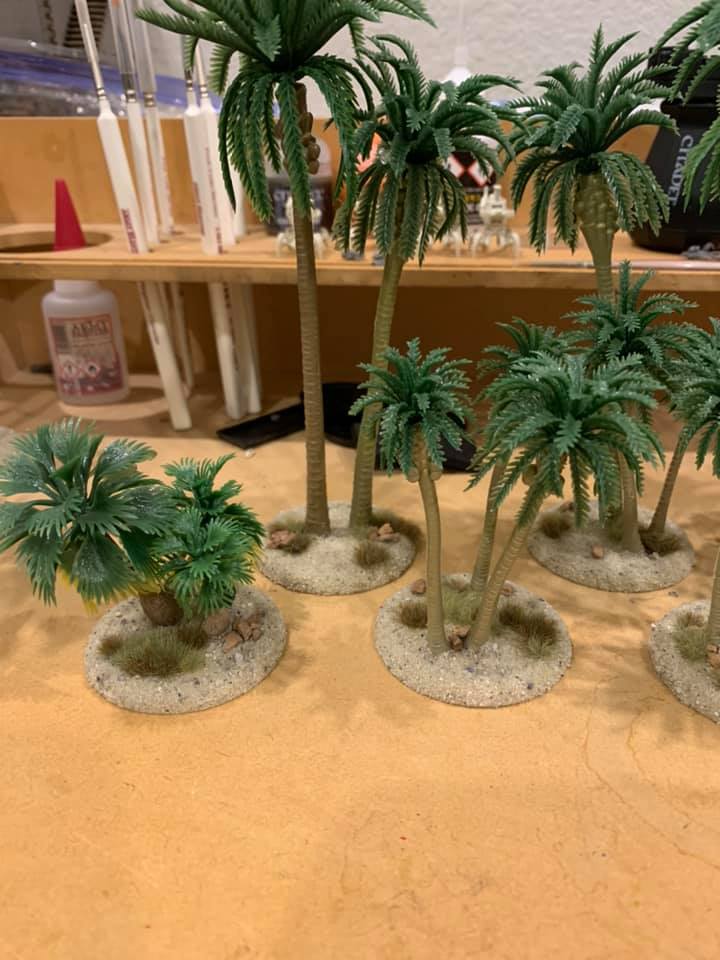
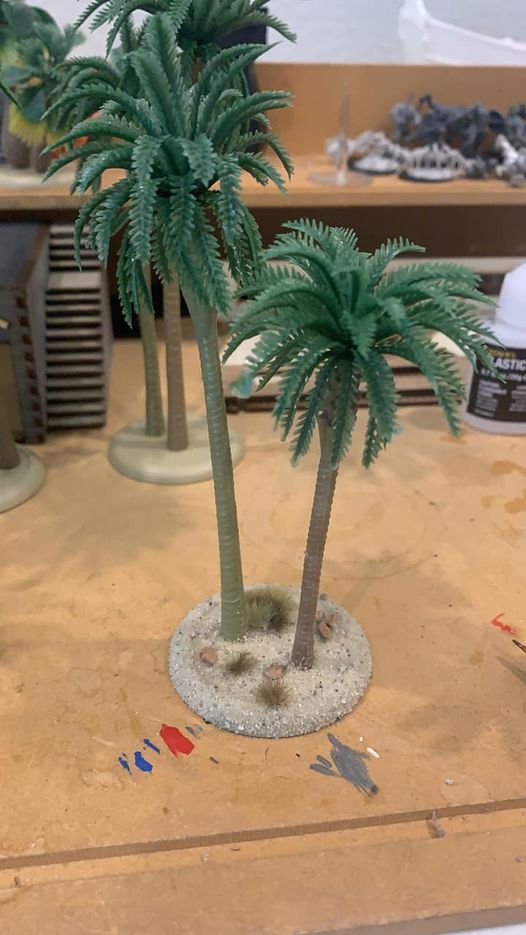
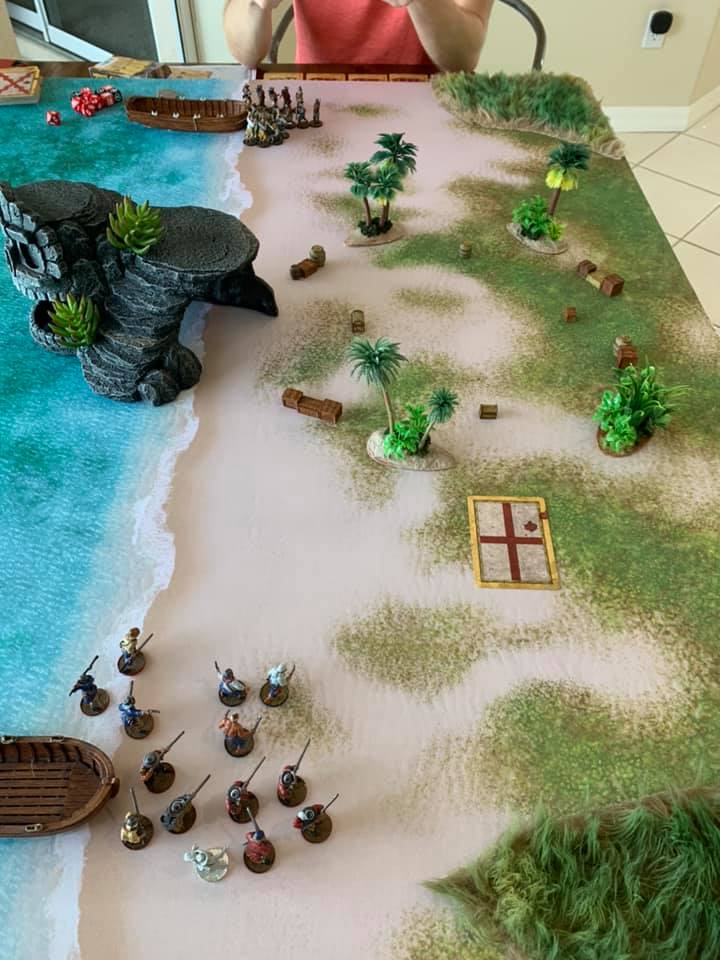
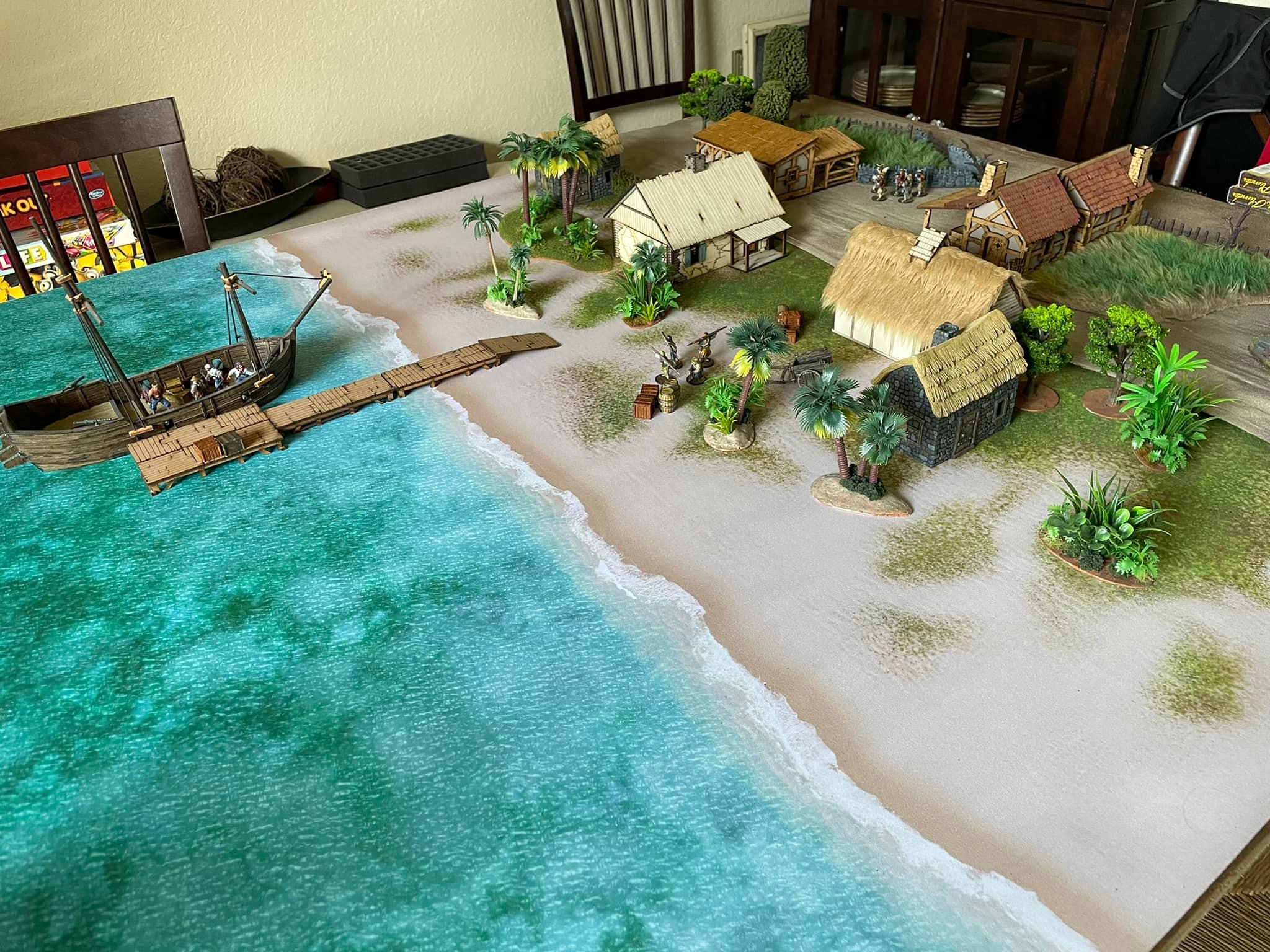
I’m always fascinated by the creativity and ideas that players and crafters bring to their terrain boards. A visually appealing gaming table enhances immersion and draws you deeper into the game. I absolutely love wandering through convention halls and admiring the ingenuity of hobbyists and artists alike.
Palm trees and jungle terrain are staples for Blood & Plunder games, especially those set in a Caribbean-style environment. However, creating an entire board of palm trees requires some creativity to keep things interesting. The best way to spark inspiration is by looking at examples that work. With that in mind, I reached out to over 40 members of the gaming community and gathered a large collection of photos into one resource. I hope you’ll find something here to inspire your own terrain building.
While I’m no expert, it’s always incredibly satisfying when someone compliments my photos online or comments on the terrain when passing by a table at a game store or convention. We all appreciate recognition for the hard work we put into our hobby. So, to all of you who contributed to this gallery, I want to give a big “THANK YOU!” You’re AWESOME! Thanks for helping to inspire others in the hobby to create amazing terrain of their own.
If you have photos you’d like to add, feel free to share them on the blog, Discord, or Facebook, and we’ll include them in the collection.














































Conclusion
Creating palm tree and jungle terrain for your Blood & Plunder games doesn’t have to be daunting. With a few simple materials and techniques, you can craft visually stunning pieces that elevate your gaming experience and immerse players in the rich Caribbean setting. Whether you’re assembling dense jungle areas or scattered palm groves, the key is balancing aesthetics and functionality. Hopefully, the gallery of images will help you draw inspiration from the community and help you build terrain. Happy crafting!